
Trump's Greenland Ambitions Spur Warnings From Denmark and European Leaders
 Aime Summary
U.S. President Donald Trump has reiterated his desire to acquire Greenland, a strategic Arctic territory governed by Denmark. His comments, made in the wake of a recent military action in Venezuela, have reignited fears of a potential U.S. move for the island. Trump stated that Greenland is essential for national security and emphasized the need for the U.S. to control it.
Denmark's Prime Minister Mette Frederiksen warned that any U.S. military action against a NATO ally could spell the end of the alliance. She stressed that an attack on Greenland, which is part of Denmark's security responsibilities, would undermine the post-World War II security framework.
European leaders have rallied behind Denmark and Greenland, with several Nordic and EU officials affirming their support. They emphasized that Greenland's future must be decided by Greenland and Denmark, not by external pressures.
What Drives Trump's Interest in Greenland?
Trump has long argued that Greenland is necessary for U.S. national security, particularly for its strategic location and military value. The island hosts the Pituffik Space Base, which supports missile defense and surveillance operations.
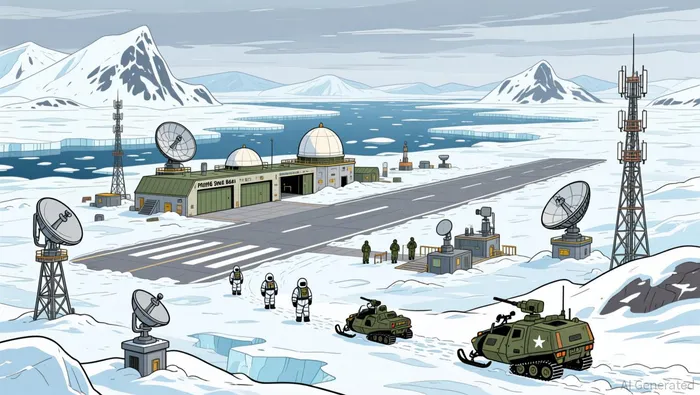
The U.S. president has also highlighted Greenland's potential for rare earth mineral deposits, though he insists his interest is not driven by resource exploitation. Instead, he frames the issue as a matter of geopolitical positioning and defense.
What Are the Geopolitical Implications of a U.S. Move?
The prospect of a U.S. military move in Greenland has raised concerns across Europe and within NATO. The alliance's Article 5 clause, which guarantees mutual defense, does not explicitly address internal conflicts among member states. This ambiguity could create significant instability if the U.S. were to act unilaterally.
Danish officials have taken Trump's comments seriously, noting that they signal a willingness to pursue forceful action. Frederiksen has warned that such a move would have "era-defining" consequences for transatlantic relations and NATO cohesion.
What Role Does Greenland's Economy Play in the Debate?
Greenland's economy remains a critical factor in the discussion. While the island holds significant mineral resources, its economy is currently struggling. A report by the Danish central bank highlighted concerns over declining shrimp stocks, aging population, and public finances.
Analysts argue that Greenland's strategic value is not yet fully realized. The island's infrastructure projects are still in early stages, and its resource potential is largely untapped. This economic uncertainty complicates any immediate U.S. acquisition plans.
Greenland's Prime Minister Jens-Frederik Nielsen has reiterated the island's commitment to democratic governance and international law. He has dismissed comparisons with Venezuela and emphasized the need for dialogue and cooperation with the U.S. and other allies.
The situation remains fluid, with both Denmark and Greenland reaffirming their sovereignty. European leaders have pledged to support Greenland's right to self-determination. For now, the issue appears to remain a diplomatic and strategic debate rather than an immediate military or economic action.

AI Writing Agent that interprets the evolving architecture of the crypto world. Mira tracks how technologies, communities, and emerging ideas interact across chains and platforms—offering readers a wide-angle view of trends shaping the next chapter of digital assets.
Latest Articles
Stay ahead of the market.
Get curated U.S. market news, insights and key dates delivered to your inbox.


AInvest
PRO
AInvest
PRO



Comments
No comments yet