
Trump's Global Tariff Surge and Market Volatility: Strategic Asset Reallocation in a Protectionist World
 Aime Summary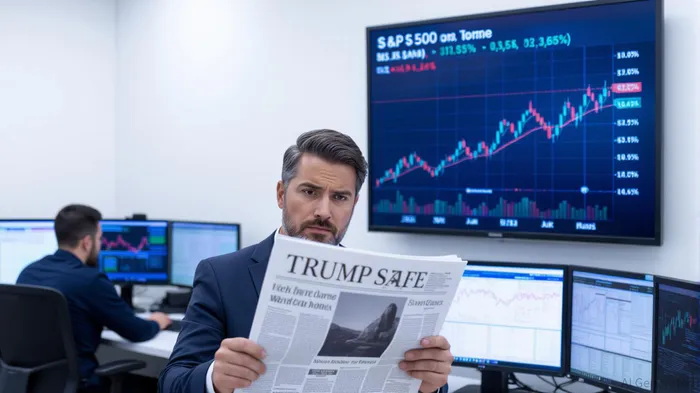
In July 2025, President Trump's Executive Order 14298 marked a seismic shift in global trade dynamics. By imposing tariffs ranging from 10% to 41% on imports from over a dozen countries—including key allies like Brazil and Switzerland—the administration signaled a return to aggressive protectionism. The move, framed as a tool to correct trade imbalances and bolster U.S. manufacturing, has instead triggered a wave of volatility, with the S&P 500 plummeting 10% in two days after the April tariff announcements. As investors grapple with the fallout, the question is no longer whether markets will be disrupted, but how to adapt to a new era of geopolitical risk and economic uncertainty.
The Tariff Shockwave: A New Era of Trade Uncertainty
The July 2025 tariffs are not merely a policy recalibration—they represent a structural break in global trade. By leveraging the International Emergency Economic Powers Act and the Trade Act of 1974, the administration has weaponized tariffs to enforce reciprocity, with the U.S. effective tariff rate now projected to rise to 18% from 2.3% in 2024. Countries like Brazil and Switzerland, which had been negotiating trade agreements, are now caught in a double bind: comply with U.S. demands or face steeper costs for their exports. The European Union's tiered tariff structure, meanwhile, underscores a calculated approach to balancing political leverage with economic pragmatism.
The market response has been swift and severe. BlackRockBLK-- estimates that a 20% tariff increase could reduce global growth by 2–2.5%, with U.S. GDP growth now forecast at 0% for 2025. Inflation, already a concern, is expected to climb to 3.8% as higher tariffs drive up input costs and consumer prices. The Federal Reserve, caught between tightening and the risk of recession, faces a delicate balancing act.
Historical Parallels: Lessons from Smoot-Hawley and the 1980s
History offers cautionary tales. The 1930 Smoot-Hawley Tariff, which triggered a global trade war and deepened the Great Depression, saw world trade collapse by 60% and the S&P 500 fall 89%. While modern economies are more resilient, the structural parallels are striking: high tariffs, retaliatory measures, and a flight to safety in bonds and cash.
The 1980s U.S.-Japan trade tensions, by contrast, highlight the power of diplomacy. Targeted tariffs and the Plaza Accord of 1985 managed to avoid a full-scale crisis by aligning trade policies with macroeconomic stability. The lesson is clear: protectionism works only if it's contained, negotiated, and not weaponized for political gain.
Strategic Asset Reallocation: Navigating the New Normal
For investors, the key is to anticipate the next move in this unfolding drama. Here's how to position portfolios for a protectionist world:
Diversify Beyond Equities
Bonds and liquid alternatives have proven their mettle in volatile environments. The Bloomberg Aggregate Bond Index, for instance, has provided stability even as equities wavered. Meanwhile, funds like BlackRock's Global Equity Market Neutral Fund (BDMIX) have outperformed during downturns, returning 5% during the S&P 500's 19% decline in early 2025.Prioritize Low-Volatility Equities
Defensive sectors—utilities, healthcare, and consumer staples—are better positioned to weather trade shocks. The iShares MSCIMSCI-- USA Min Vol Factor ETF (USMV), for example, fell less than half as much as the S&P 500 during recent volatility.Embrace Active Strategies
Long-short funds and tactical asset allocation can capitalize on market dislocations. BlackRock's Tactical Opportunities Fund, which adjusts exposure to global stocks, bonds, and currencies, is designed to thrive in uncertain environments.Hedge Currency and Geopolitical Risks
The U.S. dollar, once a safe haven, is under pressure as growth slows and trade imbalances persist. A modest underweight in USD and allocations to gold or hedged foreign equities can mitigate exposure to a depreciating dollar.Maintain Liquidity
A “bucket strategy” with 12–18 months of cash reserves ensures investors can weather short-term turbulence without selling assets at a discount. This is particularly critical in a world where trade conflicts can escalate rapidly.
The Road Ahead: A Call for Pragmatism
While Trump's tariffs have introduced a new layer of complexity, history shows that markets recover when clarity emerges. The challenge for investors is to balance short-term risks with long-term opportunities. As the IMF warns that 20% tariffs could reduce global growth by 1% through 2026, the priority must be to build resilience—not retreat from the global economy.
In this new protectionist world, the winners will be those who adapt. By diversifying portfolios, hedging geopolitical risks, and staying attuned to macroeconomic shifts, investors can navigate the turbulence and position themselves for the next phase of global trade. The key is to act now—not in panic, but with a strategy forged in the fires of uncertainty.

Delivering real-time insights and analysis on emerging financial trends and market movements.
Latest Articles
Stay ahead of the market.
Get curated U.S. market news, insights and key dates delivered to your inbox.
AInvest
PRO
AInvest
PRO



Comments
No comments yet