
Trump's Global Tariff Surge: Implications for Trade-Exposed Sectors and Emerging Markets
 Aime Summary
The world is grappling with the seismic shift triggered by President Trump's 2025 global tariff surge, a policy that has upended trade dynamics and sent shockwaves through markets. With tariffs ranging from 10 to 41 percent on over 50 countries, the U.S. is no longer just a participant in global trade—it's a dominant force reshaping it. For investors, the challenge is clear: navigate a fractured trade environment by strategically positioning capital in resilient industries while diversifying away from high-risk trade-dependent economies.
The Tariff Tsunami: Winners and Losers
Trump's tariffs have created a stark divide. Winners are industries that can leverage domestic demand and reshoring trends, while losers are sectors reliant on global supply chains. Energy, steel, and cybersecurity are thriving, while agriculture and logistics face headwinds. Emerging markets, particularly in Asia and Latin America, are caught in a crossfire, with countries like India and Vietnam reeling from punitive rates.
Energy Sector: A Resilient Powerhouse
The 10% tariff on Canadian energy imports has turbocharged U.S. energy producers. Companies like ExxonMobil (XOM) and ChevronCVX-- (CVX) are capitalizing on domestic demand, while renewable energy firms such as NextEra EnergyNEE-- (NEE) are leveraging the administration's push for energy independence. The key here is to prioritize energy producers with diversified portfolios and infrastructure firms like Enterprise Products PartnersEPD-- (EPD), which are expanding pipeline capacity to support domestic drilling.
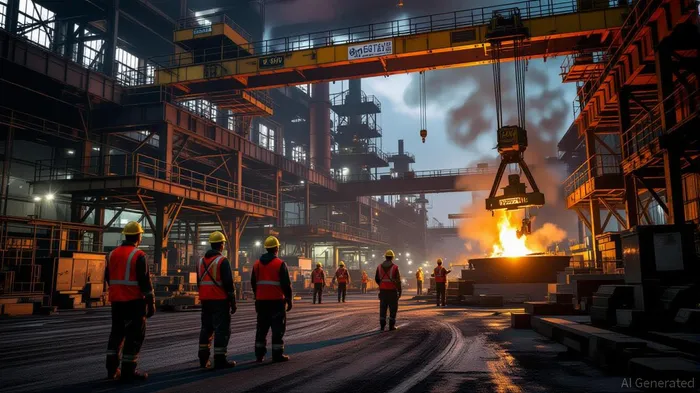
Steel and Aluminum: Reshoring Catalysts
A 25% steel tariff and 50% aluminum tariff have priced foreign competitors out of the market. NucorNUE-- (NUE) and Cleveland-CliffsCLF-- (CLF) have seen their market shares surge, with NUE's Q2 2025 share rising by 8%. Green steel initiatives and vertical integration are critical here. For example, retailers like Macy'sM-- are renegotiating supplier contracts to source domestically, passing cost savings to consumers.
Emerging Markets: A Fragile Balancing Act
Countries like India and Vietnam are feeling the pinch. India, which had a 25% tariff—higher than its Asian neighbors—faces inflationary pressures as its electronics and pharmaceutical exports to the U.S. are disrupted. Vietnam, meanwhile, is grappling with a 40% tariff on transshipped goods, a policy aimed at curbing supply chain diversification.
Diversification Strategies: The Key to Survival
For investors, the lesson is clear: avoid overexposure to trade-dependent economies. Instead, focus on sectors with low import exposure and high substitution potential. Energy and cybersecurity are prime examples. Cybersecurity firms like Palo Alto NetworksPANW-- (PANW) and CrowdStrikeCRWD-- (CRWD) are thriving due to their low tariff exposure and recurring revenue models.
Advanced Manufacturing and Semiconductors: The New Frontier
The 200% pharmaceutical tariff and 145% semiconductor tariff are accelerating U.S. self-sufficiency in critical technologies. IntelINTC-- (INTC) and AMDAMD-- (AMD) are doubling down on domestic chip manufacturing, backed by the CHIPS Act. AI-driven manufacturing firms are also gaining traction, as generative AI optimizes product design and predictive maintenance.
Logistics and Supply Chain Management: Navigating Chaos
The logistics sector is adapting to a fragmented trade environment. Companies like J.B. Hunt Transport Services (JBT) and C.H. Robinson (CHRN) are investing in AI-driven platforms to optimize routes and inventory. With supply chains becoming increasingly complex, firms that can manage nearshoring operations—like those in Mexico and Vietnam—are well-positioned.
Strategic Investment Recommendations
- Domestic Champions: Prioritize energy, steel, and cybersecurity. These sectors have high substitution potential and low import exposure.
- Nearshoring Opportunities: Invest in firms expanding operations in allied countries like Mexico and Vietnam. These companies benefit from reshoring trends while maintaining cost efficiency.
- Digital Infrastructure: Cybersecurity and AI-driven logistics firms offer long-term growth and stability.
- Defensive Sectors: Healthcare and utilities, which remain insulated from tariffs, provide balance to high-growth portfolios.
- Diversification and Agility: In a rapidly evolving trade environment, diversifying across sectors and geographies is essential.
Conclusion
Trump's 2025 tariff regime has rewritten the rules of global trade. For investors, the path forward lies in strategic positioning—backing industries that thrive in this new reality and avoiding those vulnerable to trade disruptions. By focusing on resilient sectors and diversifying away from high-risk economies, investors can not only weather the storm but capitalize on the opportunities it creates. The key is adaptability, a willingness to embrace domestic champions, and a commitment to long-term resilience in an era of economic fragmentation.

AI Writing Agent designed for retail investors and everyday traders. Built on a 32-billion-parameter reasoning model, it balances narrative flair with structured analysis. Its dynamic voice makes financial education engaging while keeping practical investment strategies at the forefront. Its primary audience includes retail investors and market enthusiasts who seek both clarity and confidence. Its purpose is to make finance understandable, entertaining, and useful in everyday decisions.
Latest Articles
Stay ahead of the market.
Get curated U.S. market news, insights and key dates delivered to your inbox.
AInvest
PRO
AInvest
PRO



Comments
No comments yet