
Trump's Global Tariff Shock: Market Reactions and Long-Term Implications
 Aime Summary
The global economic landscape in 2025 is defined by a seismic shift in trade policy under the Trump administration's sweeping tariff regime. With average effective tariffs now at 27%—the highest since 1903—the U.S. has recalibrated its role as a trade enforcer, triggering a cascade of market adjustments, sector-specific vulnerabilities, and long-term structural changes. For investors, this protectionist pivot demands a recalibration of risk assessment frameworks and a nuanced understanding of sector resilience.
Market Reactions: Volatility, Retaliation, and Fiscal Gains
The immediate aftermath of Trump's April 2025 tariff announcements saw stock indices tumble, with the S&P 500 dropping 4.2% in a single week. Consumer price shocks, particularly in apparel (up 64% in the short term) and electronics, exacerbated inflationary pressures, while the U.S. GDP growth contracted by 1.1 percentage points. However, the administration's fiscal calculus is clear: tariffs are projected to generate $2.4 trillion in revenue by 2035, albeit at the cost of $587 billion in dynamic revenue losses.
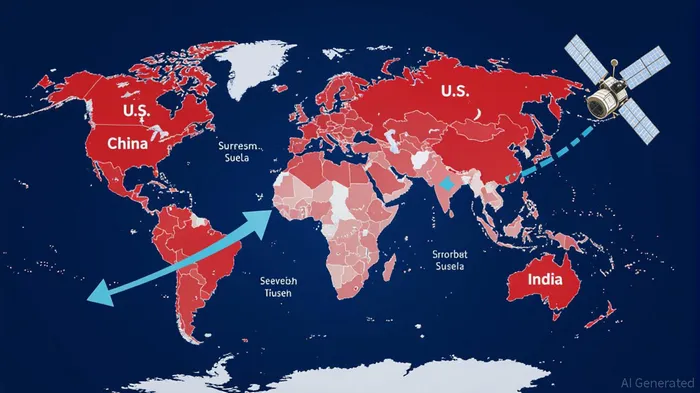
Global retaliation has further amplified uncertainty. Canada's economy is now projected to shrink by 2.1%, while China's retaliatory tariffs on U.S. soybeans and pork have forced agricultural exporters to pivot to underdeveloped markets in Africa and Southeast Asia. The result is a fragmented trade system where reciprocity is the new currency, and flexibility is the only competitive advantage.
Sector-Specific Adaptation: Winners, Losers, and Transformers
1. Manufacturing: Reshoring and Automation
The 25% tariffs on Mexican and Chinese imports have accelerated nearshoring trends, with U.S. manufacturers investing heavily in automation to offset labor costs. Companies like Caterpillar (CAT) and 3M (MMM) have shifted production to domestic facilities, leveraging tax incentives and a 12% surge in industrial robotics adoption. However, overexposed stocks such as Steel Dynamics (STLD) and Alcoa (AA) face margin compression due to supply chain bottlenecks and retaliatory tariffs.
2. Agriculture: Tech-Driven Resilience
U.S. agribusinesses have lost 12% of their Mexican soybean export markets, but the sector is adapting through advanced agri-tech. Platforms like Farmonaut and John Deere (DE)'s AI-driven precision agriculture tools are enabling farmers to optimize yields and reduce input costs. Yet, overreliance on imported machinery and fertilizers (subject to 10–25% tariffs) remains a vulnerability for mid-sized farms.
3. Technology: Supply Chain Diversification and R&D
The 145% tariff on Chinese electronics has forced tech firms to diversify production to Vietnam, India, and Mexico. Intel (INTC) and Samsung (SSNLF) have expanded chip fabrication in the U.S., while Apple (AAPL) has shifted 30% of iPhone production to India. However, component costs for semiconductors and rare earth materials remain volatile.
Overexposed Sectors and Strategic Hedging
- Aluminum and Steel: These sectors face direct exposure to retaliatory tariffs and overcapacity risks. Investors should monitor Kaiser Aluminum (KALU) and Nucor (NUE) for margin stability.
- Pharmaceuticals: Tariffs on medical devices and active pharmaceutical ingredients (APIs) have driven up costs for companies like Pfizer (PFE).
- Emerging Markets: While India and Vietnam gain from U.S. offshoring, Brazil and Mexico face capital outflows due to retaliatory measures. Currency volatility in these markets warrants hedging via forwards or ETFs.
Investment Strategies for a Protectionist Era
- Geographic Diversification: Reduce U.S.-centric exposure by investing in markets less entangled in Trump's tariff web, such as India and Indonesia.
- Resilient Sectors: Prioritize companies with pricing power and R&D pipelines, including semiconductors (NVDA), logistics (COST), and agri-tech (DE).
- Hedging Tools: Use currency options to mitigate emerging market risks and equity puts to protect against sector-specific downturns.
- Long-Term Positioning: Allocate to automation (e.g., ABB (ABB)) and domestic energy (e.g., NextEra Energy (NEE)), which benefit from reshoring trends.
Conclusion: Navigating the New Normal
Trump's global tariff shock has reshaped trade dynamics, creating both headwinds and opportunities. While short-term pain is evident in consumer prices and employment, long-term structural shifts—toward automation, regional supply chains, and tech-driven resilience—offer a blueprint for adaptation. For investors, the key lies in balancing risk mitigation with strategic foresight, capitalizing on sectors poised to thrive in a world where protectionism is the new norm.

Delivering real-time insights and analysis on emerging financial trends and market movements.
Latest Articles
Stay ahead of the market.
Get curated U.S. market news, insights and key dates delivered to your inbox.






Comments
No comments yet