
Trump’s GENIUS Act Strengthens Demand for Graphite Network’s TradFi-Grade Blockchain Infrastructure
 Aime Summary
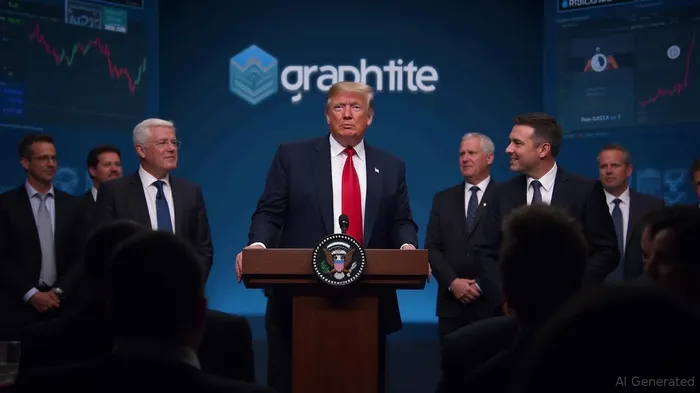
President Donald Trump signed the GENIUS Act into law on July 18, 2025, establishing the first federal regulatory framework for stablecoins in the U.S. The bipartisan legislation (308–122) mandates that stablecoins be fully backed by liquid reserves such as U.S. dollars or short-term Treasuries. It requires monthly public disclosures and annual audits for issuers with over $50 billion in market cap while enforcing anti-money laundering compliance. The Act also introduces a dual oversight model, with federal agencies like the OCC regulating large issuers and state regulators handling smaller ones. Foreign issuers must comply with U.S. rules to operate, and lawmakers are prohibited from profiting directly from stablecoin holdings. The legislation prioritizes stablecoin holder rights in bankruptcy proceedings and bans deceptive terms like “FDIC-insured” [1].
Graphite Network, a reputation-based Layer-1 blockchain launched in January 2025, is gaining traction amid this regulatory shift. The platform’s native token, $@G, was listed on a major centralized exchange just days after the Act’s passage, signaling renewed interest in infrastructure aligned with regulatory expectations. Graphite Network’s architecture includes a Proof-of-Authority (PoA) Polymer 2.0 consensus, processing 1,400 transactions per second with under-10-second confirmations. Its Ethereum-compatible virtual machine supports Solidity-based smart contracts, enabling seamless Layer-2 application development [1].
The Act’s emphasis on compliance and transparency aligns closely with Graphite Network’s design. The platform integrates zero-knowledge-based KYC verification, allowing users to prove identity without revealing private data. Its Trust Score system dynamically assesses on-chain behavior, verification status, and account activity to determine credibility. A one-user, one-account policy prevents multi-account abuse, while transaction filters let users interact based on criteria like KYC status or minimum Trust Scores. Node operators earn native rewards to sustain decentralized infrastructure, and the Bank Integration initiative aims to bridge traditional banking systems with blockchain networks [1].
The GENIUS Act’s requirements—such as full reserve backing, AML compliance, and tiered regulatory scrutiny—mirror Graphite Network’s core principles. The platform’s interoperability and high-speed throughput position it to support stablecoin clearing, settlement, and liquidity routing. With stablecoins now under formal oversight, infrastructure that enforces identity, auditability, and trust is becoming critical. The $@G listing on a top-tier exchange coincided with heightened institutional and retail demand for blockchain solutions that meet emerging regulatory standards. This timing reinforces Graphite Network’s appeal as an enterprise-grade infrastructure provider for compliant digital finance [1].
The Act marks a pivotal shift in how the U.S. regulates stablecoins, testing whether blockchain infrastructure can operate under real-world rules. Graphite Network’s focus on transparency and permissioned access demonstrates readiness for this transition. As the regulatory landscape evolves, projects prioritizing compliance and utility—like Graphite Network—are likely to see increased adoption. The $@G listing further broadens the platform’s accessibility, aligning its growth with the demand for infrastructure that bridges traditional finance and decentralized systems [1].
Source: [1] [Trump’s GENIUS Act Strengthens Demand for Graphite Network’s TradFi-Grade Blockchain Infrastructure] [https://coinmarketcap.com/community/articles/688455714e1e2911e4118eb1/]

Stay ahead of the market.
Get curated U.S. market news, insights and key dates delivered to your inbox.


AInvest
PRO
AInvest
PRO



Comments
No comments yet