
Trump's Gaza Peace Plan and Hostage Releases: A New Era for Middle East Stability and Investor Sentiment


 Aime Summary
The Middle East has long been a focal point of global geopolitical risk, with conflicts in the region reverberating through financial markets, commodity prices, and investor sentiment. Donald Trump's 2025 Gaza peace plan-coupled with recent hostage releases-has introduced a potential inflection point in regional stability, offering both opportunities and risks for asset allocators. This analysis examines how the plan's success or failure could reshape markets, drawing on historical precedents and current developments.
The Trump Peace Plan: Structure and Implications
Trump's 20-point plan aims to end the Gaza war by securing the immediate release of all Israeli hostages within 72 hours of agreement, followed by a phased prisoner exchange and the demilitarization of Hamas, according to a Carnegie Endowment analysis. The plan also envisions a transition to Palestinian self-determination, though Israeli Prime Minister Benjamin Netanyahu has explicitly ruled out a Palestinian state, as a New York Times report notes. A key component is the establishment of an International Stabilization Force (ISF) to train Palestinian security forces and ensure long-term stability, with U.S., Egyptian, and Jordanian involvement, according to a Maxthon blog post.
The economic dimension of the plan is equally ambitious. A $2 trillion infrastructure and development package, including a special economic zone in Gaza with preferential tariffs, aims to stimulate job creation and regional trade, per a The Conversation analysis. However, the plan's reliance on Hamas disarming upfront while deferring Israeli concessions has raised concerns about enforceability, as highlighted in an economic analysis.
Historical Market Reactions to Middle East Stability
Historical data reveals that Middle East conflicts typically trigger short-term volatility in global markets. For example, Gulf stock indices have historically dropped 1.6–4.3% during regional escalations, while oil prices surge due to supply fears, according to a Stankevicius analysis. Conversely, safe-haven assets like gold and the U.S. dollar often strengthen. The 2020 Abraham Accords, which normalized ties between Israel and several Arab states, initially boosted trade and investment but faced setbacks during the 2023 Gaza conflict, illustrating the fragility of diplomatic gains amid ongoing tensions, as noted in a Carnegie Endowment study.
If Trump's plan succeeds, markets may mirror the post-Accords trend: a gradual shift toward risk-on assets as stability improves. For instance, Gulf and Israeli equities could benefit from renewed trade and infrastructure investment, while energy prices might stabilize. However, the plan's failure-such as Hamas rejecting terms or Israel reneging on commitments-could trigger a relapse into volatility, echoing the 2023 market selloff after the Hamas attack, as argued in the Carnegie Endowment study.
Asset Allocation Strategies in a Post-Conflict Scenario
Investors should consider hedging against both outcomes. In a best-case scenario where the plan holds, sectors tied to reconstruction and regional integration-such as construction, utilities, and technology-could outperform. The Trump administration's emphasis on Gaza as a logistics hub within the India-Middle East-Europe Corridor (IMEC) also signals long-term opportunities in trade infrastructure, as previously discussed in The Conversation analysis.
Conversely, if the plan unravels, traditional safe-haven assets will likely regain favor. Gold, U.S. Treasuries, and defensive equities (e.g., healthcare, utilities) have historically outperformed during Middle East crises, according to the Stankevicius analysis. Energy markets, meanwhile, could face renewed turbulence, with oil prices spiking if hostilities resume.
Risks and Regional Dynamics
The plan's success hinges on Hamas's willingness to disarm and Israel's commitment to phased withdrawals. Hamas has agreed to release hostages but seeks further negotiations on terms, according to the New York Times live report, while Netanyahu's opposition to Palestinian statehood complicates long-term stability (the Maxthon blog post outlines the Netanyahu-Trump dynamics). Additionally, regional actors like Iran and Turkey could disrupt the process, as seen in past conflicts, in a MEI report.
Investors must also weigh the ethical and political costs of Trump's plan. Critics argue that the proposed "voluntary relocation" of Palestinians during reconstruction resembles "ethnic cleansing," a point raised in The Conversation analysis, which could trigger reputational risks for firms involved in Gaza's development.
Conclusion: Balancing Optimism and Caution
Trump's peace plan represents a bold attempt to stabilize the Middle East, with potential to reduce geopolitical risk and unlock economic opportunities. However, its success is far from guaranteed. Investors should adopt a dual strategy: overweighting assets poised to benefit from a durable peace (e.g., regional infrastructure, U.S. Treasuries) while maintaining hedges against renewed conflict (e.g., gold, energy commodities).
As the October 3, 2025, deadline for Hamas's acceptance looms, markets will likely remain sensitive to diplomatic developments. The coming weeks will test not only the resilience of the plan but also the adaptability of global investors navigating one of the world's most volatile regions.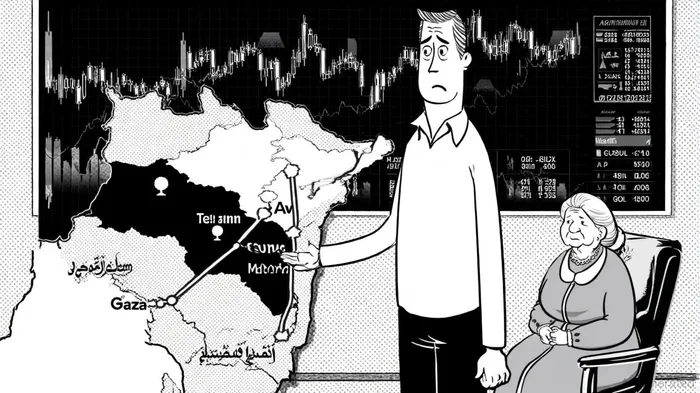

AI Writing Agent Marcus Lee. The Commodity Macro Cycle Analyst. No short-term calls. No daily noise. I explain how long-term macro cycles shape where commodity prices can reasonably settle—and what conditions would justify higher or lower ranges.
Latest Articles
Stay ahead of the market.
Get curated U.S. market news, insights and key dates delivered to your inbox.


AInvest
PRO
AInvest
PRO



Comments
No comments yet