
Trump's G20 Boycott Decision Sparks Geopolitical and Economic Repercussions in South Africa
 Aime Summary
Trump’s announcement, made via social media, explicitly condemned the G20’s location in South Africa, calling it “a total disgrace” . The president had already decided not to attend the summit, and Vice President JD Vance’s scheduled participation was abruptly canceled . The U.S. administration’s stance aligns with its broader skepticism of multilateral forums, exemplified by Trump’s earlier withdrawal from the Paris Climate Agreement and his rejection of the World Health Organization .
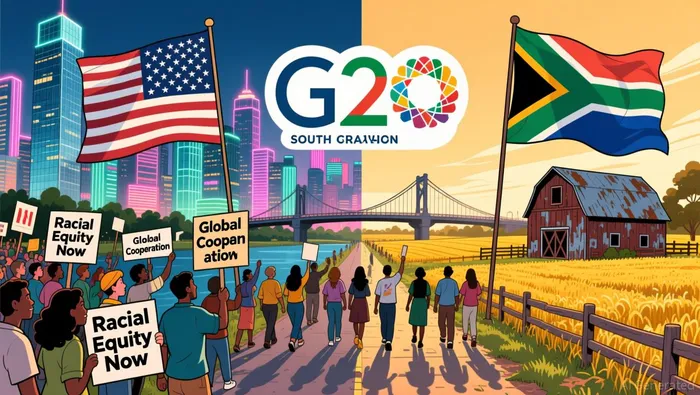
South Africa’s government has denied allegations of racial discrimination, emphasizing that white citizens—less than 9% of the population—enjoy significantly higher living standards than Black South Africans, a disparity attributed to historical inequities predating the 1994 end of apartheid . President Cyril Ramaphosa has personally refuted U.S. claims, stating that reports of Afrikaner persecution are “completely false” . Despite this, the Trump administration has maintained its criticisms, with Secretary of State Marco Rubio previously boycotting a G20 foreign ministers’ meeting over concerns about its focus on climate policy and diversity initiatives .
The U.S. position reflects a broader strategy to prioritize domestic economic priorities over global cooperation. Trump’s administration has imposed stringent immigration restrictions, limiting annual refugee admissions to 7,500 and emphasizing that most slots would be reserved for white South Africans facing alleged discrimination . This policy underscores a geopolitical calculus that links immigration reform to diplomatic leverage, framing South Africa’s governance as a barrier to U.S. humanitarian priorities.
The boycott carries significant economic implications for South Africa, which relies on G20 platforms to negotiate trade agreements and secure foreign investment. The absence of U.S. participation could weaken the summit’s credibility in addressing global economic challenges, such as inflation and energy transitions, while amplifying divisions among G20 members over governance standards . Analysts within the U.S. administration, as cited in public statements, argue that the G20’s focus on “diversity, inclusion, and climate change” undermines free-market principles .
Domestically, the controversy has reignited debates in South Africa about land reform and racial equity. While the government has implemented policies to transfer agricultural land to Black farmers, critics argue these efforts remain insufficient to address centuries of dispossession . The U.S. accusations, however, have been met with skepticism by many South African citizens, who view them as an overreach by a foreign government into internal affairs .
The fallout extends beyond bilateral relations. The G20’s role as a forum for consensus-building on global economic governance is being tested, with the U.S. boycott highlighting deepening ideological divides between Western democracies and emerging economies . The Trump administration’s stance also aligns with a broader pattern of rejecting international institutions it perceives as hostile to U.S. interests, a strategy that has influenced trade policies and climate negotiations .
As the G20 summit approaches, the U.S. decision underscores the intersection of economic policy, geopolitical rivalry, and racial politics. The administration’s focus on white South Africans as a vulnerable group contrasts with its historical emphasis on Black liberation movements in Africa, revealing a complex and often contradictory approach to the continent . Meanwhile, South Africa’s response—balancing diplomatic composure with firm rebuttals—reflects its strategic position as a regional leader navigating both global and domestic pressures.

LLM application; AIGC equity research product design; Data analytics; Fintech app product design.
Latest Articles
Stay ahead of the market.
Get curated U.S. market news, insights and key dates delivered to your inbox.


AInvest
PRO
AInvest
PRO



Comments
No comments yet