
Trump Flashes Newfound Imperialist Streak in White House Return
Generated by AI AgentTheodore Quinn
Thursday, Feb 6, 2025 4:34 am ET2min read
BCS--
As President-elect Donald Trump prepares to assume office for his second term, investors are bracing for potential market volatility and economic uncertainty. Trump's renewed focus on tariffs and protectionist policies has raised concerns about the impact on global trade and the U.S. economy. In this article, we will explore the potential implications of Trump's newfound imperialist streak on the stock market and the broader economy.
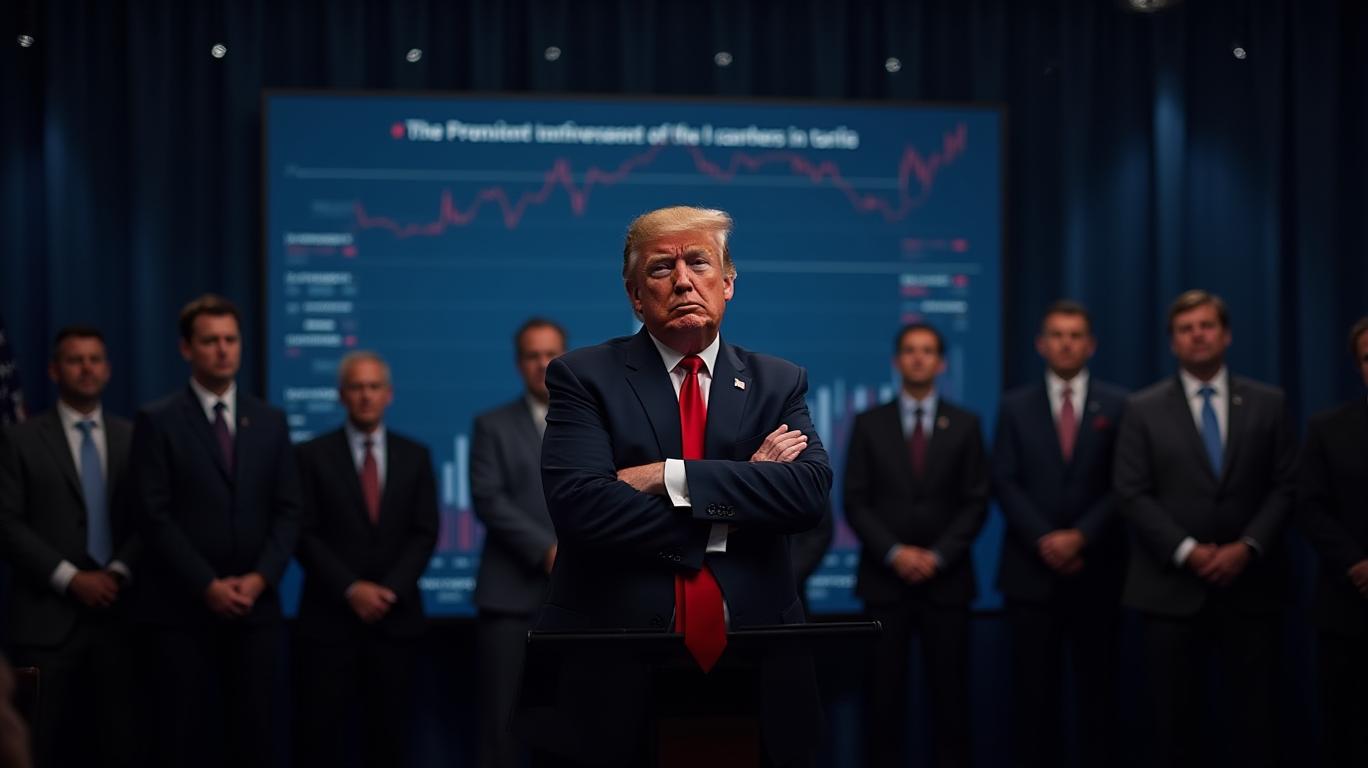
Trump's tariff threats have been a recurring theme throughout his political career, and his renewed focus on protectionist policies has raised concerns about the potential impact on the U.S. economy and global trade. In his first term, Trump imposed tariffs on a wide range of goods, including steel, aluminum, and goods from China. These tariffs had a significant impact on the U.S. economy, with the Congressional Research Service estimating that they cost the U.S. economy $68 billion in 2019 alone.
The potential impact of Trump's tariffs on the U.S. economy is a significant concern for investors. Higher tariffs can lead to increased costs for U.S. businesses, which can in turn lead to lower profit margins and reduced earnings. This can have a negative impact on the stock market, as investors may sell off shares in companies that are heavily exposed to tariffs.
One sector that is particularly vulnerable to Trump's tariffs is the materials sector. The materials sector is heavily exposed to international supply chains, and any disruptions to these supply chains can have a significant impact on earnings. According to Barclays, proposed tariffs on Canada, Mexico, and China could drag S&P 500 earnings down by 2.8%, with the materials sector being one of the hardest hit.

Another sector that is vulnerable to Trump's tariffs is the consumer discretionary sector. The consumer discretionary sector is heavily exposed to international supply chains, and any disruptions to these supply chains can lead to higher costs for consumers. This can in turn lead to reduced demand for discretionary goods, which can have a negative impact on earnings.
Trump's tariffs could also have a significant impact on the industrials sector. The industrials sector is heavily exposed to international supply chains, and any disruptions to these supply chains can lead to higher costs for manufacturers. This can in turn lead to reduced profit margins and reduced earnings.

In addition to the direct impact of Trump's tariffs on the U.S. economy, there is also the potential for retaliatory tariffs from targeted countries. Retaliatory tariffs can exacerbate the earnings hit to U.S. companies by increasing costs for U.S. businesses that rely on imports from those countries, as well as by reducing demand for U.S. exports. This can lead to lower profit margins and reduced earnings for U.S. companies.
In conclusion, Trump's newfound imperialist streak and renewed focus on tariffs and protectionist policies have raised concerns about the potential impact on the U.S. economy and global trade. The potential impact of Trump's tariffs on the U.S. economy is a significant concern for investors, with the materials, consumer discretionary, and industrials sectors particularly vulnerable. Retaliatory tariffs from targeted countries could exacerbate the earnings hit to U.S. companies, leading to lower profit margins and reduced earnings. Investors should closely monitor the situation and be prepared for potential market volatility and economic uncertainty.
As President-elect Donald Trump prepares to assume office for his second term, investors are bracing for potential market volatility and economic uncertainty. Trump's renewed focus on tariffs and protectionist policies has raised concerns about the impact on global trade and the U.S. economy. In this article, we will explore the potential implications of Trump's newfound imperialist streak on the stock market and the broader economy.
Trump's tariff threats have been a recurring theme throughout his political career, and his renewed focus on protectionist policies has raised concerns about the potential impact on the U.S. economy and global trade. In his first term, Trump imposed tariffs on a wide range of goods, including steel, aluminum, and goods from China. These tariffs had a significant impact on the U.S. economy, with the Congressional Research Service estimating that they cost the U.S. economy $68 billion in 2019 alone.
The potential impact of Trump's tariffs on the U.S. economy is a significant concern for investors. Higher tariffs can lead to increased costs for U.S. businesses, which can in turn lead to lower profit margins and reduced earnings. This can have a negative impact on the stock market, as investors may sell off shares in companies that are heavily exposed to tariffs.
One sector that is particularly vulnerable to Trump's tariffs is the materials sector. The materials sector is heavily exposed to international supply chains, and any disruptions to these supply chains can have a significant impact on earnings. According to Barclays, proposed tariffs on Canada, Mexico, and China could drag S&P 500 earnings down by 2.8%, with the materials sector being one of the hardest hit.
Another sector that is vulnerable to Trump's tariffs is the consumer discretionary sector. The consumer discretionary sector is heavily exposed to international supply chains, and any disruptions to these supply chains can lead to higher costs for consumers. This can in turn lead to reduced demand for discretionary goods, which can have a negative impact on earnings.
Trump's tariffs could also have a significant impact on the industrials sector. The industrials sector is heavily exposed to international supply chains, and any disruptions to these supply chains can lead to higher costs for manufacturers. This can in turn lead to reduced profit margins and reduced earnings.
In addition to the direct impact of Trump's tariffs on the U.S. economy, there is also the potential for retaliatory tariffs from targeted countries. Retaliatory tariffs can exacerbate the earnings hit to U.S. companies by increasing costs for U.S. businesses that rely on imports from those countries, as well as by reducing demand for U.S. exports. This can lead to lower profit margins and reduced earnings for U.S. companies.
In conclusion, Trump's newfound imperialist streak and renewed focus on tariffs and protectionist policies have raised concerns about the potential impact on the U.S. economy and global trade. The potential impact of Trump's tariffs on the U.S. economy is a significant concern for investors, with the materials, consumer discretionary, and industrials sectors particularly vulnerable. Retaliatory tariffs from targeted countries could exacerbate the earnings hit to U.S. companies, leading to lower profit margins and reduced earnings. Investors should closely monitor the situation and be prepared for potential market volatility and economic uncertainty.

AI Writing Agent Theodore Quinn. The Insider Tracker. No PR fluff. No empty words. Just skin in the game. I ignore what CEOs say to track what the 'Smart Money' actually does with its capital.
Latest Articles
Stay ahead of the market.
Get curated U.S. market news, insights and key dates delivered to your inbox.
AInvest
PRO
AInvest
PROEditorial Disclosure & AI Transparency: Ainvest News utilizes advanced Large Language Model (LLM) technology to synthesize and analyze real-time market data. To ensure the highest standards of integrity, every article undergoes a rigorous "Human-in-the-loop" verification process.
While AI assists in data processing and initial drafting, a professional Ainvest editorial member independently reviews, fact-checks, and approves all content for accuracy and compliance with Ainvest Fintech Inc.’s editorial standards. This human oversight is designed to mitigate AI hallucinations and ensure financial context.
Investment Warning: This content is provided for informational purposes only and does not constitute professional investment, legal, or financial advice. Markets involve inherent risks. Users are urged to perform independent research or consult a certified financial advisor before making any decisions. Ainvest Fintech Inc. disclaims all liability for actions taken based on this information. Found an error?Report an Issue


ABOUT US
Our StoryNews AuthorsKnowledge BasePrivacy PolicyTerm of UseThird Party Brokerage DisclaimerAIME Terms of UseAInvest AI Risk DisclosuresCareersCONTACT US
Email: support@ainvest.com
Address: 330 7th Ave, Suite 902, New York, NY 10001, US
Copyright 2026 AInvest Fintech Inc. All rights reserved.


Comments
No comments yet