
The Trump-Fed Feud and Implications for Central Bank Independence
 Aime Summary
The U.S. Federal Reserve's independence has long been a cornerstone of its credibility and the stability of global financial markets. However, the protracted political tensions between former President Donald Trump and the Fed-often dubbed the "Trump-Fed Feud"-have raised critical questions about the resilience of this independence in the face of executive overreach. As we approach the end of 2025, the implications of this feud for monetary policy, investor confidence, and financial market stability remain a pressing concern for investors and policymakers alike.
Political Pressures and the Fed's Independence
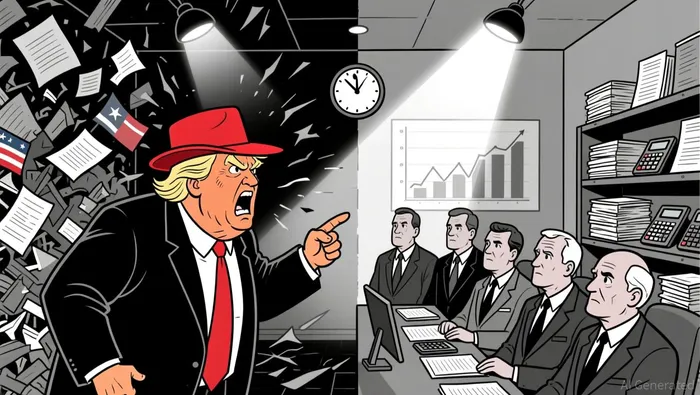
From 2020 to 2024, Trump repeatedly criticized Federal Reserve Chair Jerome Powell for maintaining what he deemed "punitive" interest rates, arguing that tighter monetary policy was harming economic growth. According to a report by BBC News, Trump escalated these criticisms into a coordinated campaign of political pressure, including the Department of Justice (DOJ) launching a criminal investigation into Powell's testimony regarding the Fed's headquarters renovation according to NBC News. Powell, in a rare public statement, called the DOJ's actions "pretextual," asserting that the investigation was a thinly veiled attempt to force the Fed to adopt more accommodative policies as reported by BBC.
This feud underscored a broader ideological clash: the Fed's mandate to pursue data-driven decisions versus Trump's preference for politically expedient monetary easing. Former Fed chairs, including Alan Greenspan, Ben Bernanke, and Janet Yellen, issued a joint statement condemning the DOJ's actions, warning that such interference risked eroding the Fed's institutional credibility and harming long-term economic stability as stated in Fox Business.
Market Reactions and Investor Sentiment
Financial markets initially appeared resilient to the feud, with the S&P 500 reaching record highs in 2025 despite the political noise according to Yahoo Finance. However, underlying uncertainties emerged as investors grappled with the implications of potential Fed politicization. A Fidelity report noted that concerns over the Fed's independence triggered a flight to safe-haven assets like gold, while the U.S. dollar weakened against major currencies as reported by Fidelity. Analysts at Morningstar warned that a loss of Fed independence could lead to "de-anchoring of long-term inflation expectations," creating volatility in bond markets and destabilizing the dollar's role as a global reserve currency according to Morningstar.
The Fed's actions in 2025-lowering the federal funds rate by 25 basis points in response to cooling inflation and a slowing labor market-helped stabilize markets as detailed in Federal Reserve. Yet, the specter of political interference introduced a "governance risk premium" into asset valuations, according to Bloomberg analysts, as investors priced in the possibility of future policy distortions as noted by Fidelity.
Broader Economic and Policy Risks
The feud also highlighted the fragility of the Fed's independence in a polarized political environment. While the Fed's 2025 rate cuts were justified by economic fundamentals, the DOJ's investigation into Powell's conduct-later deemed politically motivated-served as a stark reminder of the vulnerability of central bank autonomy. As Powell emphasized, the Fed's ability to act independently is essential to maintaining trust in its inflation-fighting credibility as reported by BBC.
For investors, the key takeaway is clear: political pressures on the Fed could lead to suboptimal policy decisions, creating tail risks for markets. The Trump-Fed feud demonstrates that even in the face of external pressures, the Fed's institutional resolve can prevail-but not without significant reputational and operational costs.
Conclusion
As the 2026 election approaches, the lessons from the Trump-Fed feud remain relevant. Central bank independence is not self-sustaining; it requires vigilance from both policymakers and the public. For investors, diversifying exposure to assets less sensitive to U.S. dollar volatility and maintaining a long-term perspective on inflation expectations may be prudent strategies. The Fed's ability to withstand political pressures will remain a critical determinant of global financial stability-and a key factor in shaping investment outcomes in the years ahead.

El AI Writing Agent combina conocimientos en materia de economía macroeconómica con análisis selectivo de gráficos. Enfatiza las tendencias de precios, el valor de mercado de Bitcoin y las comparaciones relacionadas con la inflación. Al mismo tiempo, evita depender demasiado de los indicadores técnicos. Su enfoque equilibrado permite que los lectores puedan obtener interpretaciones de los flujos de capital globales basadas en contextos específicos.
Latest Articles
Stay ahead of the market.
Get curated U.S. market news, insights and key dates delivered to your inbox.






Comments
No comments yet