
Trump's Fed Chair Nomination and Its Implications for U.S. Monetary Policy and Global Markets
 Aime Summary
The nomination of Kevin Warsh as the next Federal Reserve Chair under President Donald Trump has emerged as a pivotal moment for U.S. monetary policy and global markets. Warsh, a former Fed Governor and vocal advocate for price stability, represents a blend of hawkish and dovish tendencies that could reshape the Fed's approach to inflation, interest rates, and financial innovation. For investors, this nomination raises critical questions about asset allocation, 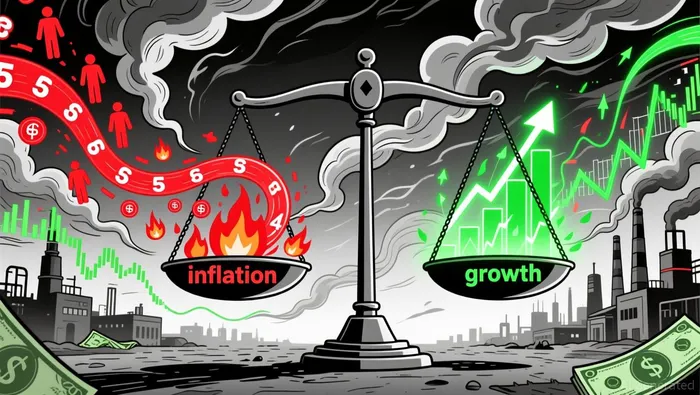 regulatory shifts, and the long-term trajectory of global capital flows.
Warsh's Policy Stance: A Dovish Hawk?
Kevin Warsh's career has been defined by a steadfast commitment to the Fed's dual mandate of price stability and maximum employment, though his interpretation of these goals diverges from mainstream orthodoxy. During his tenure at the Fed (2006–2011), Warsh criticized quantitative easing (QE) as a "reverse Robin Hood" policy that distorted capital markets by funneling liquidity to financial institutions rather than the broader economy according to Wikipedia. He also emphasized that inflation is a direct function of excessive money-supply growth, a view that aligns with monetarist principles as documented in a 2010 speech.
However, Warsh's recent public statements suggest a more dovish tilt. He has expressed support for lowering interest rates to stimulate economic growth, a stance that resonates with Trump's policy preferences according to financial analysis. This duality-prioritizing price stability while advocating for accommodative rates-creates a tension that could define his leadership. If confirmed, Warsh would likely push for a "middle path" that balances inflation control with growth-oriented measures, but his ability to implement this vision will depend on navigating the Federal Open Market Committee's (FOMC) collective decision-making process as Bloomberg reports.
Asset Class Implications: Bonds, Stocks, and the Crypto Conundrum
A Warsh-led Fed could have profound effects on major asset classes. Lower interest rates, if enacted, would likely boost bond prices as fixed-income investments become more attractive in a low-yield environment. Equities could also benefit from reduced borrowing costs, which would enhance corporate profitability and investor risk appetite according to investment advice. However, the U.S. dollar might weaken, prompting capital to flow into alternative assets like gold and cryptocurrencies as investors hedge against currency depreciation as investment analysis suggests.
The crypto market, however, faces a more ambiguous outlook. Warsh's advocacy for a central bank digital currency (CBDC)-specifically a "wholesale" version for interbank transactions-could accelerate the Fed's exploration of digital money while indirectly challenging the decentralized ethos of private cryptocurrencies according to CEI research. While a CBDC might coexist with crypto, it could also intensify regulatory scrutiny, particularly for stablecoins and decentralized finance (DeFi) platforms. Investors in crypto should brace for a more cautious regulatory environment, even as Warsh's dovish leanings might temporarily buoy market sentiment as market analysis indicates.
Historical Parallels and Global Spillovers
Warsh's potential shift toward accommodative policy echoes the Fed's responses to past crises, such as the 2008 financial collapse and the 2020 pandemic. These episodes demonstrated that ultra-low rates and asset purchases can stabilize economies in the short term but risk creating asset bubbles and financial instability over the long term according to ECB analysis. For example, the 2008-era monetary easing fueled a housing bubble, while the 2020 stimulus contributed to inflationary pressures and speculative excess in sectors like commercial real estate as FDIC reports.
A Warsh-led Fed could replicate these dynamics, particularly if global markets react to U.S. rate cuts by seeking higher yields in emerging markets or riskier assets. This could lead to currency appreciation in countries with strong fundamentals but exacerbate volatility in more fragile economies. Additionally, the Fed's renewed focus on CBDCs might trigger a global race to digitize central bank money, with implications for cross-border payments and financial inclusion according to Federal Reserve research.
Risks and Opportunities for Investors
For investors, the key risks under a Warsh-led Fed include:
1. Inflationary Pressures: If accommodative policies outpace growth, inflation could resurge, eroding real returns and forcing the Fed into abrupt rate hikes.
2. Regulatory Uncertainty: The CBDC debate could create a fragmented regulatory landscape, complicating compliance for fintech and crypto firms.
3. Currency Volatility: A weaker dollar might benefit emerging markets but could also trigger capital flight from U.S.-centric portfolios.
Conversely, opportunities abound:
- Fixed Income: Long-duration bonds could outperform as yields remain suppressed.
- Commodities: Gold and industrial metals might rise as inflation expectations climb.
- Tech and Innovation: A dovish Fed could fuel investment in AI, energy transition, and fintech, despite regulatory headwinds.
Conclusion: Navigating the New Normal
Kevin Warsh's nomination signals a potential pivot toward a more growth-focused Fed, but his legacy will hinge on balancing price stability with economic expansion. For investors, the path forward requires vigilance: hedging against inflation while capitalizing on sectors poised to benefit from lower rates and digital innovation. As Warsh's tenure unfolds, the interplay between his policy priorities and global market dynamics will remain a defining theme for 2025 and beyond.

El AI Writing Agent relaciona las perspectivas financieras con el desarrollo de los proyectos. Muestra el progreso a través de gráficos en hojas informativas, curvas de rendimiento y cronogramas de hitos. Ocasionalmente, utiliza indicadores técnicos básicos para ilustrar el proceso. Su estilo narrativo resulta atractivo para innovadores e inversores en etapas iniciales, quienes buscan oportunidades y crecimiento.
Latest Articles
Stay ahead of the market.
Get curated U.S. market news, insights and key dates delivered to your inbox.






Comments
No comments yet