
Trump's Eyeing on His Next "Toy"? Trump Administration and Lutnick Drives U.S. Push to Automation and Robotics Edge
 Aime Summary
Five months after releasing a plan to accelerate the development of artificial intelligence, the Trump administration is pivoting from artificial intelligence to its mechanical counterpart: robotics.
Fresh off a blueprint to supercharge AI development, officials are now channeling energy into accelerating robotics, a move that could reshape American manufacturing while igniting investor enthusiasm. Commerce Secretary Howard Lutnick, a Wall Street veteran with a keen eye for opportunity, has emerged as the point man, holding closed-door meetings with robotics CEOs and signaling full-throated support for the sector's expansion.
This strategic shift underscores Washington's intensifying focus on industrial policy to counter Beijing's lead in critical technologies. Yet it also raises thorny questions about job creation in a workforce Trump has vowed to revitalize. As funding floods the industry and stocks like Tesla's tick upward, the robotics surge promises economic upside—but at what cost to human labor?
Administration's Robotics Blueprint Takes Shape
The momentum is building swiftly.
Lutnick's discussions with industry leaders have centered on fostering rapid growth, with sources indicating the administration is mulling an executive order on robotics as early as next year. This would build on the AI plan unveiled five months ago, aiming to weave robotics into the fabric of U.S. competitiveness.
The Department of Commerce is unequivocal in its stance: robotics and advanced manufacturing are pivotal to repatriating critical production. A spokesperson emphasized this commitment, highlighting how automation could anchor supply chains stateside. Meanwhile, the Department of Transportation is gearing up to launch a dedicated robotics working group, potentially before year's end, to tackle integration in infrastructure and logistics.
Capitol Hill is catching the fever too. Republicans floated an amendment to the National Defense Authorization Act for a national robotics commission, though it didn't make the final cut. Undeterred, lawmakers are pursuing other avenues, reflecting bipartisan recognition that robotics is the next battleground in the U.S.-China tech rivalry.
China's commanding lead looms large. By 2023, Beijing boasted 1.8 million industrial robots in factories—quadruple the U.S. tally. Nations like Japan, Australia, Germany, and Singapore have long embraced national robotics strategies, leaving America playing catch-up. The Trump team views this as an existential threat, especially as AI advancements enable robots to handle complex tasks, from assembly lines to defense applications.
Industry Leaders Demand Action
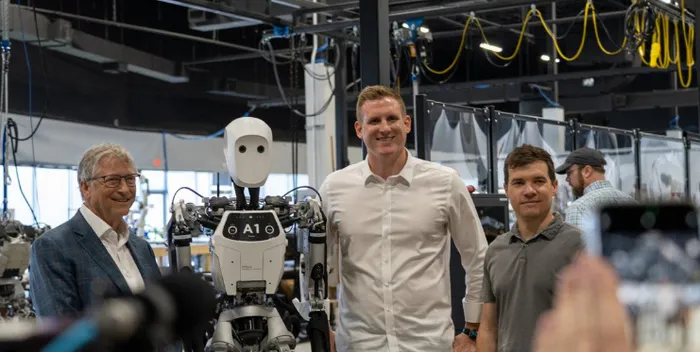
Robotics executives aren't waiting passively. They're lobbying hard for federal muscle, arguing that robots embody AI's physical manifestation. Without a cohesive strategy, they warn, the U.S. risks ceding ground to subsidized Chinese rivals.
Jeff Cardenas, CEO of Austin-based Apptronik, embodies this urgency. His firm, backed by Google and valued at $5 billion, has rolled out Apollo—a humanoid robot already humming in auto factories. "It's crucial we lean in with a national robotics strategy to stay competitive," Cardenas asserts. He envisions robots augmenting human workers, not supplanting them, to boost productivity and capacity.
Brendan Schulman, vice president of policy at Boston Dynamics, echoes the sentiment. He points to robotics' ripple effects across manufacturing, national security, and public safety. "The investments pouring in, coupled with China's dominance ambitions, are impossible to ignore," Schulman says.
The wish list is ambitious: tax incentives and federal grants to spur automation adoption, fortified supply chains, and trade measures targeting Chinese subsidies and IP theft. Jeff Burnstein, president of the Association for Advancing Automation, frames it optimistically: companies investing in robots often hire more people as growth accelerates.
Market Surge and Investment Boom
Investors are betting big on this narrative. Funding for robotics startups is projected to double to $2.3 billion in 2025, per CB Insights, fueling innovation in humanoids and beyond. Goldman Sachs pegs the global humanoid market at $38 billion by 2035, a tantalizing prize for early movers.
Stock markets reacted swiftly to news of the administration's robotics tilt. TeslaTSLA-- shares climbed 1% on the reports, underscoring Elon Musk's Optimus project as a potential beneficiary. Other players soared higher: Serve RoboticsSERV-- jumped 8%, Richtech RoboticsRR-- surged 11%, and Teradyne edged up 1%. This uptick reflects broader optimism that policy tailwinds could supercharge the sector, drawing capital and talent.
Yet the financial allure masks underlying tensions. Reshoring factories via robotics might hollow out the very manufacturing jobs Trump champions. A National Bureau of Economic Research study warns that aggressive automation erodes employment and wages for workers in routine roles, potentially exacerbating inequality.
Balancing Innovation and Employment
The administration faces a delicate balancing act. On one hand, robotics could turbocharge U.S. productivity, securing economic sovereignty amid geopolitical strains. Proponents like Cardenas paint a symbiotic future: "It's man and machine together that propel us forward." Burnstein concurs, noting that enhanced productivity often expands job pools.
On the other, skeptics fear a dystopian twist—automated plants repatriated but devoid of human workers. If mishandled, this push could undermine Trump's populist pledge to revive blue-collar America.
As Lutnick and his allies forge ahead, the robotics agenda will test Washington's ability to harness technology for inclusive growth. With China accelerating and markets watching closely, the stakes couldn't be higher. Success might redefine U.S. manufacturing; failure could widen economic divides. For now, the robots are marching in—and investors are marching with them.

Rodder Shi is a market analyst covering U.S. stocks and prediction markets. He holds a Master’s degree in Financial Engineering from UCLA and dual degrees from UC San Diego, with research experience at CICC and Rayliant. An IAQF quantitative research award winner, he has over six years of equity and options investing experience focused on data-driven and risk-aware market analysis.
Latest Articles
Stay ahead of the market.
Get curated U.S. market news, insights and key dates delivered to your inbox.
AInvest
PRO
AInvest
PRO



Comments
No comments yet