
Trump Extends China Tariff Truce for 90 Days, Easing Market Concerns
Generated by AI AgentAinvest Macro News
Monday, Aug 11, 2025 10:02 pm ET2min read
 Aime Summary
In a move to stabilize international trade relations, President Donald Trump announced a 90-day extension to the existing tariff truce with China. This decision comes as global markets watch for signs of a potential escalation in trade tensions between the world's two largest economies. The extension is seen as a temporary relief, allowing more time for negotiations aimed at reaching a permanent trade agreement.
Introduction
The announcement of the tariff truce extension plays a critical role in shaping the economic outlook, particularly in the trade-sensitive sectors. The ongoing trade discussions between the U.S. and China have significant implications for monetary policy and investment decisions, as trade policies are closely monitored by central banks and investors alike. The recent decision to extend the truce underscores the challenges in resolving trade disputes but also reflects a commitment to finding a diplomatic solution. The tariffs, which were initially set to increase, will now remain at reduced rates, providing a buffer against immediate economic disruptions.
Data Overview and Context
The tariff truce is a key indicator of the U.S.-China trade relationship, with substantial implications for global trade dynamics. The original agreement, reached in May, reduced U.S. tariffs on Chinese goods to 30% and Chinese tariffs on U.S. goods to 10%. Without the extension, tariffs could have surged to 145% on Chinese imports, a scenario that was widely feared by businesses and investors. The truce extension reflects ongoing negotiations aimed at addressing trade imbalances and improving market access. This temporary measure is critical in averting further economic strain, as global supply chains remain sensitive to tariff adjustments.
Analysis of Underlying Drivers and Implications
Key factors driving this decision include the need to stabilize markets and sustain economic growth amid ongoing geopolitical tensions. The tariff policies have been a focal point of U.S. economic strategy, aimed at reducing trade deficits and encouraging domestic production. The extension allows both nations more time to resolve complex issues, such as intellectual property rights and market access, which have been sticking points in negotiations. This move is likely to have broader implications for global trade patterns, influencing fiscal and monetary policies worldwide. If successful, the extended truce could pave the way for a more comprehensive trade agreement, mitigating risks of economic slowdown.
Policy Implications for the Federal Reserve
The Federal Reserve monitors trade policies closely as they impact economic stability and inflation. The extended truce eases pressure on the Fed to adjust interest rates in response to potential economic shocks from escalating tariffs. While the Fed remains cautious, this development provides some breathing room to assess broader economic trends without immediate disruptions from trade disputes. The Fed's approach will likely remain data-driven, focusing on underlying economic indicators to guide policy decisions.
Market Reactions and Investment Implications
The announcement of the tariff truce extension has alleviated immediate market concerns, leading to moderate gains in equities and stabilizing currency markets. Fixed income markets, particularly Treasury yields, may see reduced volatility as the risk of a trade-induced recession diminishes. For investors, this environment suggests a cautious approach, focusing on sectors less exposed to trade volatility, such as technology and domestic-focused industries. The extension also supports commodity markets, particularly those reliant on cross-border trade, by reducing uncertainty in the short term.
Conclusion & Final Thoughts
The extension of the tariff truce between the U.S. and China is a critical step in maintaining economic stability amid ongoing trade negotiations. By averting a sharp increase in tariffs, this move provides temporary relief to markets and allows for continued dialogue aimed at resolving trade disputes. Investors and policymakers will closely monitor upcoming trade talks and economic data releases to gauge the potential for a more permanent resolution. As negotiations continue, the focus will remain on achieving a balanced trade relationship that supports economic growth and stability.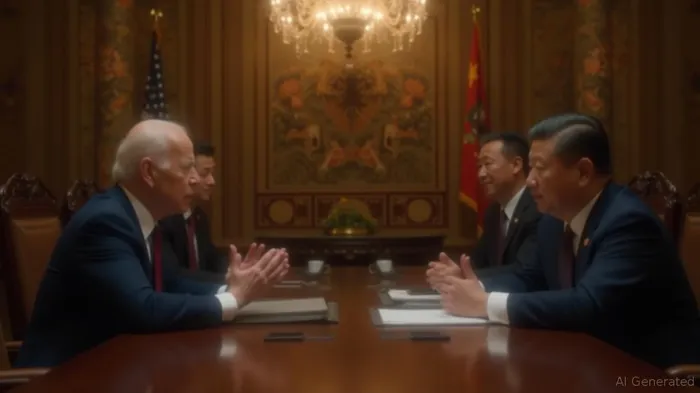
Introduction
The announcement of the tariff truce extension plays a critical role in shaping the economic outlook, particularly in the trade-sensitive sectors. The ongoing trade discussions between the U.S. and China have significant implications for monetary policy and investment decisions, as trade policies are closely monitored by central banks and investors alike. The recent decision to extend the truce underscores the challenges in resolving trade disputes but also reflects a commitment to finding a diplomatic solution. The tariffs, which were initially set to increase, will now remain at reduced rates, providing a buffer against immediate economic disruptions.
Data Overview and Context
The tariff truce is a key indicator of the U.S.-China trade relationship, with substantial implications for global trade dynamics. The original agreement, reached in May, reduced U.S. tariffs on Chinese goods to 30% and Chinese tariffs on U.S. goods to 10%. Without the extension, tariffs could have surged to 145% on Chinese imports, a scenario that was widely feared by businesses and investors. The truce extension reflects ongoing negotiations aimed at addressing trade imbalances and improving market access. This temporary measure is critical in averting further economic strain, as global supply chains remain sensitive to tariff adjustments.
Analysis of Underlying Drivers and Implications
Key factors driving this decision include the need to stabilize markets and sustain economic growth amid ongoing geopolitical tensions. The tariff policies have been a focal point of U.S. economic strategy, aimed at reducing trade deficits and encouraging domestic production. The extension allows both nations more time to resolve complex issues, such as intellectual property rights and market access, which have been sticking points in negotiations. This move is likely to have broader implications for global trade patterns, influencing fiscal and monetary policies worldwide. If successful, the extended truce could pave the way for a more comprehensive trade agreement, mitigating risks of economic slowdown.
Policy Implications for the Federal Reserve
The Federal Reserve monitors trade policies closely as they impact economic stability and inflation. The extended truce eases pressure on the Fed to adjust interest rates in response to potential economic shocks from escalating tariffs. While the Fed remains cautious, this development provides some breathing room to assess broader economic trends without immediate disruptions from trade disputes. The Fed's approach will likely remain data-driven, focusing on underlying economic indicators to guide policy decisions.
Market Reactions and Investment Implications
The announcement of the tariff truce extension has alleviated immediate market concerns, leading to moderate gains in equities and stabilizing currency markets. Fixed income markets, particularly Treasury yields, may see reduced volatility as the risk of a trade-induced recession diminishes. For investors, this environment suggests a cautious approach, focusing on sectors less exposed to trade volatility, such as technology and domestic-focused industries. The extension also supports commodity markets, particularly those reliant on cross-border trade, by reducing uncertainty in the short term.
Conclusion & Final Thoughts
The extension of the tariff truce between the U.S. and China is a critical step in maintaining economic stability amid ongoing trade negotiations. By averting a sharp increase in tariffs, this move provides temporary relief to markets and allows for continued dialogue aimed at resolving trade disputes. Investors and policymakers will closely monitor upcoming trade talks and economic data releases to gauge the potential for a more permanent resolution. As negotiations continue, the focus will remain on achieving a balanced trade relationship that supports economic growth and stability.

Stay ahead of the market.
Get curated U.S. market news, insights and key dates delivered to your inbox.


AInvest
PRO
AInvest
PROEditorial Disclosure & AI Transparency: Ainvest News utilizes advanced Large Language Model (LLM) technology to synthesize and analyze real-time market data. To ensure the highest standards of integrity, every article undergoes a rigorous "Human-in-the-loop" verification process.
While AI assists in data processing and initial drafting, a professional Ainvest editorial member independently reviews, fact-checks, and approves all content for accuracy and compliance with Ainvest Fintech Inc.’s editorial standards. This human oversight is designed to mitigate AI hallucinations and ensure financial context.
Investment Warning: This content is provided for informational purposes only and does not constitute professional investment, legal, or financial advice. Markets involve inherent risks. Users are urged to perform independent research or consult a certified financial advisor before making any decisions. Ainvest Fintech Inc. disclaims all liability for actions taken based on this information. Found an error?Report an Issue


ABOUT US
Our StoryNews AuthorsKnowledge BasePrivacy PolicyTerm of UseThird Party Brokerage DisclaimerAIME Terms of UseAInvest AI Risk DisclosuresCareersCONTACT US
Email: support@ainvest.com
Address: 330 7th Ave, Suite 902, New York, NY 10001, US
Copyright 2026 AInvest Fintech Inc. All rights reserved.


Comments
No comments yet