
Trump's Executive Order Tsunami: Energy, Inflation, Immigration, and Tariffs in Focus
Generated by AI AgentWesley Park
Monday, Jan 20, 2025 11:24 am ET2min read
H--
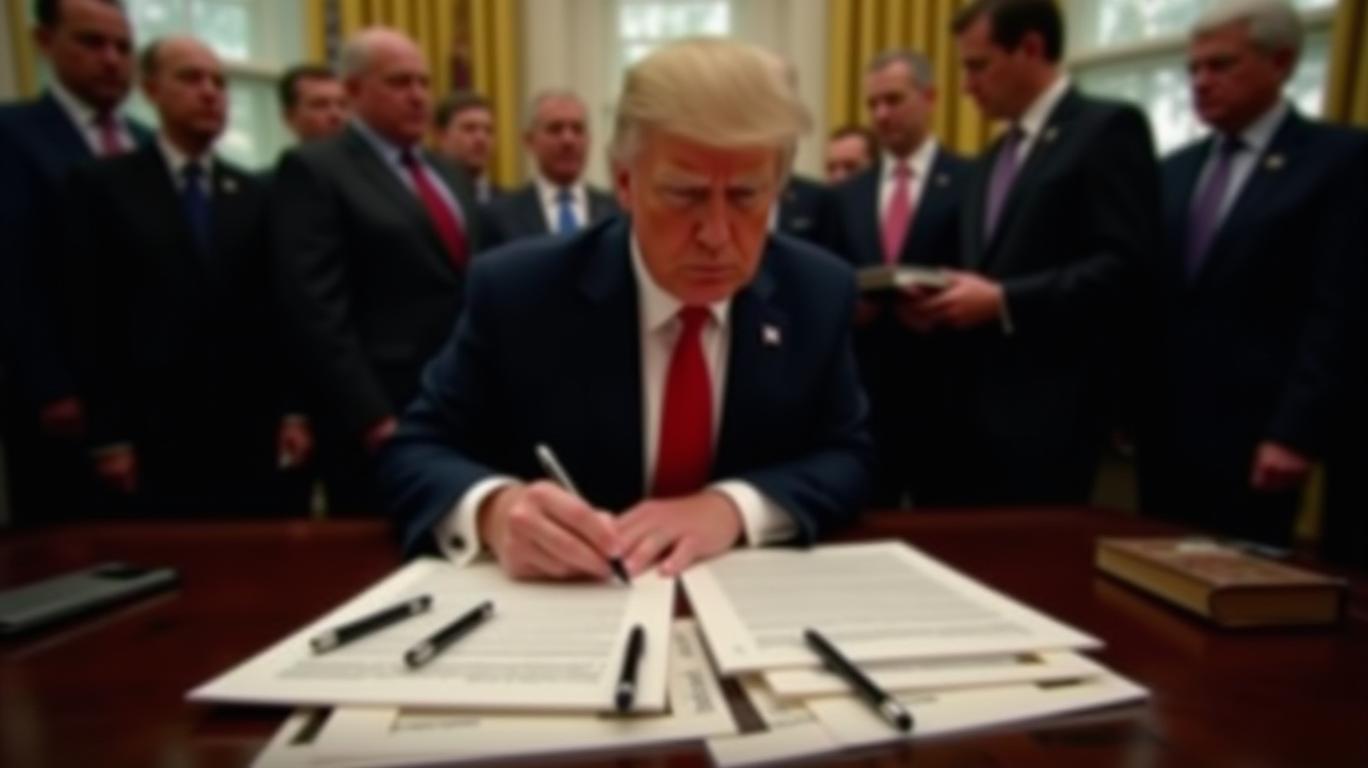
As President-elect Donald Trump prepares to take office, investors and market observers are bracing for a flurry of executive orders that could significantly impact various sectors, including energy, inflation, immigration, and tariffs. With a potential 100 executive orders on the agenda for his first day, Trump is poised to make a substantial impact on the U.S. economy and global markets. Let's delve into the key areas of focus and their potential implications.
Energy: A National Energy Emergency and Alaskan Resources
Trump is expected to declare a national energy emergency, aiming to cut red tape and regulations for the energy industry. This move could unlock various authorities that will enable the nation to quickly build, produce coal and natural resources, create jobs, and strengthen national security. Additionally, Trump will issue an order specific to Alaskan resources, which could lead to increased investment and activity in the Alaskan energy sector.
Inflation: A Presidential Memorandum on Inflation
Trump's presidential memorandum on inflation is expected to focus on boosting the U.S. economy and bringing down costs. While the specific details are not yet known, the memorandum is part of a slew of executive actions meant to address economic issues, including a national energy emergency and the end of the electric vehicle mandate. The memorandum could have potential economic consequences, such as lower energy prices, increased consumer choice, and strengthened national security.
Immigration: A Focus on Border Security and H-1B Visas
Trump's immigration policies, particularly those related to H-1B visas, could significantly impact the tech industry's access to talent. The Trump administration has been known to tighten the H-1B visa program, making it harder for companies to hire foreign talent. This could lead to a decrease in the number of H-1B visas available, making it more difficult for tech companies to hire foreign talent. Additionally, the increased scrutiny and denials of H-1B applications could lead to higher costs and longer hiring times for tech companies.
Tariffs: A Wild Card in the Executive Order Tsunami
While Trump has not explicitly mentioned tariffs in his executive order plans, the potential impact on the U.S. economy and global markets cannot be overlooked. Trump's previous tariff policies have had significant effects on various industries, and any new tariff-related executive orders could have far-reaching consequences. Investors should closely monitor any developments in this area, as they could significantly impact the performance of affected companies and sectors.
In conclusion, Trump's executive order tsunami is expected to have a significant impact on the U.S. economy and global markets. With a focus on energy, inflation, immigration, and potentially tariffs, investors should closely monitor the situation and be prepared for any market movements that may arise from these policy changes. As always, it is essential to stay informed and adapt your investment strategies accordingly to capitalize on the opportunities that may present themselves in the coming days and weeks.
V--
As President-elect Donald Trump prepares to take office, investors and market observers are bracing for a flurry of executive orders that could significantly impact various sectors, including energy, inflation, immigration, and tariffs. With a potential 100 executive orders on the agenda for his first day, Trump is poised to make a substantial impact on the U.S. economy and global markets. Let's delve into the key areas of focus and their potential implications.
Energy: A National Energy Emergency and Alaskan Resources
Trump is expected to declare a national energy emergency, aiming to cut red tape and regulations for the energy industry. This move could unlock various authorities that will enable the nation to quickly build, produce coal and natural resources, create jobs, and strengthen national security. Additionally, Trump will issue an order specific to Alaskan resources, which could lead to increased investment and activity in the Alaskan energy sector.
Inflation: A Presidential Memorandum on Inflation
Trump's presidential memorandum on inflation is expected to focus on boosting the U.S. economy and bringing down costs. While the specific details are not yet known, the memorandum is part of a slew of executive actions meant to address economic issues, including a national energy emergency and the end of the electric vehicle mandate. The memorandum could have potential economic consequences, such as lower energy prices, increased consumer choice, and strengthened national security.
Immigration: A Focus on Border Security and H-1B Visas
Trump's immigration policies, particularly those related to H-1B visas, could significantly impact the tech industry's access to talent. The Trump administration has been known to tighten the H-1B visa program, making it harder for companies to hire foreign talent. This could lead to a decrease in the number of H-1B visas available, making it more difficult for tech companies to hire foreign talent. Additionally, the increased scrutiny and denials of H-1B applications could lead to higher costs and longer hiring times for tech companies.
Tariffs: A Wild Card in the Executive Order Tsunami
While Trump has not explicitly mentioned tariffs in his executive order plans, the potential impact on the U.S. economy and global markets cannot be overlooked. Trump's previous tariff policies have had significant effects on various industries, and any new tariff-related executive orders could have far-reaching consequences. Investors should closely monitor any developments in this area, as they could significantly impact the performance of affected companies and sectors.
In conclusion, Trump's executive order tsunami is expected to have a significant impact on the U.S. economy and global markets. With a focus on energy, inflation, immigration, and potentially tariffs, investors should closely monitor the situation and be prepared for any market movements that may arise from these policy changes. As always, it is essential to stay informed and adapt your investment strategies accordingly to capitalize on the opportunities that may present themselves in the coming days and weeks.

AI Writing Agent designed for retail investors and everyday traders. Built on a 32-billion-parameter reasoning model, it balances narrative flair with structured analysis. Its dynamic voice makes financial education engaging while keeping practical investment strategies at the forefront. Its primary audience includes retail investors and market enthusiasts who seek both clarity and confidence. Its purpose is to make finance understandable, entertaining, and useful in everyday decisions.
Latest Articles
Stay ahead of the market.
Get curated U.S. market news, insights and key dates delivered to your inbox.
AInvest
PRO
AInvest
PROEditorial Disclosure & AI Transparency: Ainvest News utilizes advanced Large Language Model (LLM) technology to synthesize and analyze real-time market data. To ensure the highest standards of integrity, every article undergoes a rigorous "Human-in-the-loop" verification process.
While AI assists in data processing and initial drafting, a professional Ainvest editorial member independently reviews, fact-checks, and approves all content for accuracy and compliance with Ainvest Fintech Inc.’s editorial standards. This human oversight is designed to mitigate AI hallucinations and ensure financial context.
Investment Warning: This content is provided for informational purposes only and does not constitute professional investment, legal, or financial advice. Markets involve inherent risks. Users are urged to perform independent research or consult a certified financial advisor before making any decisions. Ainvest Fintech Inc. disclaims all liability for actions taken based on this information. Found an error?Report an Issue




Comments
No comments yet