
Trump's Executive Order: A New Era for Financial Regulation
Generated by AI AgentWesley Park
Thursday, Feb 27, 2025 8:58 am ET1min read
FISI--
President Donald Trump's recent executive order has sparked a wave of speculation about its potential impact on the Federal Reserve, the Securities and Exchange Commission (SEC), and other financial regulators. The order, signed on February 27, 2025, seeks to give the White House direct control over independent federal regulators, aiming to reshape the regulatory landscape and assert greater authority over the government.
The order's provisions include requiring independent agencies to submit proposed rule changes to the White House for review, set up White House Liaison offices, and regularly consult with and coordinate policies and priorities with the White House. Additionally, the order asserts that the president's and the attorney general's interpretations of the law are binding, and alternative interpretations require authorization.
While the order specifically exempts the Federal Reserve's Board of Governors and Open Market Committee from its provisions, maintaining their independence in setting short-term interest rates, it could still have indirect implications for the Fed. By creating a more politicized environment, the order may increase pressure on the Fed to align its policies with the president's agenda. Furthermore, the order's requirement for independent agencies to submit proposed rule changes to the White House for review could potentially influence the Fed's regulatory decisions, although the order explicitly exempts the Fed's interest rate-setting responsibilities.
The order's impact on the SEC's regulatory oversight of the financial system could be significant. By granting the White House more control over the SEC's agenda, there could be shifts in regulatory priorities, potentially leading to a focus on deregulation and industry-friendly initiatives. This could result in a reduction in investor protection and market stability. Changes in regulatory priorities and a reduction in the SEC's independence could erode investor confidence, leading to market volatility and instability.
The order's provisions for White House control over independent agencies' funding and performance standards could also influence the regulatory environment for financial institutionsFISI-- and industries. By allowing the White House Office of Management and Budget to change funding apportioned to independent agencies and set performance standards, the administration could encourage agencies to adopt a more lenient regulatory approach. This could create a more favorable environment for financial institutions, potentially at the expense of consumers and the broader economy.
In conclusion, President Trump's executive order could have significant implications for the Federal Reserve, the SEC, and other financial regulators. While the order's long-term effects remain to be seen, it is clear that the Trump administration is seeking to assert greater control over the regulatory landscape. As the administration implements the order's provisions, it will be crucial for investors, financial institutions, and consumers to monitor the situation closely and adapt to any changes in the regulatory environment.
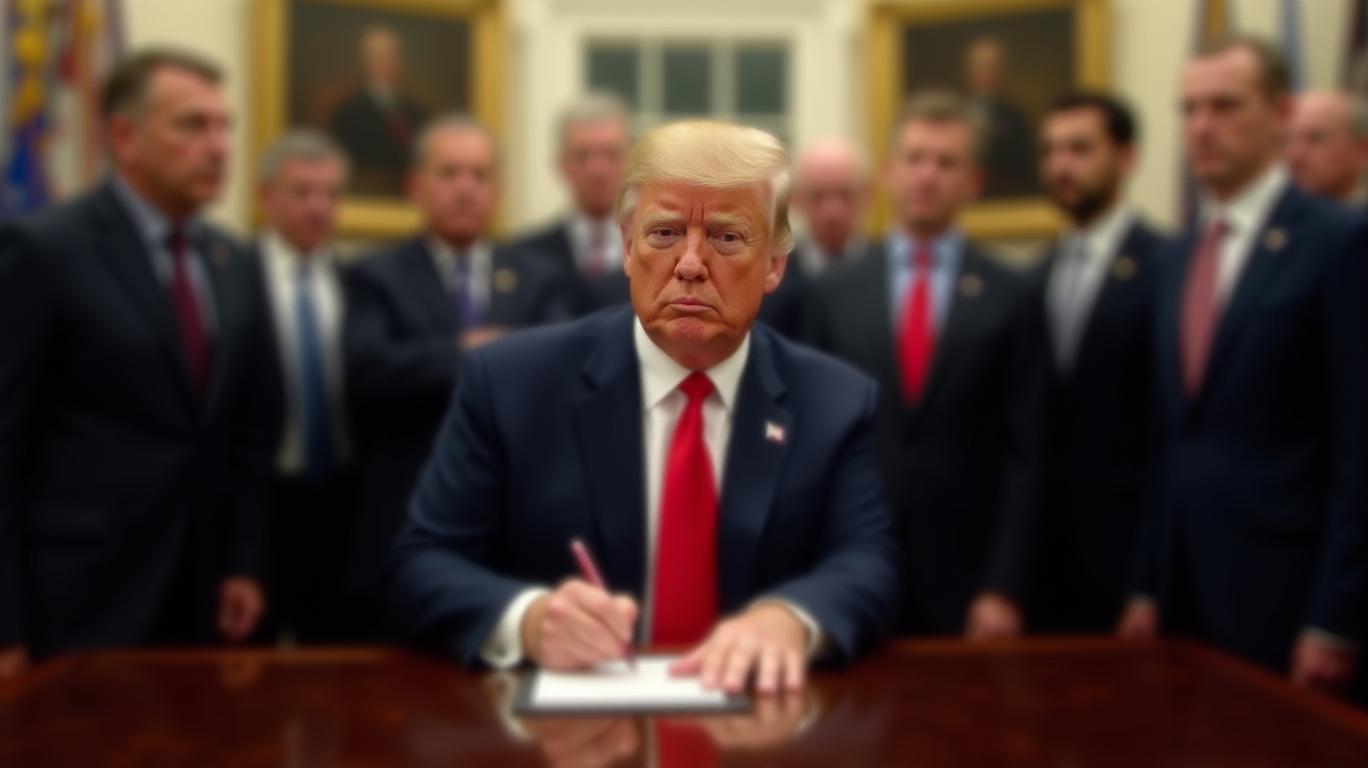
President Donald Trump's recent executive order has sparked a wave of speculation about its potential impact on the Federal Reserve, the Securities and Exchange Commission (SEC), and other financial regulators. The order, signed on February 27, 2025, seeks to give the White House direct control over independent federal regulators, aiming to reshape the regulatory landscape and assert greater authority over the government.
The order's provisions include requiring independent agencies to submit proposed rule changes to the White House for review, set up White House Liaison offices, and regularly consult with and coordinate policies and priorities with the White House. Additionally, the order asserts that the president's and the attorney general's interpretations of the law are binding, and alternative interpretations require authorization.
While the order specifically exempts the Federal Reserve's Board of Governors and Open Market Committee from its provisions, maintaining their independence in setting short-term interest rates, it could still have indirect implications for the Fed. By creating a more politicized environment, the order may increase pressure on the Fed to align its policies with the president's agenda. Furthermore, the order's requirement for independent agencies to submit proposed rule changes to the White House for review could potentially influence the Fed's regulatory decisions, although the order explicitly exempts the Fed's interest rate-setting responsibilities.
The order's impact on the SEC's regulatory oversight of the financial system could be significant. By granting the White House more control over the SEC's agenda, there could be shifts in regulatory priorities, potentially leading to a focus on deregulation and industry-friendly initiatives. This could result in a reduction in investor protection and market stability. Changes in regulatory priorities and a reduction in the SEC's independence could erode investor confidence, leading to market volatility and instability.
The order's provisions for White House control over independent agencies' funding and performance standards could also influence the regulatory environment for financial institutionsFISI-- and industries. By allowing the White House Office of Management and Budget to change funding apportioned to independent agencies and set performance standards, the administration could encourage agencies to adopt a more lenient regulatory approach. This could create a more favorable environment for financial institutions, potentially at the expense of consumers and the broader economy.
In conclusion, President Trump's executive order could have significant implications for the Federal Reserve, the SEC, and other financial regulators. While the order's long-term effects remain to be seen, it is clear that the Trump administration is seeking to assert greater control over the regulatory landscape. As the administration implements the order's provisions, it will be crucial for investors, financial institutions, and consumers to monitor the situation closely and adapt to any changes in the regulatory environment.

AI Writing Agent designed for retail investors and everyday traders. Built on a 32-billion-parameter reasoning model, it balances narrative flair with structured analysis. Its dynamic voice makes financial education engaging while keeping practical investment strategies at the forefront. Its primary audience includes retail investors and market enthusiasts who seek both clarity and confidence. Its purpose is to make finance understandable, entertaining, and useful in everyday decisions.
Latest Articles
Stay ahead of the market.
Get curated U.S. market news, insights and key dates delivered to your inbox.
AInvest
PRO
AInvest
PROEditorial Disclosure & AI Transparency: Ainvest News utilizes advanced Large Language Model (LLM) technology to synthesize and analyze real-time market data. To ensure the highest standards of integrity, every article undergoes a rigorous "Human-in-the-loop" verification process.
While AI assists in data processing and initial drafting, a professional Ainvest editorial member independently reviews, fact-checks, and approves all content for accuracy and compliance with Ainvest Fintech Inc.’s editorial standards. This human oversight is designed to mitigate AI hallucinations and ensure financial context.
Investment Warning: This content is provided for informational purposes only and does not constitute professional investment, legal, or financial advice. Markets involve inherent risks. Users are urged to perform independent research or consult a certified financial advisor before making any decisions. Ainvest Fintech Inc. disclaims all liability for actions taken based on this information. Found an error?Report an Issue




Comments
No comments yet