
Trump Executive Order Ends "Operation Chokepoint 2.0" Boosting Crypto Sector
 Aime Summary
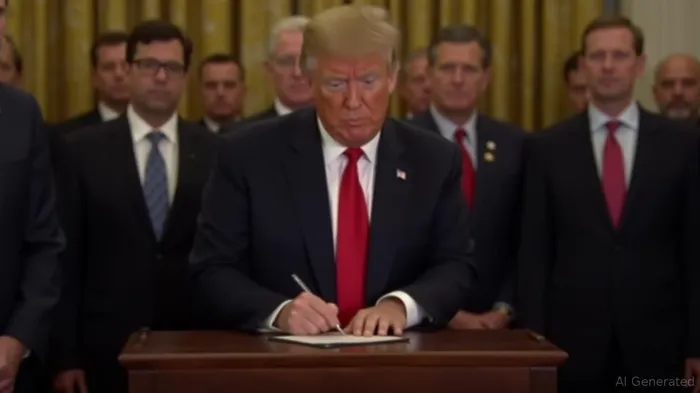
President Trump signed an executive order titled “Guaranteeing Fair Banking for All Americans,” which bars federal agencies from pressuring banks to cut off services to entire industries, effectively shutting down the so-called “Operation Chokepoint 2.0” [1]. The move is widely seen as a major victory for the crypto sector, which had long accused federal regulators—particularly the FDIC—of pressuring banks to refuse services to cryptocurrency-related businesses [2]. For years, crypto advocates claimed that banks were being urged to terminate accounts linked to digital assetDAAQ-- firms under the guise of risk management, often without clients being informed of the reasons [3].
The executive order explicitly states that “no American should be denied access to financial services because of their constitutionally or statutorily protected beliefs, affiliations, or political views” [4]. It mandates that banking decisions be based on individualized, objective, and risk-based analyses rather than political motivations. The policy aims to prevent the misuse of financial systems as tools of political warfare, a concern that gained prominence following the collapses of major crypto-related banks in recent years [5].
Crypto advocates like Nic Carter and prominent industry figures have long criticized what they described as an informal campaign against digital asset businesses by regulators. Carter warned that banks could continue to deny services to certain clients, disguising politically motivated actions as business decisions [6]. The order does not eliminate all challenges, as it relies on banks themselves to determine risk, leaving room for continued regulatory influence [7]. Carter and others have called for increased transparency and accountability in banking decisions, arguing that clients should be informed in a timely and precise manner if their accounts are at risk of closure [8].
Senator Cynthia Lummis, a vocal crypto supporter, hailed the order as a decisive end to Operation Chokepoint 2.0, declaring that the practice “can never happen again” [9]. Meanwhile, Caitlin Long praised the order for creating a new oversight mechanism under the Small Business Administration (SBA), which she argued signals a shift in trust away from traditional banking regulators like the FDIC and the Federal Reserve [10]. The SBA, led by Kelly Loeffler—a known BitcoinBTC-- advocate—will now supervise banks to ensure they are not engaging in politically motivated debanking [11].
Despite the optimism, legal analysts caution that regulators may still find ways to influence banking decisions by framing certain industries as high-risk, even if they are law-abiding [12]. Carter emphasized the challenge of distinguishing between genuine operational risks and politically motivated denials of service, especially in industries like crypto, which are often subject to heightened regulatory scrutiny [13]. He proposed focusing on increasing regulatory transparency rather than placing sole responsibility on banks [14].
The order marks a significant shift in federal policy toward financial inclusion and regulatory neutrality. However, the long-term effectiveness will depend on the clarity of enforcement and the willingness of regulators to avoid politicized interventions in the financial system [15].
Sources:
[1]https://coinmarketcap.com/community/articles/6897e6d53b515077fb4c3bfc/

Stay ahead of the market.
Get curated U.S. market news, insights and key dates delivered to your inbox.


AInvest
PRO
AInvest
PRO



Comments
No comments yet