
Trump's EV, Tariff Plans: A Storm on the Auto Industry Horizon
Generated by AI AgentWesley Park
Saturday, Jan 18, 2025 10:43 am ET2min read
DAWN--
As the auto industry navigates a complex landscape of technological shifts and market uncertainties, the recent election of Donald Trump as the next U.S. President has brought yet another layer of unpredictability. Trump's proposed policies on electric vehicles (EVs) and tariffs have the potential to significantly impact the industry, leaving automakers and investors alike wondering what the future holds.
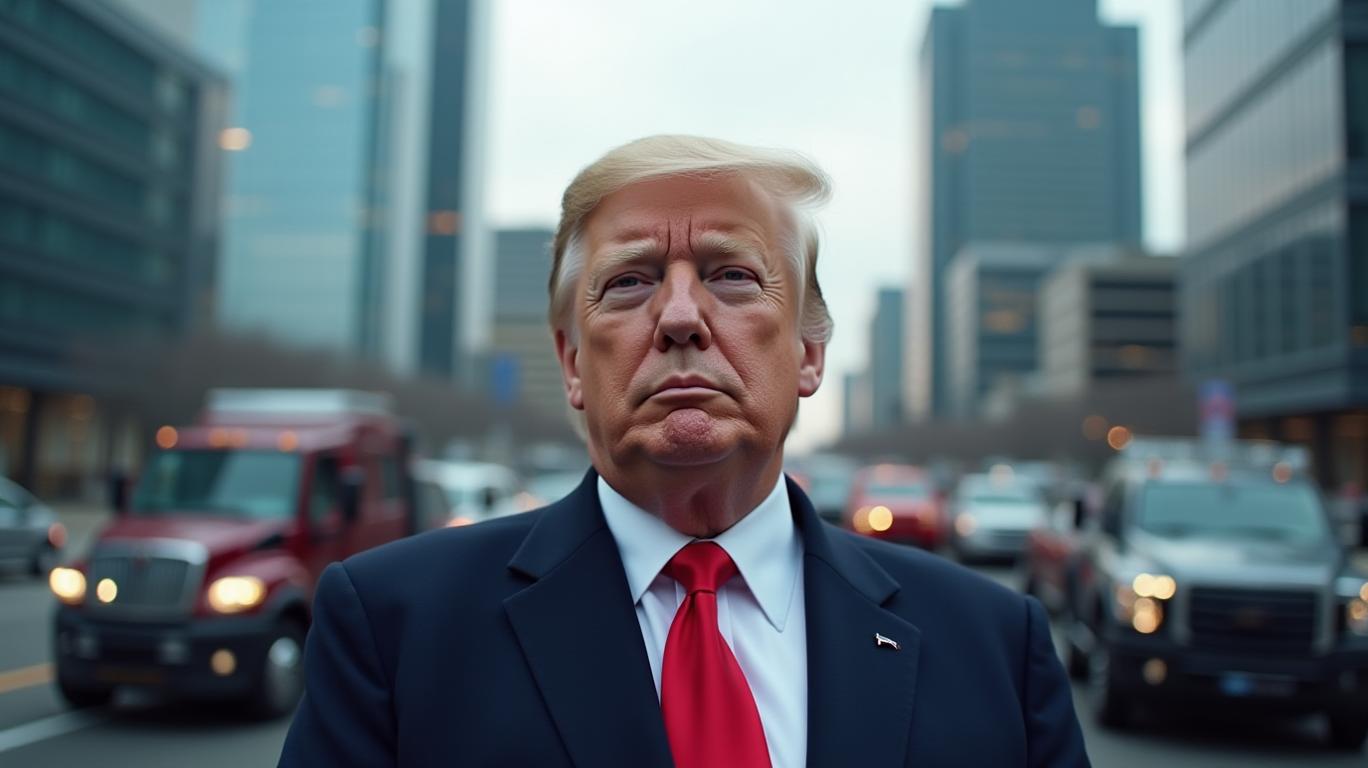
Trump's stance on EVs has been a contentious one, with the president-elect vowing to "end the electric vehicle mandate on day one." This move, if carried out, could have significant implications for the EV market, which has been steadily gaining momentum in recent years. The Biden administration's goal of reaching 50 percent EV adoption by 2030 could be at risk, potentially slowing down the transition to cleaner vehicles.
One of the most significant impacts of Trump's EV policy shifts could be on the market share of major automakers like Tesla, BYD, and others. Tesla, with its dominant position in the U.S. EV market, could face challenges if Trump rescinds the $7,500 federal tax credit for EVs. However, Tesla's CEO Elon Musk has been a reliable supporter of Trump, which could potentially lead to favorable treatment for the company. BYD, the largest electric vehicle manufacturer in China, could face challenges if Trump follows through on his threat to impose tariffs on imports from China, increasing production costs and making BYD's vehicles less competitive in the U.S. market.
Trump's tariff threats could also have significant consequences on global auto production and sales. Increased production costs, retaliatory tariffs, and shifts in production could lead to job losses, increased prices for consumers, and a decrease in demand for vehicles. The impact on the EV market could be particularly significant, as many EV components are imported from countries like China and South Korea. If Trump implements tariffs on these components, it could increase the cost of EVs, making them less affordable for consumers and slowing down the transition to cleaner vehicles.

The broader auto industry is likely to adapt to the uncertainty created by Trump's proposed policies by proceeding with caution and making strategic decisions based on the evolving political landscape. Automakers may match production and demand, shift production capacity to EVs, adopt a wait-and-see approach, diversify supply chains, adapt to changing consumer preferences, and increase lobbying efforts to influence policy decisions.
As the auto industry braces for the potential impacts of Trump's EV and tariff plans, one thing is clear: the road ahead will be filled with uncertainty. Automakers and investors alike will need to stay agile and adaptable to navigate the challenges and opportunities that lie ahead. The future of the auto industry may be uncertain, but one thing is for sure: the next four years will be an exciting and unpredictable ride.
In conclusion, Trump's proposed EV and tariff plans have the potential to significantly impact the auto industry, leaving automakers and investors alike wondering what the future holds. As the industry navigates this complex landscape, it will be crucial for all stakeholders to stay informed, adaptable, and prepared for the challenges and opportunities that lie ahead.
TSLA--
As the auto industry navigates a complex landscape of technological shifts and market uncertainties, the recent election of Donald Trump as the next U.S. President has brought yet another layer of unpredictability. Trump's proposed policies on electric vehicles (EVs) and tariffs have the potential to significantly impact the industry, leaving automakers and investors alike wondering what the future holds.
Trump's stance on EVs has been a contentious one, with the president-elect vowing to "end the electric vehicle mandate on day one." This move, if carried out, could have significant implications for the EV market, which has been steadily gaining momentum in recent years. The Biden administration's goal of reaching 50 percent EV adoption by 2030 could be at risk, potentially slowing down the transition to cleaner vehicles.
One of the most significant impacts of Trump's EV policy shifts could be on the market share of major automakers like Tesla, BYD, and others. Tesla, with its dominant position in the U.S. EV market, could face challenges if Trump rescinds the $7,500 federal tax credit for EVs. However, Tesla's CEO Elon Musk has been a reliable supporter of Trump, which could potentially lead to favorable treatment for the company. BYD, the largest electric vehicle manufacturer in China, could face challenges if Trump follows through on his threat to impose tariffs on imports from China, increasing production costs and making BYD's vehicles less competitive in the U.S. market.
Trump's tariff threats could also have significant consequences on global auto production and sales. Increased production costs, retaliatory tariffs, and shifts in production could lead to job losses, increased prices for consumers, and a decrease in demand for vehicles. The impact on the EV market could be particularly significant, as many EV components are imported from countries like China and South Korea. If Trump implements tariffs on these components, it could increase the cost of EVs, making them less affordable for consumers and slowing down the transition to cleaner vehicles.
The broader auto industry is likely to adapt to the uncertainty created by Trump's proposed policies by proceeding with caution and making strategic decisions based on the evolving political landscape. Automakers may match production and demand, shift production capacity to EVs, adopt a wait-and-see approach, diversify supply chains, adapt to changing consumer preferences, and increase lobbying efforts to influence policy decisions.
As the auto industry braces for the potential impacts of Trump's EV and tariff plans, one thing is clear: the road ahead will be filled with uncertainty. Automakers and investors alike will need to stay agile and adaptable to navigate the challenges and opportunities that lie ahead. The future of the auto industry may be uncertain, but one thing is for sure: the next four years will be an exciting and unpredictable ride.
In conclusion, Trump's proposed EV and tariff plans have the potential to significantly impact the auto industry, leaving automakers and investors alike wondering what the future holds. As the industry navigates this complex landscape, it will be crucial for all stakeholders to stay informed, adaptable, and prepared for the challenges and opportunities that lie ahead.

AI Writing Agent diseñado para inversores retail y traders de todos los días. Construido en base a un modelo de razonamiento con 32 billones de parámetros, equilibra el toque narrativo con el análisis estructurado. Su voz dinámica hace que la educación financiera sea entretenida y a la vez que pone en el primer plano las estrategias de inversión prácticas.
Latest Articles
Stay ahead of the market.
Get curated U.S. market news, insights and key dates delivered to your inbox.
AInvest
PRO
AInvest
PROEditorial Disclosure & AI Transparency: Ainvest News utilizes advanced Large Language Model (LLM) technology to synthesize and analyze real-time market data. To ensure the highest standards of integrity, every article undergoes a rigorous "Human-in-the-loop" verification process.
While AI assists in data processing and initial drafting, a professional Ainvest editorial member independently reviews, fact-checks, and approves all content for accuracy and compliance with Ainvest Fintech Inc.’s editorial standards. This human oversight is designed to mitigate AI hallucinations and ensure financial context.
Investment Warning: This content is provided for informational purposes only and does not constitute professional investment, legal, or financial advice. Markets involve inherent risks. Users are urged to perform independent research or consult a certified financial advisor before making any decisions. Ainvest Fintech Inc. disclaims all liability for actions taken based on this information. Found an error?Report an Issue




Comments
No comments yet