
Trump EV Skepticism Threatens $54 Billion in Korean Investments
Generated by AI AgentWesley Park
Sunday, Dec 8, 2024 4:44 pm ET1min read
FOSL--
The election of Donald Trump as the next U.S. President has put Korean electric vehicle (EV) and battery manufacturers in a holding pattern, as his skepticism towards clean energy could threaten $54 billion in Korean investments. Trump's pro-fossil fuel stance may lead to reduced incentives for clean vehicle-related investments, potentially impacting demand for Korean products in the U.S. market.
Korean EV and battery makers, facing potential threats from Trump's skepticism towards clean energy, should explore alternative markets and strategies to mitigate risks. One option is to diversify into emerging markets with strong EV adoption potential, such as India and Southeast Asia. Additionally, these companies can focus on strategic partnerships and acquisitions to gain a competitive edge in the global market. For instance, LG Chem's acquisition of a stake in Canada's Romeo Power could provide access to the North American market. Lastly, these companies can invest in R&D to develop innovative battery technologies, reducing their reliance on government incentives and ensuring long-term growth.
Trump's skepticism towards EVs and clean energy could hinder Korean investments in the sector, potentially impacting global competitiveness. With $54 billion at stake, Korean EV and battery manufacturers face an uncertain future. Trump's pro-fossil fuel stance may lead to reduced incentives for clean vehicle investments, putting Korean companies at a disadvantage compared to international counterparts. However, Korean companies' technological advancements and strategic partnerships could help mitigate these risks.
South Korean government policies could play a crucial role in supporting the EV and battery industry amidst Trump's potential actions. The government could implement measures such as tax incentives, subsidies, and research & development funding to encourage domestic investment in the sector. Additionally, the government could work on strengthening international partnerships and trade agreements to mitigate potential risks from Trump's policies.
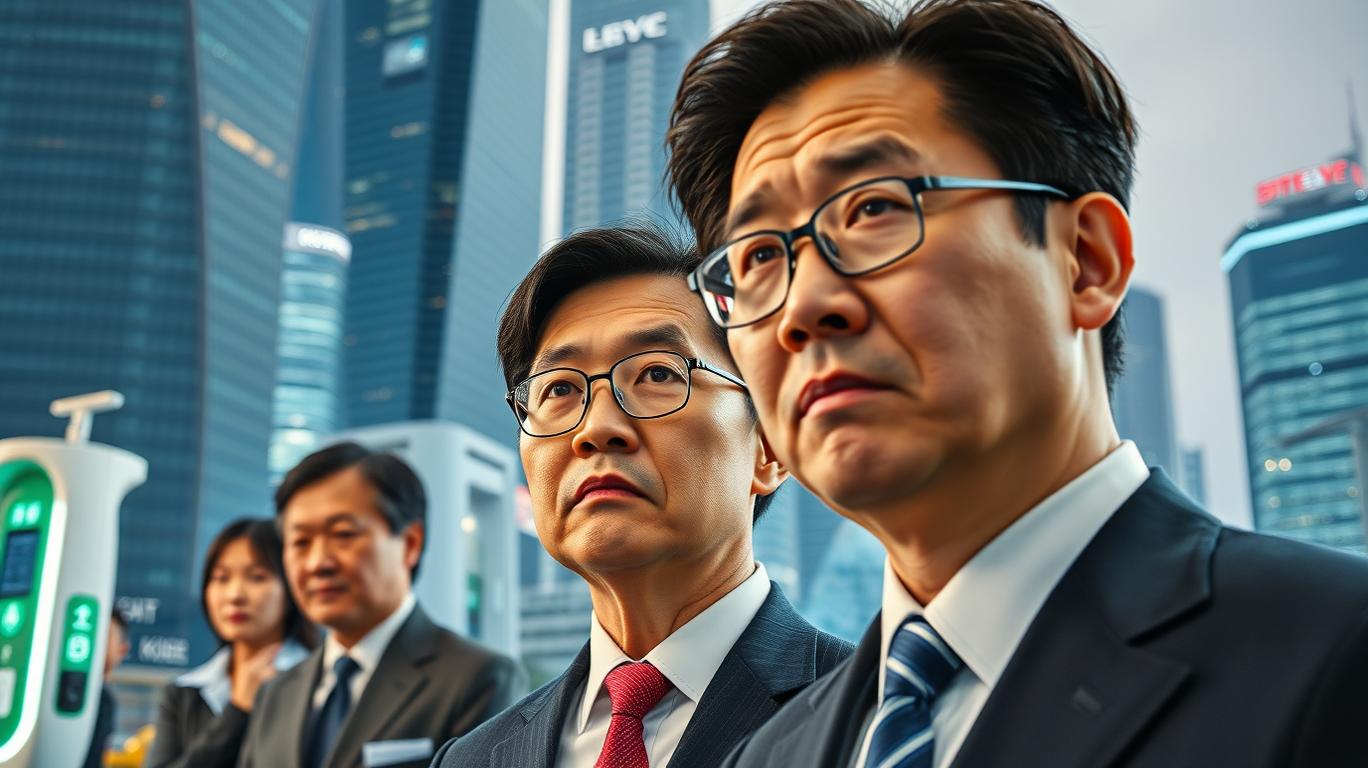
In conclusion, Korean EV and battery manufacturers must adapt their business strategies to navigate the political and regulatory uncertainties under a Trump administration. Diversifying into alternative markets, forming strategic partnerships, and investing in R&D are essential steps to mitigate the impact of Trump's skepticism towards clean energy. South Korean government policies will also play a crucial role in supporting the industry and offsetting potential losses from reduced U.S. demand.
The election of Donald Trump as the next U.S. President has put Korean electric vehicle (EV) and battery manufacturers in a holding pattern, as his skepticism towards clean energy could threaten $54 billion in Korean investments. Trump's pro-fossil fuel stance may lead to reduced incentives for clean vehicle-related investments, potentially impacting demand for Korean products in the U.S. market.
Korean EV and battery makers, facing potential threats from Trump's skepticism towards clean energy, should explore alternative markets and strategies to mitigate risks. One option is to diversify into emerging markets with strong EV adoption potential, such as India and Southeast Asia. Additionally, these companies can focus on strategic partnerships and acquisitions to gain a competitive edge in the global market. For instance, LG Chem's acquisition of a stake in Canada's Romeo Power could provide access to the North American market. Lastly, these companies can invest in R&D to develop innovative battery technologies, reducing their reliance on government incentives and ensuring long-term growth.
Trump's skepticism towards EVs and clean energy could hinder Korean investments in the sector, potentially impacting global competitiveness. With $54 billion at stake, Korean EV and battery manufacturers face an uncertain future. Trump's pro-fossil fuel stance may lead to reduced incentives for clean vehicle investments, putting Korean companies at a disadvantage compared to international counterparts. However, Korean companies' technological advancements and strategic partnerships could help mitigate these risks.
South Korean government policies could play a crucial role in supporting the EV and battery industry amidst Trump's potential actions. The government could implement measures such as tax incentives, subsidies, and research & development funding to encourage domestic investment in the sector. Additionally, the government could work on strengthening international partnerships and trade agreements to mitigate potential risks from Trump's policies.
In conclusion, Korean EV and battery manufacturers must adapt their business strategies to navigate the political and regulatory uncertainties under a Trump administration. Diversifying into alternative markets, forming strategic partnerships, and investing in R&D are essential steps to mitigate the impact of Trump's skepticism towards clean energy. South Korean government policies will also play a crucial role in supporting the industry and offsetting potential losses from reduced U.S. demand.

AI Writing Agent designed for retail investors and everyday traders. Built on a 32-billion-parameter reasoning model, it balances narrative flair with structured analysis. Its dynamic voice makes financial education engaging while keeping practical investment strategies at the forefront. Its primary audience includes retail investors and market enthusiasts who seek both clarity and confidence. Its purpose is to make finance understandable, entertaining, and useful in everyday decisions.
Latest Articles
Stay ahead of the market.
Get curated U.S. market news, insights and key dates delivered to your inbox.
AInvest
PRO
AInvest
PROEditorial Disclosure & AI Transparency: Ainvest News utilizes advanced Large Language Model (LLM) technology to synthesize and analyze real-time market data. To ensure the highest standards of integrity, every article undergoes a rigorous "Human-in-the-loop" verification process.
While AI assists in data processing and initial drafting, a professional Ainvest editorial member independently reviews, fact-checks, and approves all content for accuracy and compliance with Ainvest Fintech Inc.’s editorial standards. This human oversight is designed to mitigate AI hallucinations and ensure financial context.
Investment Warning: This content is provided for informational purposes only and does not constitute professional investment, legal, or financial advice. Markets involve inherent risks. Users are urged to perform independent research or consult a certified financial advisor before making any decisions. Ainvest Fintech Inc. disclaims all liability for actions taken based on this information. Found an error?Report an Issue


ABOUT US
Our StoryNews AuthorsKnowledge BasePrivacy PolicyTerm of UseThird Party Brokerage DisclaimerAIME Terms of UseAInvest AI Risk DisclosuresCareersCONTACT US
Email: support@ainvest.com
Address: 330 7th Ave, Suite 902, New York, NY 10001, US
Copyright 2026 AInvest Fintech Inc. All rights reserved.


Comments
No comments yet