
Trump Establishes Strategic Bitcoin Reserve, Shifts U.S. Digital Asset Strategy
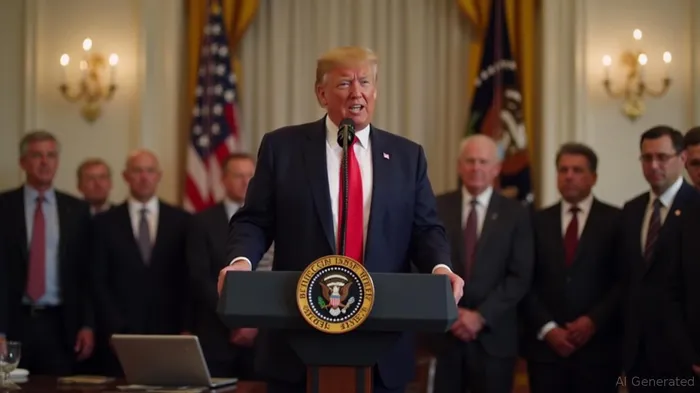
President Donald J. Trump has signed an executive order to establish a Strategic Bitcoin Reserve and a U.S. Digital AssetDAAQ-- Stockpile, marking a significant shift in the nation's digital asset strategy. This initiative aims to position the U.S. as a leader in the digital assets sector by utilizing confiscated Bitcoin as a sovereign asset. The move is part of a broader effort to integrate cryptocurrencies into the nation's financial strategy, with the reserve designed to manage the nation's digital asset holdings seized in criminal and civil forfeiture proceedings. The Bitcoin held in the reserve will not be sold and will be maintained as reserve assets of the United States, utilized to meet governmental objectives in accordance with applicable law.
The executive order was signed on June 20, 2025, following a critical National Security meeting convened by President Trump. The establishment of the Strategic Bitcoin Reserve is part of a series of legislative and executive actions aimed at advancing stablecoin legislation and regulating the cryptocurrency market. The Senate passed the GENIUS Act with bipartisan support, which establishes a regulatory framework for payment stablecoins. This legislation now moves to the House of Representatives, where the House Financial Services Committee has been focused on its own version of stablecoin legislation, the STABLE Act.
In addition to the GENIUS Act, Rep. TimTIMB-- Burchett introduced the “Executive Order 14233 Act of 2025” to codify President Trump’s Executive Order 14233. The Executive Order, released in March 2025, indicated that the Secretary of the Treasury would establish an office to administer and maintain control of custodial accounts, collectively known as the “Strategic Bitcoin Reserve,” held by the Department of the Treasury. The government Bitcoin deposited into the Strategic Bitcoin Reserve is not to be sold and must be maintained as reserve assets of the United States, utilized to meet governmental objectives in accordance with applicable law.
Key figures involved in this initiative include Donald J. Trump as the architect and the U.S. Treasury responsible for managing the new reserves. Congressman Stephen F. Lynch opposes the initiative with the "Stop TRUMP in Crypto Act." The policy aims at securing digital assets without burdening taxpayers. The policy has wide-reaching effects on market dynamics, particularly Bitcoin's role as a reserve asset. Industry insiders are examining its impact on overall market liquidity and possible regulatory precedents. Meanwhile, Trump's memecoin's market value sharply declined, illustrating volatile investor sentiment.
Financially, the policy centers on budget-neutral asset allocation. Politically, it invites debate over regulatory boundaries and transparency in asset management. The broader implications may include shifts in global cryptocurrency market dynamics. Insights from industry analysts suggest potential shifts in U.S. and global financial strategies. The U.S. Strategic Bitcoin Reserve could impact regulatory frameworks and influence international negotiations over digital asset governance. Continued scrutiny and adjustments are anticipated in financial policy circles.

Stay ahead of the market.
Get curated U.S. market news, insights and key dates delivered to your inbox.


AInvest
PRO
AInvest
PRO



Comments
No comments yet