
Trump Escalates Pressure on Fed to Cut Rates to 1% Amid Credibility Clash with Administration
 Aime Summary
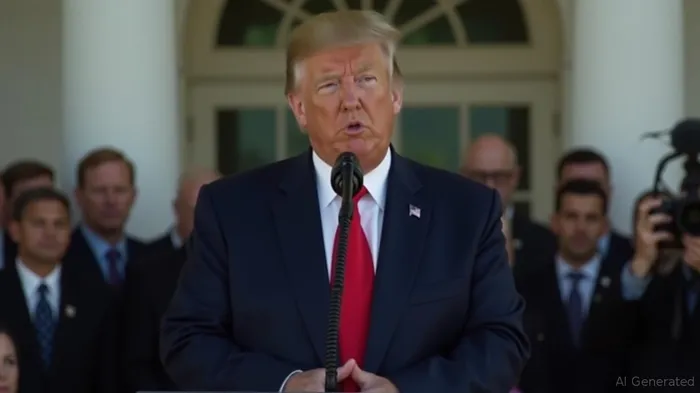
President Donald Trump has escalated public pressure on the Federal Reserve to slash interest rates, accusing Chair Jerome Powell of politically motivated inaction and hinting at potential removal of the official despite legal constraints. The president has repeatedly criticized the Fed for maintaining the federal funds rate in the 4.25–4.5% range, asserting that the central bank’s reluctance to cut rates could be driven by partisan considerations. During a recent Oval Office press appearance, Trump stated, “He’s probably keeping rates high for political reasons,” reiterating calls for aggressive rate reductions to stimulate economic growth. His proposals include lowering the federal funds rate to as low as 1%, a move seen as extreme outside of severe economic crises.
Treasury Secretary Scott Bessent has publicly defended the Fed’s independence, emphasizing the need for monetary policy decisions to remain insulated from political influence. “The Federal Reserve must act in the national interest, not respond to partisan pressures,” Bessent said, highlighting an internal administration divide over the central bank’s autonomy. This stance has drawn scrutiny from former Fed officials, including Ben Bernanke and Janet Yellen, who warn that aggressive rate cuts in a low-unemployment environment could reignite inflationary pressures. Powell has maintained a data-driven approach, resisting calls to implement abrupt policy shifts despite Trump’s persistent advocacy.
The president’s demands have introduced uncertainty into the Fed’s policy outlook, complicating its dual mandate of balancing inflation control and economic growth. While Trump frames rate reductions as a tool to enhance American competitiveness, critics argue such measures could undermine the Fed’s credibility and destabilize financial markets. The administration’s broader agenda, including tariffs on imported goods, has already influenced global central banks to consider rate cuts, further complicating the Fed’s policy calculus. Analysts caution that hasty decisions could trigger inflationary surges, with financial markets already reacting to the prospect of aggressive cuts.
Support for lower rates within the Fed itself has added complexity to the debate. Federal Reserve Governor Christopher Waller, a vocal Trump ally, has advocated reducing the rate to 3% in upcoming meetings, arguing that temporary inflationary pressures from tariffs should be overlooked. This alignment between political and monetary policy voices has raised concerns about the politicization of the central bank. Former officials warn that sustained external pressure could erode market confidence in the Fed’s institutional independence, a cornerstone of its effectiveness. Jeffrey Roach, Chief Economist at LPL FinancialLPLA--, dismissed Trump’s demands as “ludicrous,” noting that premature rate cuts risk exacerbating the very economic challenges they aim to address.
The political tension underscores a fundamental challenge for the Fed: preserving its nonpartisan reputation while navigating an administration that openly challenges its decisions. Trump’s public criticism, amplified through social media and press conferences, reflects a strategy of direct engagement with monetary policy, a practice that risks undermining the Fed’s credibility. As the central bank prepares for critical policy meetings, the administration’s push for rate cuts remains a wildcard. While historical precedents, such as the 2020 pandemic-era rate cuts, suggest market responsiveness to sudden policy shifts, analysts stress the importance of aligning decisions with economic data rather than political expediency. The coming months will test whether the Fed can uphold its mandate amid escalating public scrutiny, with the integrity of its independence hanging in the balance.

Comprender rápidamente la historia y el contexto de varias monedas conocidas
Latest Articles
Stay ahead of the market.
Get curated U.S. market news, insights and key dates delivered to your inbox.


AInvest
PRO
AInvest
PRO



Comments
No comments yet