
Trump's Erosion of Fed Independence and Its Impact on Global Market Stability


 Aime Summary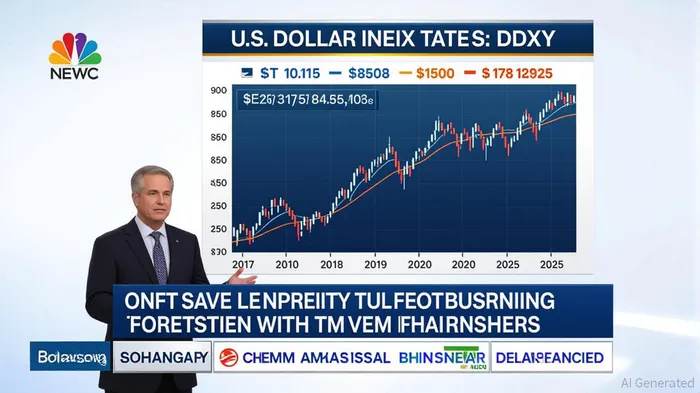
The U.S. Federal Reserve has long been a cornerstone of global financial stability, its independence from political interference a bedrock of trust in U.S. monetary policy. However, the Trump administration's aggressive public pressure on the Fed—ranging from personal attacks on Chair Jerome Powell to explicit threats against officials like Lisa Cook—has left a lasting scar on this credibility. While the Fed resisted overt political coercion, the mere perception of vulnerability has triggered a seismic shift in how investors and central banks view the dollar and U.S.-centric assets.
The Long-Term Risks to U.S. Financial Credibility
The erosion of Fed independence, though not fully realized in policy outcomes, has created a climate of uncertainty. Trump's rhetoric—demanding rate cuts to lower borrowing costs and boost the economy—challenged the Fed's mandate to prioritize price stability and maximum employment. This undermined the institution's perceived autonomy, a principle that Volcker-era reforms had painstakingly built. The result? A loss of confidence in the Fed's ability to act as a technocratic arbiter, especially during inflationary shocks or financial crises.
The implications are profound. Central banks worldwide, which had long modeled their independence on the U.S. example, now face questions about their own resilience to political pressure. For investors, the message is clear: the dollar's dominance as a reserve currency is no longer a given. As , capital began to flow toward alternatives.
The Global Shift in Portfolio Diversification
Central banks have responded to these uncertainties with a strategic reallocation of reserves. Gold, once a niche asset, has surged in popularity. In 2022 alone, central banks purchased 1,136 tonnes of gold—a record since 1967. By 2025, gold's share of global reserves exceeded 23%, surpassing the euro and yen combined. This trend reflects a desire to hedge against currency devaluation and geopolitical risks, particularly as U.S. fiscal deficits and monetary expansion raise concerns about the dollar's long-term purchasing power.
Investors are following suit. Foreign demand for U.S. equities and bonds has waned, with European and Asian institutions reducing exposure to dollar-denominated assets. The euro, yen, and yuan have gained traction as alternatives, while emerging markets with independent central banks—such as India and Brazil—have attracted capital seeking diversification. The offshore yuan's rise to 7.1527 against the dollar in 2025 underscores this shift, as does the Bank of England's emphasis on central bank autonomy as a pillar of financial stability.
Strategic Investment Advice for a Post-Dollar World
For investors, the lesson is clear: diversification is no longer optional. Here's how to position portfolios for a world where U.S. financial credibility is increasingly contested:
- Increase Gold Allocation: Physical gold and gold ETFs offer a hedge against currency depreciation and geopolitical instability. Central banks' aggressive accumulation validates its role as a safe haven.
- Diversify Currencies: Allocate to the euro, yen, and yuan to reduce dollar exposure. Currency-hedging strategies can mitigate volatility while capturing growth in non-U.S. markets.
- Prioritize Defensive Assets: Inflation-protected securities (TIPS) and defensive sectors like utilities and healthcare provide stability amid policy-driven uncertainty.
- Reevaluate Emerging Markets: Focus on economies with strong institutional frameworks and independent central banks. Avoid overexposure to regions vulnerable to capital flight during crises.
The Path Forward
The U.S. dollar remains the dominant reserve currency, accounting for 58% of global reserves. However, its share has declined steadily since 2020, and the rise of gold and alternative currencies signals a structural shift. Investors must adapt to a new reality where political interference in monetary policy is a persistent risk.
The Fed's independence is not dead, but its credibility has been wounded. As central banks and investors continue to diversify, the era of dollar hegemony may be drawing to a close. For those who act now, the opportunities in gold, non-U.S. currencies, and resilient sectors could prove transformative.
In this evolving landscape, the key to long-term stability lies not in clinging to the past, but in embracing a diversified, forward-looking portfolio.

Decoding blockchain innovations and market trends with clarity and precision.
Latest Articles
Stay ahead of the market.
Get curated U.S. market news, insights and key dates delivered to your inbox.


AInvest
PRO
AInvest
PRO



Comments
No comments yet