
Trump-Era Tax Policies and Their Exposure to Biden Tax Risks: A Strategic Hedging Guide


 Aime Summary
The Trump-Era Tax Legacy: Winners and Vulnerabilities
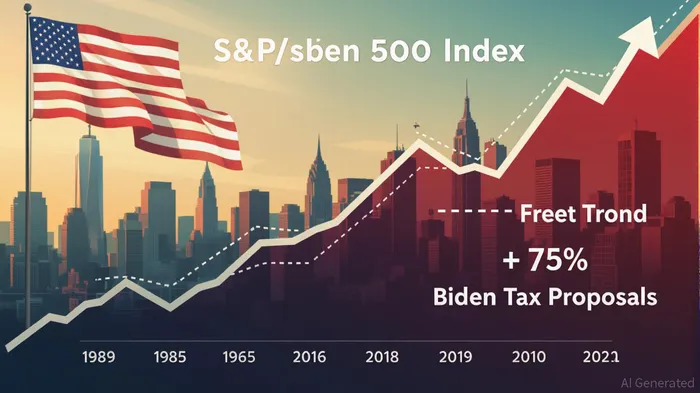
The TCJA's corporate tax cuts and pass-through deductions initially boosted market optimism. The S&P 500 surged 9.22% in Q1 2017, reflecting investor confidence in reduced corporate tax burdens, according to a Seeking Alpha analysis here. However, the long-term economic impact was mixed. While some studies noted a temporary 18% increase in corporate investment, broader GDP growth remained modest, as detailed in the Congressional Research Service report here. Sectors like technology and manufacturing, which relied on overseas profit repatriation, saw short-term gains but also became structurally dependent on low tax rates.
The Biden administration's proposed 28% corporate tax rate-a 33% increase from the current 21%-could disproportionately affect these sectors, according to a Tax Foundation analysis. For example, multinational tech firms with complex global tax structures may face reduced net margins as they adjust to higher U.S. rates compared to international peers like Thailand, which has a 15% minimum tax rate, as noted in a Business Times report. Similarly, financial institutions, which often rely on tax-efficient capital structures, could see pressure from Biden's 4% stock buyback tax and increased Medicare surcharges on high-income earners, as detailed in the Tax Foundation analysis here.
Sectoral Vulnerabilities and Historical Volatility
Historical precedents highlight the risks of tax policy shifts. In France, proposed corporate tax hikes led to immediate share price declines in financial sector giants like BNP Paribas and Société Générale, according to a Morgan Stanley report. This mirrors potential U.S. market reactions, particularly for sectors with high tax sensitivity. For instance, the manufacturing sector, which saw a 12.2% decline in corporate tax collections in Georgia following policy shifts, as noted in a Georgia news report, could face similar short-term revenue fluctuations under Biden's agenda.
The 1993 Clinton tax act and 2017 TCJA also demonstrate how tax changes influence sectoral performance. While the 2017 cuts initially drove market gains, the absence of sustained economic acceleration suggests that investors should prepare for asymmetrical outcomes under Biden's proposals. For example, the tech sector's reliance on capital gains and stock buybacks-both targeted by Biden's 25% minimum tax on unrealized gains and 4% buyback tax-could lead to reduced shareholder returns, as detailed in the Tax Foundation analysis here.
Hedging Strategies for Biden-Era Risks
To mitigate exposure to Biden's tax agenda, investors should adopt a multi-pronged approach:
Sector Diversification: Reduce overweights in tax-sensitive sectors like technology and manufacturing. Instead, allocate to sectors less impacted by corporate tax hikes, such as consumer staples or healthcare, which derive revenue from recurring consumption rather than capital gains, as noted in the Seeking Alpha analysis here.
Defensive Equity Plays: Prioritize companies with strong cash flows and low reliance on tax-advantaged structures. For example, firms with high operating margins and diversified revenue streams (e.g., Microsoft, Johnson & Johnson) are better positioned to absorb higher tax burdens, as noted in the Tax Foundation analysis here.
Options and Derivatives: Use put options or sector-specific ETFs (e.g., XLV for healthcare) to hedge against potential declines in overexposed sectors. For instance, a short-term put on the XLF financials ETF could protect against volatility from Biden's Medicare tax increases, as noted in a White House fact sheet.
Tax-Neutral Instruments: Consider municipal bonds or REITs, which derive income from tax-exempt sources and are less sensitive to federal tax policy shifts, as noted in the Seeking Alpha analysis here.
Global Exposure: Invest in international markets where corporate tax rates are lower or more stable. For example, the MSCI EAFE Index offers exposure to companies in regions like Europe and Asia, which may not face the same regulatory headwinds as U.S. multinationals, as noted in the Business Times report here.
Conclusion: Preparing for a New Tax Regime
The Biden administration's tax proposals represent a fundamental shift from Trump-era policies, with significant implications for corporate profitability and sectoral performance. While the full impact remains uncertain, historical volatility patterns and sectoral vulnerabilities suggest that investors should proactively hedge against regulatory risks. By diversifying portfolios, leveraging derivatives, and prioritizing tax-agnostic assets, investors can navigate the evolving fiscal landscape while preserving long-term value.

Delivering real-time insights and analysis on emerging financial trends and market movements.
Latest Articles
Stay ahead of the market.
Get curated U.S. market news, insights and key dates delivered to your inbox.


AInvest
PRO
AInvest
PRO



Comments
No comments yet