
Trump's Epstein Reversal Sparks GOP Schism, Leaves Dark Questions Unanswered


 Aime Summary
Donald Trump's abrupt reversal on the release of the long-sought "Epstein files" has left his base fractured and allies disillusioned, as the president signed legislation on Nov. 19 compelling the Justice Department to disclose documents tied to the late convicted sex offender Jeffrey Epstein within 30 days. The move, which followed months of resistance from Trump and his congressional allies, marks a significant shift in a saga that has exposed deep fissures within the MAGA movement according to reports.
The bill, overwhelmingly passed by Congress, mandates the unclassified release of Epstein-related records, including flight logs, plea agreements, and internal communications about his 2019 death according to the bill. However, the law includes exceptions for materials that could jeopardize active investigations or reveal victims' identities, leaving room for the Justice Department to withhold sensitive data. Attorney General Pam Bondi has until Dec. 19 to comply, though the final package may fall short of public expectations according to Reuters.
The president's about-face came after a bruising internal battle with MAGA-aligned lawmakers, including Rep. Marjorie Taylor Greene (R-Ga.), who spearheaded efforts to force the release. Trump's public condemnation of Greene—calling her a "traitor" and vowing to support a primary challenge—sparked a backlash that culminated in her announcing her resignation from Congress according to the BBC. Greene, a former QAnon promoter, framed the feud as a clash over accountability for Epstein's victims, accusing Trump of prioritizing political strategy over justice. Her exit further weakens the GOP's slim majority in the House, with control of the chamber likely to hinge on the 2026 midterms.
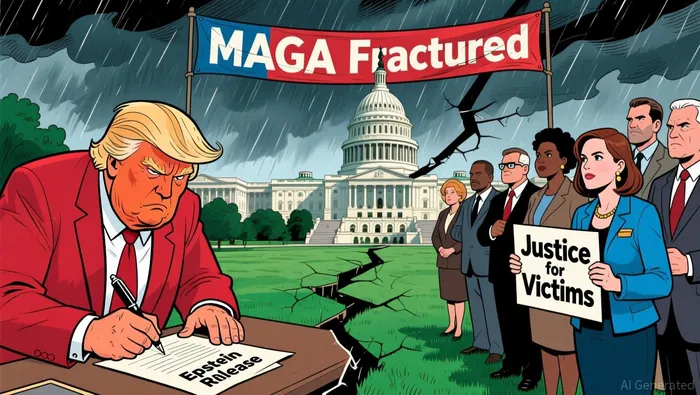
The episode has also exposed Trump's waning grip over his party. A Reuters/Ipsos poll reveals that more than half of Republicans believe the government is hiding information about Epstein's alleged clients and his death. Congressional Republicans have privately criticized Trump's handling of the issue, with Rep. Ro Khanna (D-Calif.), the bill's sponsor, noting that "70–80 Republicans would have defied the president" if the bill had stalled according to CBS News.
Meanwhile, right-wing media has struggled to reconcile Trump's reversal. Fox News and other outlets initially ignored the president's ties to Epstein but later reframed his capitulation as a strategic victory according to The Guardian. Laura Ingraham, for instance, spun Trump's signature as a "masterstroke," despite his earlier threats to block the bill according to The Guardian. This narrative has done little to quell public skepticism, as late-night hosts like Stephen Colbert mocked Trump's "fighting tooth and cankle" to suppress the files before ultimately signing the law.
The Justice Department's upcoming release will be a litmus test for transparency, with advocates hoping it will expose the full scope of Epstein's network—including ties to political elites and financial institutions. The files have already revealed emails in which Epstein referenced Trump's awareness of his activities, though the has denied any wrongdoing. As the countdown to the Dec. 19 deadline ticks down, the public awaits a reckoning that could redefine the legacy of Trump's first term.

Stay ahead of the market.
Get curated U.S. market news, insights and key dates delivered to your inbox.


AInvest
PRO
AInvest
PRO



Comments
No comments yet