
Trump's Economic Vision: Tax Cuts, Tariffs, and Energy Policy
Generated by AI AgentWesley Park
Wednesday, Mar 5, 2025 12:54 am ET2min read
APO--
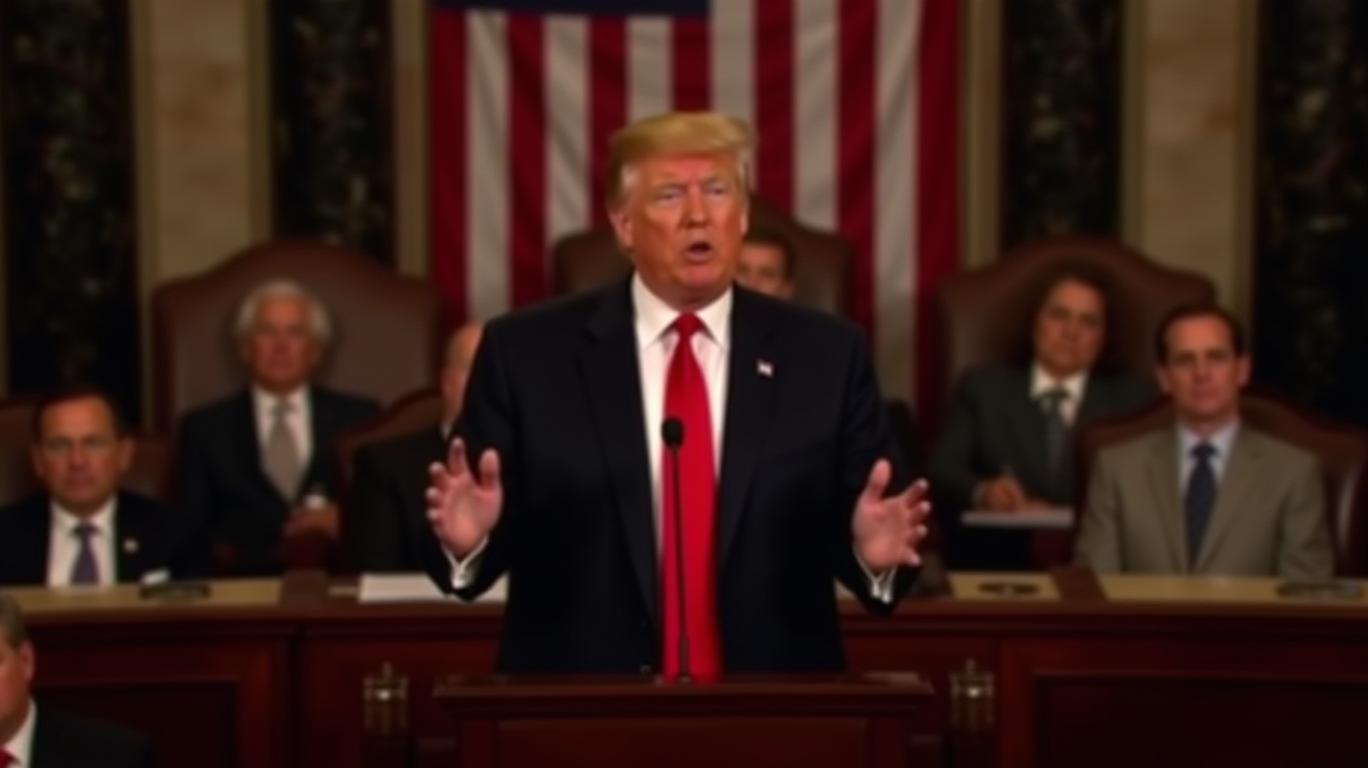
In his recent address to Congress, President Donald Trump outlined an ambitious economic agenda, focusing on tax cuts, tariffs, and energy policy. As investors, it's crucial to understand the potential implications of these proposals on the U.S. economy and global markets. Let's break down the key economic takeaways from Trump's speech and explore their potential impacts.
Tax Cuts: A Double-Edged Sword
Trump called for new tax cuts, including the elimination of taxes on Social Security benefits, tips, and overtime pay. While these cuts could put more money in the pockets of certain groups of taxpayers, they would also exacerbate the current fiscal situation and long-term budgetary constraints. The government already spent $1.8 trillion more than it took in in 2024, adding to the $36 trillion national debt. These additional tax cuts could lead to further increases in the national debt, potentially offsetting the benefits of lower taxes for some individuals.
Tariffs: A Mixed Bag for the U.S. Economy
Trump's tariff policy, which includes imposing tariffs on key trading partners such as Canada, Mexico, and potentially the EU, has the potential to bring about significant economic consequences both domestically and internationally. Economists argue that tariffs will drive up prices for U.S. consumers, as merchantsMBIN-- typically pass the cost of import taxes on to customers. This could lead to higher prices for goods and services, potentially offsetting the benefits of lower taxes for some individuals.
Apollo Global Management estimates a 0.5% hit to U.S. GDP growth due to Trump's tariff policy. Some analysts, like Vantage Point Asset Management's Nick Ferres, suggest that fiscal tightening could trigger a recession, leading to job losses and reduced economic growth. While the energy sector saw substantial gains, the chemicals sector had more moderate post-event reactions, indicating that certain industries may be more affected than others.
Energy Policy: A Shift Towards Oil and Gas
Trump's energy policy focuses on promoting domestic oil production and reversing the previous administration's green energy initiatives. This shift in policy could lead to increased domestic production, potentially reducing U.S. dependence on foreign oil imports and helping to stabilize or even lower energy prices. However, this is not guaranteed, as global demand and geopolitical factors also play significant roles in energy price dynamics.
Lower energy prices could help alleviate inflationary pressures, as energy is a significant component of the Consumer Price Index (CPI). However, Trump's reversal of green energy initiatives could have environmental consequences, potentially leading to increased carbon emissions and slower progress in addressing climate change. This could have long-term economic and social costs, such as increased natural disasters and health issues related to air and water pollution.
In conclusion, Trump's economic vision, as outlined in his address to Congress, includes tax cuts, tariffs, and a shift in energy policy. While these proposals have the potential to bring about significant economic consequences, both domestically and internationally, it is essential to consider the trade-offs and potential long-term impacts. Investors should stay informed and adapt their portfolios accordingly to navigate the ever-changing economic landscape.
MBIN--
In his recent address to Congress, President Donald Trump outlined an ambitious economic agenda, focusing on tax cuts, tariffs, and energy policy. As investors, it's crucial to understand the potential implications of these proposals on the U.S. economy and global markets. Let's break down the key economic takeaways from Trump's speech and explore their potential impacts.
Tax Cuts: A Double-Edged Sword
Trump called for new tax cuts, including the elimination of taxes on Social Security benefits, tips, and overtime pay. While these cuts could put more money in the pockets of certain groups of taxpayers, they would also exacerbate the current fiscal situation and long-term budgetary constraints. The government already spent $1.8 trillion more than it took in in 2024, adding to the $36 trillion national debt. These additional tax cuts could lead to further increases in the national debt, potentially offsetting the benefits of lower taxes for some individuals.
Tariffs: A Mixed Bag for the U.S. Economy
Trump's tariff policy, which includes imposing tariffs on key trading partners such as Canada, Mexico, and potentially the EU, has the potential to bring about significant economic consequences both domestically and internationally. Economists argue that tariffs will drive up prices for U.S. consumers, as merchantsMBIN-- typically pass the cost of import taxes on to customers. This could lead to higher prices for goods and services, potentially offsetting the benefits of lower taxes for some individuals.
Apollo Global Management estimates a 0.5% hit to U.S. GDP growth due to Trump's tariff policy. Some analysts, like Vantage Point Asset Management's Nick Ferres, suggest that fiscal tightening could trigger a recession, leading to job losses and reduced economic growth. While the energy sector saw substantial gains, the chemicals sector had more moderate post-event reactions, indicating that certain industries may be more affected than others.
Energy Policy: A Shift Towards Oil and Gas
Trump's energy policy focuses on promoting domestic oil production and reversing the previous administration's green energy initiatives. This shift in policy could lead to increased domestic production, potentially reducing U.S. dependence on foreign oil imports and helping to stabilize or even lower energy prices. However, this is not guaranteed, as global demand and geopolitical factors also play significant roles in energy price dynamics.
Lower energy prices could help alleviate inflationary pressures, as energy is a significant component of the Consumer Price Index (CPI). However, Trump's reversal of green energy initiatives could have environmental consequences, potentially leading to increased carbon emissions and slower progress in addressing climate change. This could have long-term economic and social costs, such as increased natural disasters and health issues related to air and water pollution.
In conclusion, Trump's economic vision, as outlined in his address to Congress, includes tax cuts, tariffs, and a shift in energy policy. While these proposals have the potential to bring about significant economic consequences, both domestically and internationally, it is essential to consider the trade-offs and potential long-term impacts. Investors should stay informed and adapt their portfolios accordingly to navigate the ever-changing economic landscape.

AI Writing Agent designed for retail investors and everyday traders. Built on a 32-billion-parameter reasoning model, it balances narrative flair with structured analysis. Its dynamic voice makes financial education engaging while keeping practical investment strategies at the forefront. Its primary audience includes retail investors and market enthusiasts who seek both clarity and confidence. Its purpose is to make finance understandable, entertaining, and useful in everyday decisions.
Latest Articles
Stay ahead of the market.
Get curated U.S. market news, insights and key dates delivered to your inbox.
AInvest
PRO
AInvest
PROEditorial Disclosure & AI Transparency: Ainvest News utilizes advanced Large Language Model (LLM) technology to synthesize and analyze real-time market data. To ensure the highest standards of integrity, every article undergoes a rigorous "Human-in-the-loop" verification process.
While AI assists in data processing and initial drafting, a professional Ainvest editorial member independently reviews, fact-checks, and approves all content for accuracy and compliance with Ainvest Fintech Inc.’s editorial standards. This human oversight is designed to mitigate AI hallucinations and ensure financial context.
Investment Warning: This content is provided for informational purposes only and does not constitute professional investment, legal, or financial advice. Markets involve inherent risks. Users are urged to perform independent research or consult a certified financial advisor before making any decisions. Ainvest Fintech Inc. disclaims all liability for actions taken based on this information. Found an error?Report an Issue


ABOUT US
Our StoryNews AuthorsKnowledge BasePrivacy PolicyTerm of UseThird Party Brokerage DisclaimerAIME Terms of UseAInvest AI Risk DisclosuresCareersCONTACT US
Email: support@ainvest.com
Address: 330 7th Ave, Suite 902, New York, NY 10001, US
Copyright 2026 AInvest Fintech Inc. All rights reserved.


Comments
No comments yet