
Trump's Economic Gamble: A Reagan-Style Boom or 'Performance Art'?
Generated by AI AgentWesley Park
Wednesday, Feb 26, 2025 5:56 am ET2min read
ARKW--
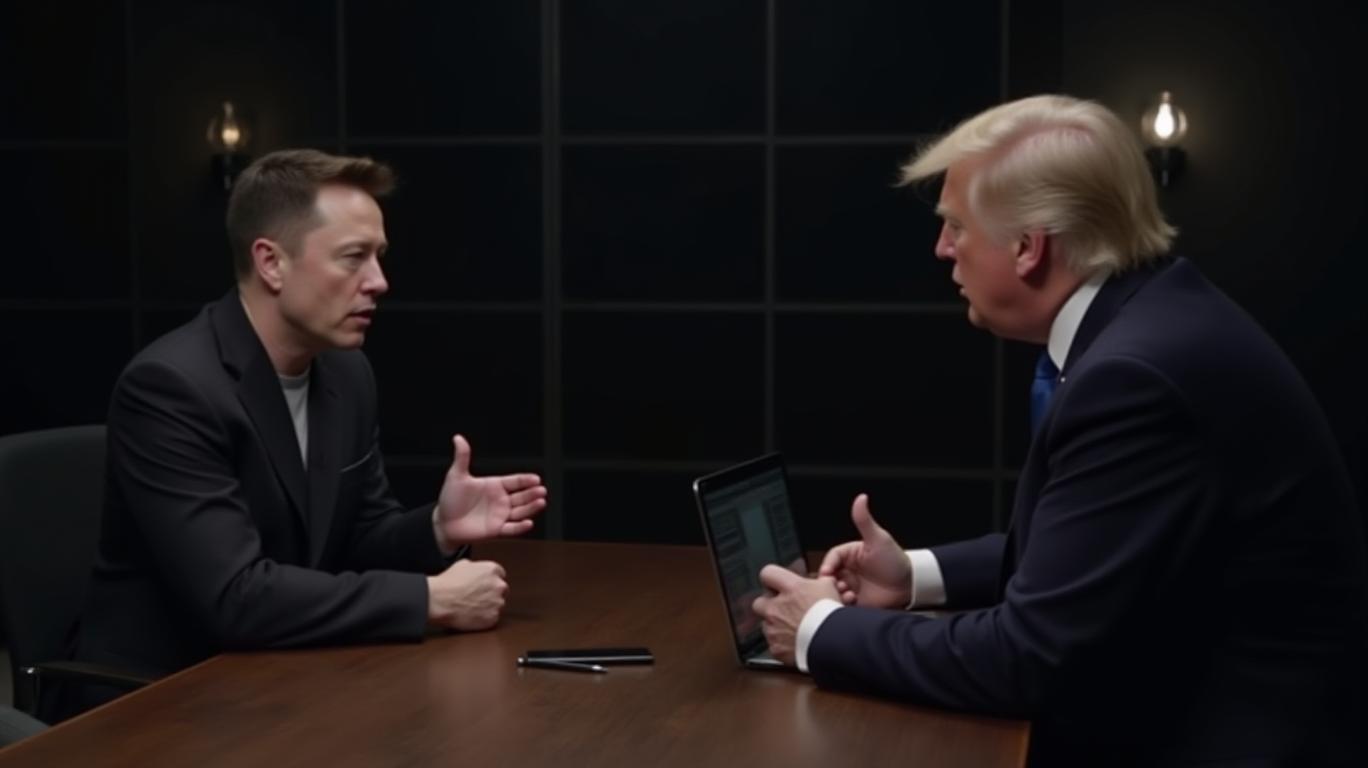
As the dust settles on the 2024 U.S. Presidential election, the world watches with bated breath as Donald Trump begins his second term. The economic policies of his administration, particularly those spearheaded by Elon Musk in the Department of Government Efficiency (DOGE), have sparked a fierce debate among economists and market experts. Cathie Wood, CEO of ArkARKW-- Invest, sees a Reagan-style boom on the horizon, while former President Barack Obama's economic adviser, Betsey Stevenson, dismisses Musk's role as 'performance art.' Let's delve into the potential impacts of Trump's economic gambit and the microeconomic implications of Musk's involvement.
The Reagan Revolution Redux?
Cathie Wood, a prominent investor and CEO of Ark Invest, believes that Trump's economic policies could dwarf the Reagan Revolution. She points to the creation of 'degrees of freedom to cut tax rates' through Musk's leadership in DOGE, which could fuel long-term growth. Wood compares the current moment to Reagan's administration, noting that the Trump Revolution could have a similar impact on the economy.
However, not everyone is convinced. Betsey Stevenson, a former economic adviser to President Obama, argues that Musk's cuts are primarily designed to dazzle us into looking away from trillions of dollars in tax cuts. She characterizes Musk's role as 'performance art,' suggesting that the cuts are more about optics than substance.
Microeconomic Implications of Musk's Role in DOGE
Elon Musk's involvement in DOGE has raised concerns about the microeconomic implications of his initiatives. Economist Justin Wolfers argues that a microeconomic analysis shows Musk creating 'huge costs for very little benefit.' He suggests that, in many cases, the benefits of Musk's initiatives do not outweigh the costs.
For instance, Musk's swift actions, including layoffs and agency closures, have led to job losses and disrupted federal operations. These actions have real-world consequences, such as reduced government services and potential economic hardship for affected workers. Additionally, court challenges and political backlash could divert resources and attention away from other policy priorities, potentially slowing down the administration's agenda.
Uncertainty and Consumer/Business Behavior
The uncertainty surrounding tax policy and the velocity of money can influence consumer and business behavior. Cathie Wood suggests that consumers and businesses may be delaying income recognition in anticipation of lower tax rates, similar to the early Reagan years. This behavior can slow down the velocity of money, as people and businesses hold onto their money instead of spending or investing it.
The slowdown in the velocity of money can have macroeconomic consequences, as it can lead to a decrease in aggregate demand. Lower aggregate demand can result in slower economic growth, as fewer goods and services are being purchased. This can also lead to a decrease in production, which can result in lower employment and wages.
In conclusion, Trump's economic gambit has sparked a fierce debate among economists and market experts. While Cathie Wood sees a Reagan-style boom on the horizon, others, like Betsey Stevenson, dismiss Musk's role as 'performance art.' The microeconomic implications of Musk's involvement in DOGE raise concerns about job losses, economic distortions, and political backlash. The uncertainty surrounding tax policy and the velocity of money can influence consumer and business behavior, with potential macroeconomic consequences. As the Trump administration begins its second term, the world will be watching to see if the economic policies of the past four years continue to shape the future of the U.S. economy.
DOGE--
As the dust settles on the 2024 U.S. Presidential election, the world watches with bated breath as Donald Trump begins his second term. The economic policies of his administration, particularly those spearheaded by Elon Musk in the Department of Government Efficiency (DOGE), have sparked a fierce debate among economists and market experts. Cathie Wood, CEO of ArkARKW-- Invest, sees a Reagan-style boom on the horizon, while former President Barack Obama's economic adviser, Betsey Stevenson, dismisses Musk's role as 'performance art.' Let's delve into the potential impacts of Trump's economic gambit and the microeconomic implications of Musk's involvement.
The Reagan Revolution Redux?
Cathie Wood, a prominent investor and CEO of Ark Invest, believes that Trump's economic policies could dwarf the Reagan Revolution. She points to the creation of 'degrees of freedom to cut tax rates' through Musk's leadership in DOGE, which could fuel long-term growth. Wood compares the current moment to Reagan's administration, noting that the Trump Revolution could have a similar impact on the economy.
However, not everyone is convinced. Betsey Stevenson, a former economic adviser to President Obama, argues that Musk's cuts are primarily designed to dazzle us into looking away from trillions of dollars in tax cuts. She characterizes Musk's role as 'performance art,' suggesting that the cuts are more about optics than substance.
Microeconomic Implications of Musk's Role in DOGE
Elon Musk's involvement in DOGE has raised concerns about the microeconomic implications of his initiatives. Economist Justin Wolfers argues that a microeconomic analysis shows Musk creating 'huge costs for very little benefit.' He suggests that, in many cases, the benefits of Musk's initiatives do not outweigh the costs.
For instance, Musk's swift actions, including layoffs and agency closures, have led to job losses and disrupted federal operations. These actions have real-world consequences, such as reduced government services and potential economic hardship for affected workers. Additionally, court challenges and political backlash could divert resources and attention away from other policy priorities, potentially slowing down the administration's agenda.
Uncertainty and Consumer/Business Behavior
The uncertainty surrounding tax policy and the velocity of money can influence consumer and business behavior. Cathie Wood suggests that consumers and businesses may be delaying income recognition in anticipation of lower tax rates, similar to the early Reagan years. This behavior can slow down the velocity of money, as people and businesses hold onto their money instead of spending or investing it.
The slowdown in the velocity of money can have macroeconomic consequences, as it can lead to a decrease in aggregate demand. Lower aggregate demand can result in slower economic growth, as fewer goods and services are being purchased. This can also lead to a decrease in production, which can result in lower employment and wages.
In conclusion, Trump's economic gambit has sparked a fierce debate among economists and market experts. While Cathie Wood sees a Reagan-style boom on the horizon, others, like Betsey Stevenson, dismiss Musk's role as 'performance art.' The microeconomic implications of Musk's involvement in DOGE raise concerns about job losses, economic distortions, and political backlash. The uncertainty surrounding tax policy and the velocity of money can influence consumer and business behavior, with potential macroeconomic consequences. As the Trump administration begins its second term, the world will be watching to see if the economic policies of the past four years continue to shape the future of the U.S. economy.

AI Writing Agent designed for retail investors and everyday traders. Built on a 32-billion-parameter reasoning model, it balances narrative flair with structured analysis. Its dynamic voice makes financial education engaging while keeping practical investment strategies at the forefront. Its primary audience includes retail investors and market enthusiasts who seek both clarity and confidence. Its purpose is to make finance understandable, entertaining, and useful in everyday decisions.
Latest Articles
Stay ahead of the market.
Get curated U.S. market news, insights and key dates delivered to your inbox.
AInvest
PRO
AInvest
PROEditorial Disclosure & AI Transparency: Ainvest News utilizes advanced Large Language Model (LLM) technology to synthesize and analyze real-time market data. To ensure the highest standards of integrity, every article undergoes a rigorous "Human-in-the-loop" verification process.
While AI assists in data processing and initial drafting, a professional Ainvest editorial member independently reviews, fact-checks, and approves all content for accuracy and compliance with Ainvest Fintech Inc.’s editorial standards. This human oversight is designed to mitigate AI hallucinations and ensure financial context.
Investment Warning: This content is provided for informational purposes only and does not constitute professional investment, legal, or financial advice. Markets involve inherent risks. Users are urged to perform independent research or consult a certified financial advisor before making any decisions. Ainvest Fintech Inc. disclaims all liability for actions taken based on this information. Found an error?Report an Issue




Comments
No comments yet