
Trump's Economic Approval Rating Hits Record Low at 43%
On April 19th, a notable shift in U.S. economic sentiment was reported, as indicated by the latest CNBC All-America Economic Survey. The survey revealed that dissatisfaction with President Donald Trump’s handling of key fiscal issues, such as tariffs, inflation, and government spending, has reached unprecedented levels, leading to the lowest economic approval rating since the start of his administration. The public’s economic optimism, which was initially boosted by the prospect of a Trump reelection, has significantly decreased.
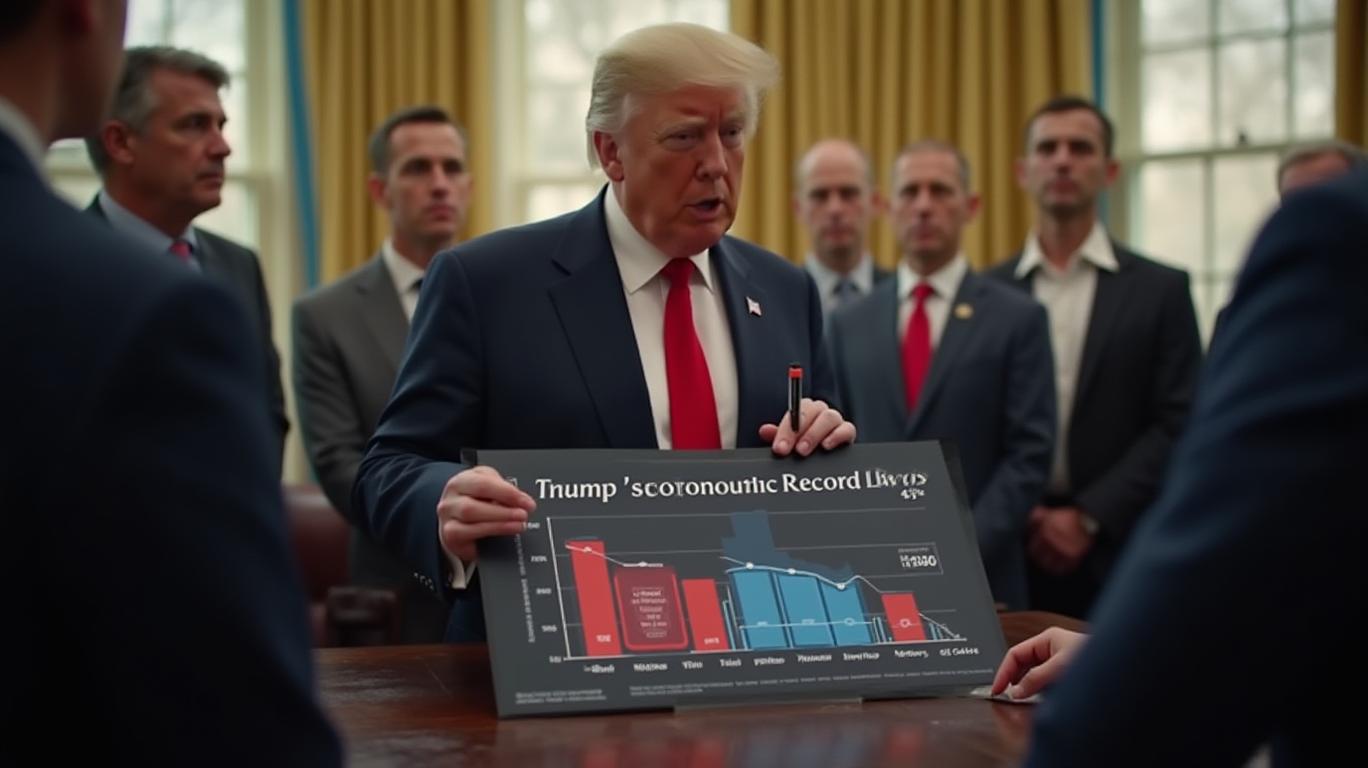
Currently, a record-high percentage of Americans anticipate a decline in the nation’s economic outlook, reflecting a growing pessimism towards the U.S. economy. This nationwide survey of 1,000 respondents shows that while 44% approve of Trump’s presidency, 51% express discontent, a slight increase compared to his final approval ratings before leaving office in 2020. However, only 43% endorse his economic policies, with 55% disapproving, marking a concerning trend as Trump faces his first negative net economic approval rating in historical polling.
The economic approval rating of former U.S. President Donald Trump has seen a significant decline, according to a recent survey. The findings reveal a growing dissatisfaction among Americans regarding the economic conditions under Trump's administration. This shift in public sentiment comes amidst rising pessimism about the future of the U.S. economy.
The survey indicates that only 26 percent of respondents believe the economy is on the right track. This figure underscores a stark contrast to the optimism that was prevalent during the early stages of Trump's presidency. The economic policies implemented during his term, including tax cuts and deregulation, initially boosted economic growth and job creation. However, the long-term effects of these policies have been met with skepticism, as many Americans now express concerns about economic inequality and financial insecurity.
The disapproval of Trump's economic performance is further highlighted by the YouGov/Economist poll, which shows that 50 percent of respondents disapprove of his handling of the economy. This disapproval is not limited to a single demographic but spans across various age groups, income levels, and political affiliations. The survey results suggest that the economic policies of the Trump administration have failed to address the underlying issues that contribute to economic insecurity and inequality.
The growing dissatisfaction with Trump's economic policies can be attributed to several factors. One of the primary concerns is the widening gap between the rich and the poor. Despite the economic growth experienced during Trump's presidency, the benefits of this growth have not been evenly distributed. Many Americans feel that the economic policies have primarily benefited the wealthy, while the middle and lower classes have been left behind.
Another significant factor contributing to the decline in Trump's economic approval rating is the impact of the COVID-19 pandemic. The pandemic has had a devastating effect on the U.S. economy, leading to widespread job losses, business closures, and economic uncertainty. While the Trump administration implemented various relief measures, many Americans feel that these efforts were insufficient and poorly executed. The pandemic has exacerbated existing economic inequalities and highlighted the vulnerabilities of the U.S. economy.
The survey results also indicate that the public's perception of the economy is closely tied to their personal financial situation. Those who have experienced job loss, reduced income, or financial hardship during the pandemic are more likely to express dissatisfaction with the economy and disapprove of Trump's economic policies. This suggests that the economic recovery from the pandemic will be a critical factor in shaping public sentiment towards the economy and future economic policies.
In conclusion, the decline in Trump's economic approval rating reflects a growing dissatisfaction among Americans regarding the economic conditions under his administration. The survey results highlight the need for economic policies that address the underlying issues contributing to economic insecurity and inequality. As the U.S. economy continues to recover from the pandemic, it will be essential for policymakers to prioritize measures that promote inclusive economic growth and address the concerns of all Americans.

Stay ahead of the market.
Get curated U.S. market news, insights and key dates delivered to your inbox.






Comments
No comments yet