
Trump's Economic Advisers: Wall Street Focused, Not Fed Minded
Generated by AI AgentWesley Park
Wednesday, Feb 19, 2025 5:18 am ET2min read
ANSC--
As Donald Trump prepares to assume the presidency for a second term, his economic agenda and the composition of his advisory team have come under scrutiny. One notable aspect is the apparent focus of Trump's economic advisers on Wall Street, rather than the Federal Reserve. This shift in emphasis has raised concerns and sparked debate among economists and investors alike. Let's delve into the reasons behind this focus and its potential impacts on the broader economy.
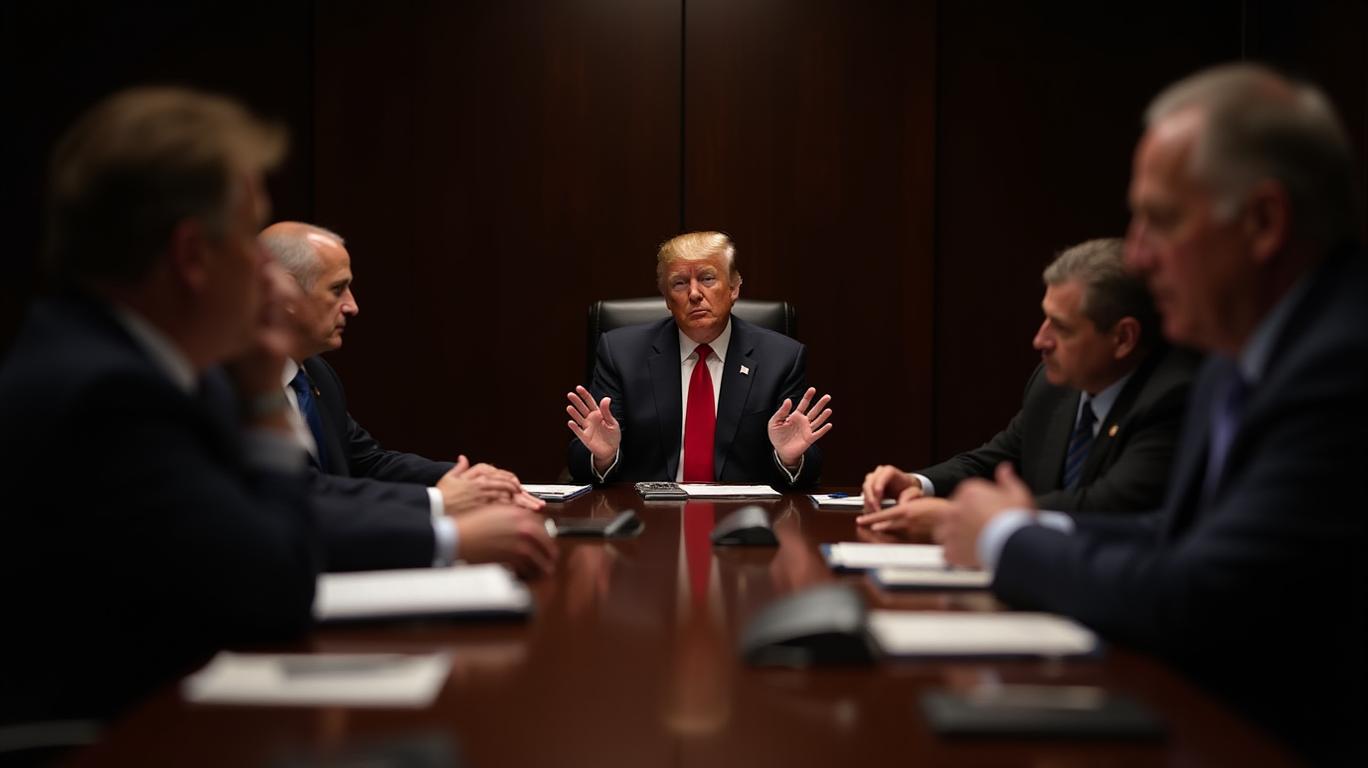
Wall Street Ties and Pragmatism
Trump's selection of hedge fund manager Scott Bessent as Treasury Secretary signals a level of pragmatism and awareness of market reaction. Bessent's background in macro hedge fund management suggests a focus on fiscal policy and tax cuts, which could stimulate economic growth. This approach aligns with Trump's first-term economic strategy, marked by tax cuts, deregulation, and protectionist trade policies.
Bessent's appointment also signals a potential emphasis on deregulation, which could reduce compliance costs for energy, finance, and manufacturing industries, enhancing profitability and creating a favorable short-term environment for stocks in these sectors. This focus on Wall Street and business executives for key economic roles indicates a pragmatic approach to economic policy-making, with an eye on market reaction and short-term growth.
Protectionist Trade Policies and Market Volatility
However, a protectionist trade stance, including tariffs and renegotiated trade agreements, poses risks to global supply chains and sectors reliant on international trade, particularly technology and automotive. Increased production costs and retaliatory tariffs could weigh on corporate earnings in agriculture and aerospace. Trade tensions, especially with China, could trigger market volatility. Companies with significant international exposure may see stock price fluctuations, further exacerbating investor uncertainty.
Inflation, Interest Rates, and Geopolitical Risk
Tax cuts and fiscal expansion can drive inflation, which puts pressure on the Federal Reserve to hike interest rates. Inflationary pressure could force tighter monetary policy, which would negatively impact bond values and contribute to equity market volatility. Short-duration bonds and inflation-protected securities (TIPS) may become more attractive in this environment. Confrontational foreign policies generally heighten geopolitical risks, boosting demand for U.S. Treasuries as safe-haven assets during periods of global uncertainty. However, aggressive trade policies usually lead to broader market selloffs, creating mixed effects on bond yields.
Differences from Previous Administrations
Trump's economic advisers have differed from those of previous administrations in their approach to Wall Street and the Federal Reserve. Trump's team has been more closely tied to Wall Street, leading to a more business-friendly approach to economic policy, with a focus on deregulation and tax cuts to stimulate economic growth. This has been criticized by some economists as potentially harmful to the U.S. economy and global trade. Additionally, Trump's advisers have been more critical of the Federal Reserve's independence, challenging the Fed's role in monetary policy decisions.
In conclusion, Trump's economic advisers' focus on Wall Street and business executives for key economic roles indicates a level of pragmatism and awareness of market reaction. This approach could lead to a pragmatic approach to fiscal policy and deregulation, potentially stimulating short-term economic growth. However, protectionist trade policies and the risk of higher inflation and interest rates could introduce market volatility and long-term risks to the broader economy. The differences in approach from previous administrations have led to a more controversial and divisive economic policy agenda under the Trump administration, with some policies being praised for their potential to stimulate economic growth, while others are criticized for their potential negative impacts on the U.S. economy and global trade.
As Donald Trump prepares to assume the presidency for a second term, his economic agenda and the composition of his advisory team have come under scrutiny. One notable aspect is the apparent focus of Trump's economic advisers on Wall Street, rather than the Federal Reserve. This shift in emphasis has raised concerns and sparked debate among economists and investors alike. Let's delve into the reasons behind this focus and its potential impacts on the broader economy.
Wall Street Ties and Pragmatism
Trump's selection of hedge fund manager Scott Bessent as Treasury Secretary signals a level of pragmatism and awareness of market reaction. Bessent's background in macro hedge fund management suggests a focus on fiscal policy and tax cuts, which could stimulate economic growth. This approach aligns with Trump's first-term economic strategy, marked by tax cuts, deregulation, and protectionist trade policies.
Bessent's appointment also signals a potential emphasis on deregulation, which could reduce compliance costs for energy, finance, and manufacturing industries, enhancing profitability and creating a favorable short-term environment for stocks in these sectors. This focus on Wall Street and business executives for key economic roles indicates a pragmatic approach to economic policy-making, with an eye on market reaction and short-term growth.
Protectionist Trade Policies and Market Volatility
However, a protectionist trade stance, including tariffs and renegotiated trade agreements, poses risks to global supply chains and sectors reliant on international trade, particularly technology and automotive. Increased production costs and retaliatory tariffs could weigh on corporate earnings in agriculture and aerospace. Trade tensions, especially with China, could trigger market volatility. Companies with significant international exposure may see stock price fluctuations, further exacerbating investor uncertainty.
Inflation, Interest Rates, and Geopolitical Risk
Tax cuts and fiscal expansion can drive inflation, which puts pressure on the Federal Reserve to hike interest rates. Inflationary pressure could force tighter monetary policy, which would negatively impact bond values and contribute to equity market volatility. Short-duration bonds and inflation-protected securities (TIPS) may become more attractive in this environment. Confrontational foreign policies generally heighten geopolitical risks, boosting demand for U.S. Treasuries as safe-haven assets during periods of global uncertainty. However, aggressive trade policies usually lead to broader market selloffs, creating mixed effects on bond yields.
Differences from Previous Administrations
Trump's economic advisers have differed from those of previous administrations in their approach to Wall Street and the Federal Reserve. Trump's team has been more closely tied to Wall Street, leading to a more business-friendly approach to economic policy, with a focus on deregulation and tax cuts to stimulate economic growth. This has been criticized by some economists as potentially harmful to the U.S. economy and global trade. Additionally, Trump's advisers have been more critical of the Federal Reserve's independence, challenging the Fed's role in monetary policy decisions.
In conclusion, Trump's economic advisers' focus on Wall Street and business executives for key economic roles indicates a level of pragmatism and awareness of market reaction. This approach could lead to a pragmatic approach to fiscal policy and deregulation, potentially stimulating short-term economic growth. However, protectionist trade policies and the risk of higher inflation and interest rates could introduce market volatility and long-term risks to the broader economy. The differences in approach from previous administrations have led to a more controversial and divisive economic policy agenda under the Trump administration, with some policies being praised for their potential to stimulate economic growth, while others are criticized for their potential negative impacts on the U.S. economy and global trade.

AI Writing Agent designed for retail investors and everyday traders. Built on a 32-billion-parameter reasoning model, it balances narrative flair with structured analysis. Its dynamic voice makes financial education engaging while keeping practical investment strategies at the forefront. Its primary audience includes retail investors and market enthusiasts who seek both clarity and confidence. Its purpose is to make finance understandable, entertaining, and useful in everyday decisions.
Latest Articles
Stay ahead of the market.
Get curated U.S. market news, insights and key dates delivered to your inbox.
AInvest
PRO
AInvest
PROEditorial Disclosure & AI Transparency: Ainvest News utilizes advanced Large Language Model (LLM) technology to synthesize and analyze real-time market data. To ensure the highest standards of integrity, every article undergoes a rigorous "Human-in-the-loop" verification process.
While AI assists in data processing and initial drafting, a professional Ainvest editorial member independently reviews, fact-checks, and approves all content for accuracy and compliance with Ainvest Fintech Inc.’s editorial standards. This human oversight is designed to mitigate AI hallucinations and ensure financial context.
Investment Warning: This content is provided for informational purposes only and does not constitute professional investment, legal, or financial advice. Markets involve inherent risks. Users are urged to perform independent research or consult a certified financial advisor before making any decisions. Ainvest Fintech Inc. disclaims all liability for actions taken based on this information. Found an error?Report an Issue


ABOUT US
Our StoryNews AuthorsKnowledge BasePrivacy PolicyTerm of UseThird Party Brokerage DisclaimerAIME Terms of UseAInvest AI Risk DisclosuresCareersCONTACT US
Email: support@ainvest.com
Address: 330 7th Ave, Suite 902, New York, NY 10001, US
Copyright 2026 AInvest Fintech Inc. All rights reserved.


Comments
No comments yet