
Trump Doubles Steel Tariffs to 50% Boosting Domestic Industry
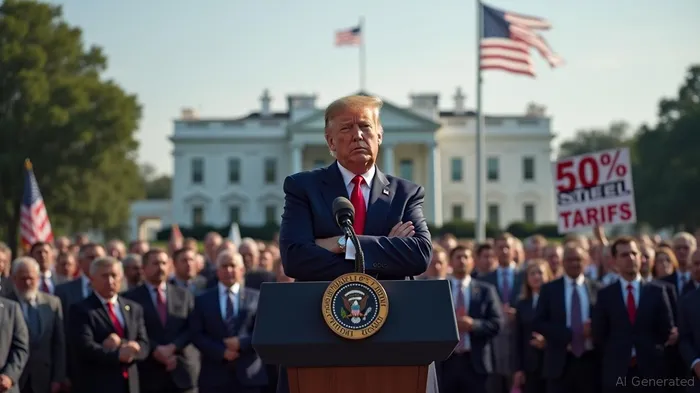
President Donald Trump announced a significant increase in steel import tariffs, raising them from 25% to 50%. This decision was made public during a rally at the U.S. Steel CorporationX-- in West Mifflin, Pennsylvania. Trump emphasized that this move is aimed at further securing the domestic steel industry, which he considers a matter of national security. "If you don't have steel, you don't have a country," he stated, underscoring the strategic importance of the steel sector.
The announcement came amidst ongoing negotiations between U.S. Steel and Japan-based Nippon Steel. Trump highlighted that he had been approached multiple times by Nippon Steel regarding a potential partnership. He expressed satisfaction with the negotiations, noting that the deal had become more favorable for U.S. Steel workers. "There is unbelievable spiritFLYY-- for what you're doing," Trump said, addressing the crowd. "You're going to have a tremendous relationship with Nippon."
The United Steelworkers, however, released a statement expressing their lack of involvement in the discussions between U.S. Steel, Nippon Steel, and the Trump administration. They also raised concerns about Nippon Steel's history of unfair trade practices, despite recent imposed duties and penalties. The union emphasized the need for binding commitments and transparency in the negotiations.
Trump's visit to Pittsburgh followed a social media post on Truth Social, where he announced a "planned partnership" between U.S. Steel and Nippon Steel. This partnership is expected to create at least 70,000 jobs and add $14 billion to the U.S. economy, with the bulk of the investment occurring in the next 14 months. Trump assured that U.S. Steel's headquarters would remain in Pittsburgh, addressing concerns about the potential relocation of the company.
The timeline of the Nippon-U.S. Steel negotiations has been complex. Nippon Steel announced its intention to acquire U.S. Steel in December 2023 for $14.9 billion. Despite promising to keep jobs in the United States, the Biden administration opposed the acquisition in March 2024, citing national security concerns. The deal was officially blocked by the Biden administration in January 2025 after the Committee on Foreign Investment in the United States (CFIUS) failed to reach a consensus on the national securitySNFCA-- implications.
Both Nippon Steel and U.S. Steel filed a lawsuit against the Biden administration, alleging political interference and violation of due process. They argued that the review process was manipulated to advance Biden’s political agenda and that the decision was influenced by the United Steelworkers union. In response, Trump signaled that he may allow the deal to go through after filing a motion to extend two deadlines in the lawsuit.
Trump later clarified that Nippon Steel wanted to invest in U.S. Steel rather than solely purchase it. "They're coming back as an investor, and I feel better about that," he said. "But I know them very well. I know the thinking. That's the investor. They'll invest, and somebody else maybe is sitting in this chair and they will no longer have an investment; they'll have the whole thing. You know, that's the way it works."
The doubling of steel tariffs is expected to have significant implications for the domestic steel industry. It could further increase prices for the metal used in various sectors, including housing, autos, and other goods. However, Trump's move is seen as a protective measure to ensure the sustainability and competitiveness of the U.S. steel industry in the face of global competition.

Stay ahead of the market.
Get curated U.S. market news, insights and key dates delivered to your inbox.
AInvest
PRO
AInvest
PRO



Comments
No comments yet