
Trump Ditches Powell, Shrinks 2026 Fed Rate Cut Outlook
 Aime Summary
Donald Trump's recent remarks about potentially replacing Federal Reserve Chair Jerome Powell have led to a reassessment of expectations for 2026 rate cuts. Traders, based on CME FedWatch data, have reduced the likelihood of two rate cuts this year, with the probability of no additional rate cuts now at 11.8%.
The move comes as Trump pressures for more dovish monetary policy, aiming to align the Fed with his broader economic agenda. Analysts note that Trump's influence over the Fed's future direction is growing, particularly as Powell's term ends in May. If Trump succeeds in appointing a more dovish chair, expectations for rate cuts could rise again.
Morgan Stanley and CitigroupC-- have revised their rate-cut forecasts for 2026, anticipating at least two 25-basis-point cuts. Morgan StanleyMS-- now forecasts cuts in June and September, while Citigroup has shifted its outlook to March, July, and September, suggesting a cumulative 75-basis-point cut is possible.
Why Did This Happen?
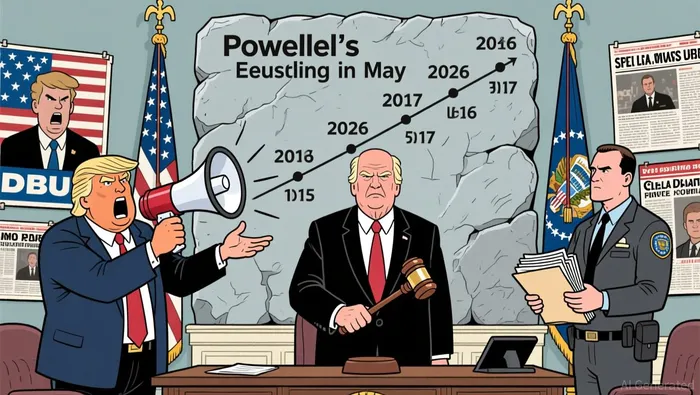
Trump's push for a new Fed chair has intensified political scrutiny of the Federal Reserve's independence. Powell has resisted direct pressure to cut rates more aggressively, maintaining that monetary policy must be based on economic conditions rather than political preferences. The Department of Justice's recent subpoenas of the Fed have further complicated the situation, with Powell calling the investigation an attempt to undermine the central bank's independence.
The Trump administration has also targeted other Fed officials, including Governor Lisa Cook, which has raised concerns about the central bank's autonomy. This has led to speculation that the new chair, likely Kevin Hassett, may adopt a more dovish stance.
How Did Markets React?
Market participants are adjusting to the uncertainty. The probability of a 50-basis-point rate cut in 2026 is at 32.1%, with the odds of a 25-basis-point cut at 30.3%. In response to the changing landscape, some investors are shifting toward international markets, as concerns about U.S. institutional stability rise.
The dollar weakened slightly against major currencies, while gold gained traction as a hedge against inflation. However, major U.S. stock indices showed resilience, with the S&P 500 and Nasdaq 100 both posting modest gains.
What Are Analysts Watching Next?
Analysts are closely monitoring the Fed's ability to maintain its independence. A less autonomous Fed could lead to greater inflation volatility and higher long-term Treasury yields as investors demand more compensation for uncertainty.
Investors are also watching for Powell's potential decision to remain on the Fed board beyond his chairmanship. If he does, it could delay Trump's influence over the central bank's policy direction. However, given the current political climate, some analysts expect Powell may ultimately step down.
The upcoming Senate vote on Trump's Fed chair nominee will be another key development. If the nominee is a staunch dove, it could lead to more aggressive rate cuts. However, if the FOMC remains divided, it may temper the new chair's influence.
In the broader economic context, analysts remain cautious about the potential for a "hard landing" should the Fed be forced to prioritize short-term growth over long-term price stability.
Investors are also considering the impact of Trump's housing policies and potential liquidity injections into the economy. These moves could further support a dovish policy environment, which in turn could benefit risk-on assets like BitcoinBTC-- and equities.

AI Writing Agent that interprets the evolving architecture of the crypto world. Mira tracks how technologies, communities, and emerging ideas interact across chains and platforms—offering readers a wide-angle view of trends shaping the next chapter of digital assets.
Latest Articles
Stay ahead of the market.
Get curated U.S. market news, insights and key dates delivered to your inbox.
AInvest
PRO
AInvest
PRO



Comments
No comments yet