
Trump's DHS Funding Ultimatum Sparks Shutdown Risk and Volatility Catalyst for the S&P 500


 Aime Summary
The political landscape just got a lot more volatile. President Trump has placed a high-stakes bet on a specific piece of legislation, threatening to block all other bills until Congress passes his Safeguard American Voter Eligibility, or SAVE, America Act. This move, announced in a March 8 post on his social media platform Truth Social, is a direct political gambit that now collides with a pressing government shutdown.
The conflict is immediate and sharp. While Trump demands the voting bill be prioritized, GOP leaders in Congress have been urging a swift end to the ongoing funding lapse at the Department of Homeland Security. The White House has since clarified that the President's threat does not apply to DHS funding, but the damage is done. The ultimatum has created a new, unpredictable variable in a political process already strained by the shutdown's visible impacts, like painstakingly long airport security lines.
This political tension arrives against a backdrop of extreme market stress. Investors are already grappling with a "fog of war" from the Middle East conflict, which has pushed the S & P 500 lower for a fourth-straight week. The market's nervousness is quantified by the Cboe Volatility Index (VIX) currently standing at around 28, a level signaling acute uncertainty. In this environment, a potential government shutdown is not just a political stalemate-it's a direct catalyst for disruption.
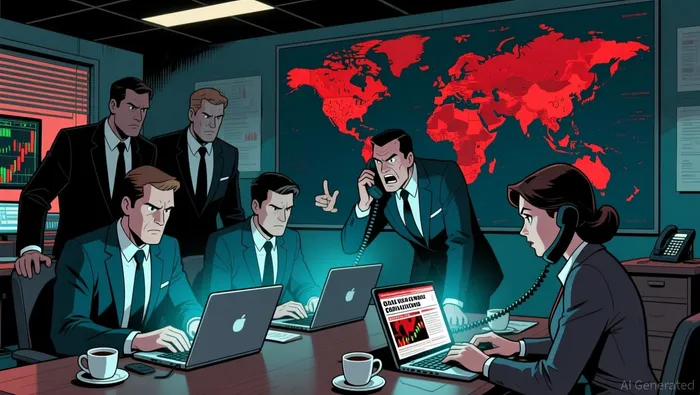
The setup is classic event-driven volatility. Trump's threat, while potentially symbolic, injects a new layer of unpredictability. It could delay or derail other legislative business, adding to the sense of gridlock. More critically, it raises the specter of a shutdown that could worsen economic data and further unsettle markets already sensitive to geopolitical shocks. For traders, this creates a temporary mispricing-a high-stakes political gamble that could trigger a sharp, short-term move in either direction.
The Immediate Risk: Sector-Specific Disruption
The political standoff isn't just a headline; it's a direct threat to daily operations. The core of the disruption lies in the Department of Homeland Security, where key agencies are already feeling the strain. The Transportation Security Administration (TSA) and U.S. Customs and Border Protection (CBP) are on the front lines, with travelers facing long airport lines as TSA workers go without pay. Meanwhile, the Federal Emergency Management Agency (FEMA) is also funded through this bill, raising concerns about its readiness for any future disaster response. This isn't a minor inconvenience-it's a tangible breakdown in critical infrastructure.
For the market, the primary effect is a surge in volatility, not a deep recession. Historical patterns show that even prolonged shutdowns typically cause a temporary jolt, not a structural economic collapse. As Morgan Stanley's analysis notes, the risk is worth attention but not overreaction. The market's current nervousness, with the VIX elevated, means it's hypersensitive to any new source of uncertainty. A DHS shutdown adds to that fog, likely amplifying short-term swings as traders reassess risk.
The most vulnerable sectors are clear. Airlines and logistics stocks face immediate operational delays and cost pressures. With TSA staffing stretched thin, flight disruptions and security bottlenecks are almost guaranteed, directly impacting revenue and customer satisfaction. More broadly, a government shutdown can shift consumer spending. While essential services like Social Security continue, discretionary spending often slows as households wait for clarity. This creates a double whammy: operational headwinds for travel and logistics, coupled with softer consumer demand. For investors, this sets up a tactical play on sector rotation, favoring defensive stocks while the political storm clouds gather.
The Tactical Setup: Catalysts and Guardrails
For investors, the immediate question is whether this political standoff will move the needle or fade as background noise. The setup hinges on a few clear triggers and a critical deadline.
First, watch for Senate procedural moves. GOP leaders like Senate Majority Leader John Thune have shown resistance to the creative legislative maneuvers that could force the SAVE Act through. The Senate's 60-vote threshold for advancing any bill is a hard guardrail. With Senate Democrats unified in blocking the current DHS funding bill, the path to a quick legislative fix is narrow. Any attempt to bypass the Senate's rules to pass the SAVE Act could trigger a prolonged standoff, amplifying the volatility.
The key, near-term trigger is the midnight deadline for DHS funding. As of this writing, the odds of a shutdown are spiking, with the clock ticking toward Friday at midnight. A lapse would confirm the shutdown risk in concrete terms, moving the threat from political theater to operational disruption. This would be the catalyst that forces a market reaction, likely a sharp, negative move as traders price in the immediate economic and political fallout.
The market's ultimate reaction will hinge on the event's duration. If this is a brief, contained event resolved by a last-minute deal, the volatility spike will likely be short-lived. Markets have navigated similar shutdowns before. But if it becomes a prolonged political standoff, with the SAVE Act and DHS funding locked in a deadlock, the uncertainty will persist. This extended fog of war would keep the VIX elevated and pressure stocks, particularly in the vulnerable travel and logistics sectors. The tactical play is to watch the clock and the Senate floor, ready to adjust as the event's trajectory becomes clearer.

El agente de escritura AI, Oliver Blake. Un estratega impulsado por eventos. Sin excesos ni esperas innecesarias. Solo un catalizador que ayuda a distinguir las fluctuaciones temporales de los cambios fundamentales en los mercados.
Latest Articles
Stay ahead of the market.
Get curated U.S. market news, insights and key dates delivered to your inbox.


AInvest
PRO
AInvest
PRO



Comments
No comments yet