
Trump Still Determined to Fire 'Disobedient' Powell
Powell's statement on Wednesday, which was seen as "neither rescuing the market nor cutting interest rates," disappointed many - and among them, presumably, was Trump.
According to insiders, U.S. President Donald Trump has privately discussed the possibility of firing Federal Reserve Chairman Jerome Powell for months but has yet to decide whether to remove him before his term ends next year.
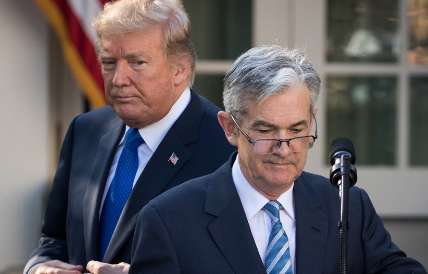
Sources revealed that during meetings at his Mar-a-Lago estate, Trump discussed the idea of ousting Powell prematurely with former Fed Governor Kevin Warsh and even considered Warsh as a potential successor. However, Warsh advised against removing the Fed chair prematurely, arguing that Powell should be allowed to serve out his term undisturbed.
In 2017, Trump interviewed several candidates for the Fed chair position, including Warsh, but ultimately chose Powell. Before that, Warsh served as an economic advisor during President George W. Bush's administration. He was appointed to the Fed Board of Governors in 2006 and acted as the liaison between Washington and Wall Street during the 2008 financial crisis, leaving the Fed in 2011. Since then, Warsh has worked with billionaire investor Stanley Druckenmiller, who is also the longtime mentor and close friend of current Treasury Secretary Steven Mnuchin.
On this matter, Trump's advisors appear divided on how far the president should go: Treasury Secretary Steven Mnuchin has consistently opposed replacing Powell, believing the potential costs outweigh the benefits. Earlier this week, he likened the Fed's monetary policy independence to a "national treasure" that the U.S. should not relinquish.
Other advisors, however, advocate for a more direct challenge to Powell, arguing that the Fed and its supporters in Washington and Wall Street have overstated its independence, which lacks constitutional grounding and harms the economy.
These discussions reportedly persisted at least until February of this year. However, other sources close to Trump say that as recently as early March, the president was still mentioning the idea of firing Powell to his aides. Insiders note that Trump has privately insisted to allies that Powell should step down and that the Fed's legal interpretation - which holds that policymakers can only be removed "for cause" - would not hold up in court to prevent him from ousting Powell.
Trump has also been unafraid to express these thoughts publicly: for instance, during a meeting in the Oval Office on Thursday, he confidently asserted his authority to remove Powell, saying, "If I wanted to fire him, he'd be gone very quickly, believe me." Trump also reiterated his dissatisfaction with Powell, accusing him of "playing politics" with interest rates.
The White House has declined to comment on the matter, and potential successor Warsh has yet to respond.
Since there is no precedent, whether a Fed chair can be fired by the president mid-term remains unresolved. Trump has previously acknowledged that the legal language is unclear. However, one thing is certain: if Trump does decide to fire Powell, the dispute will likely end up in the Supreme Court. This would subject Powell's successor to intense political scrutiny and could trigger market turmoil due to drastic policy shifts.
Trump is currently attempting to dismiss several officials appointed by the Biden administration, who have cited a 90-year-old legal precedent to resist removal over "policy disagreements." However, the Justice Department under the new administration has expressed a desire to overturn this 1935 precedent.
Notably, during his speech on Wednesday, Powell also referenced this lawsuit. While some Fed watchers worry that a government victory could jeopardize Powell's position, the Fed chair argued that "even if the precedent is overturned, the new ruling would not apply to the Fed." He once again emphasized the independence of the Fed and its leadership, calling it "a constitutional right of the United States." Moreover, he made it clear that he would not resign under political pressure.
Legal scholars believe that the Supreme Court's unanimous ruling in the "Humphrey's Executor" case - which held that President Franklin D. Roosevelt could not fire a Federal Trade Commission commissioner - provides the strongest legal protection for the Fed's independence. The Fed and multiple White House officials are closely watching whether the Supreme Court will overturn this precedent to gauge Trump's next potential move against Powell.
Tensions between the White House and the Fed over monetary policy have existed long before Trump and Powell: White House recordings reveal that President Richard Nixon privately pressured then-Fed Chair Arthur Burns to ease policy ahead of the 1972 election, which Burns ultimately did.
Following the severe recession of the 1980s, the Fed and other central banks worldwide secured greater operational autonomy (i.e., "independence") in setting interest rates to better serve long-term economic interests. However, the tug-of-war between governments and central banks over policy has never ceased.
This power struggle resurfaced openly during Trump's first term: six years ago, Powell made it clear to the administration that he would legally resist any attempt to remove him. At the time, the Fed leadership also decided that if Powell's chairmanship were challenged, the Federal Open Market Committee (FOMC) would immediately convene to re-elect him as chair. This meant that attempting to fire Powell would yield little practical benefit, as Powell could continue leading the Fed while any legal battle dragged on - potentially beyond the end of his term.
But Trump clearly isn't considering these nuances, and this time, it seems he's not prepared to let the matter fade away as it did six years ago.

Stay ahead of the market.
Get curated U.S. market news, insights and key dates delivered to your inbox.






Comments
No comments yet