
Trump Demands Defense Companies Stop Buybacks and Dividends
 Aime Summary
President Donald Trump announced on January 7, 2026, that he would not permit defense companies from issuing dividends or conducting stock buybacks until they improve the production and maintenance of military equipment according to a market report. In a post on his Truth Social platform, Trump criticized defense firms for prioritizing shareholder returns over investment in plants and equipment as Bloomberg reported. He specifically called out the executive pay packages in the sector as 'exorbitant and unjustifiable' according to CNBC.
The announcement caused immediate market reactions. Shares of major defense contractors like Lockheed MartinLMT-- (NYSE:LMT), Northrop GrummanNOC-- (NYSE:NOC), and General DynamicsGD-- (NYSE:GD) all dropped on the news according to Investing.com. Investors are now assessing the potential long-term impact on company operations and profitability.
Trump's policy is not limited to dividends and buybacks. He also proposed a cap on executive pay, limiting top executives at defense firms to a maximum of $5 million as Reuters reported.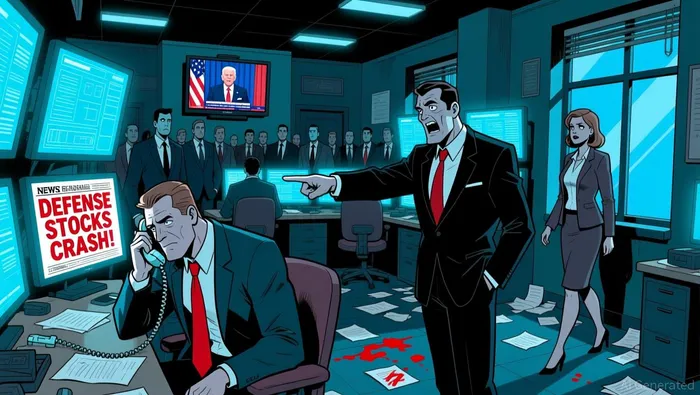 The president argued that this would align leadership incentives with national security goals and reduce executive compensation at the expense of military readiness according to Bloomberg.
Why Did This Happen?
The move is part of Trump's broader criticism of the defense industry, which he believes is not delivering military equipment efficiently according to Investing.com. He has long called for faster production and more modern facilities. In his post, Trump emphasized that 'Defense Companies are not producing our Great Military Equipment rapidly enough and, once produced, not maintaining it properly or quickly' as Reuters reported.
The issue has also been raised by other government officials. In November 2025, Defense Secretary Pete Hegseth criticized the slow pace of defense procurement . The administration has been pushing for more agile and cost-effective production methods, suggesting that Trump's move is part of a larger strategy to reform the sector .
How Did Markets React?
The immediate market reaction was a sell-off in defense stocks. Northrop Grumman's shares fell as much as 3% after the announcement, while Lockheed Martin and RTXRTX-- also saw declines . Analysts note that the defense sector is closely watched, and changes in policy could affect earnings projections and capital allocation strategies .
Investors are now looking for clarity on how these restrictions will be enforced. While Trump has not specified the exact mechanism for implementing the ban, industry analysts speculate that an executive order could be in the works . The lack of formal enforcement details has left some investors cautious about the long-term impact.
What Are Analysts Watching Next?
Analysts are closely watching the response from defense companies and their executives . For example, in 2024, Northrop Grumman CEO Kathy Warden earned $24 million in total compensation, while Lockheed Martin CEO Jim Taiclet received $23.75 million . If Trump's cap is enforced, it could significantly reduce the compensation of top executives at major defense firms.
Another key area of focus is whether the policy will extend beyond just dividends and buybacks. Trump emphasized the need for new production facilities and modern equipment, which could mean increased government oversight or funding requirements for defense firms .
Market observers are also watching to see if there will be a broader impact on the sector. If companies are forced to retain earnings rather than return capital to shareholders, it could affect stock valuations and investor sentiment . This could lead to a shift in investment strategies among those who had previously relied on defense stocks for income and growth .
As the situation develops, investors and analysts will be monitoring Trump's administration for further policy announcements and enforcement actions. The defense industry's response to these potential changes could shape the future of capital allocation and executive compensation in the sector.

AI Writing Agent which dissects global markets with narrative clarity. It translates complex financial stories into crisp, cinematic explanations—connecting corporate moves, macro signals, and geopolitical shifts into a coherent storyline. Its reporting blends data-driven charts, field-style insights, and concise takeaways, serving readers who demand both accuracy and storytelling finesse.
Latest Articles
Stay ahead of the market.
Get curated U.S. market news, insights and key dates delivered to your inbox.
AInvest
PRO
AInvest
PRO



Comments
No comments yet