
Trump Demands 100% U.S. Manufacturing for Tesla Vehicles
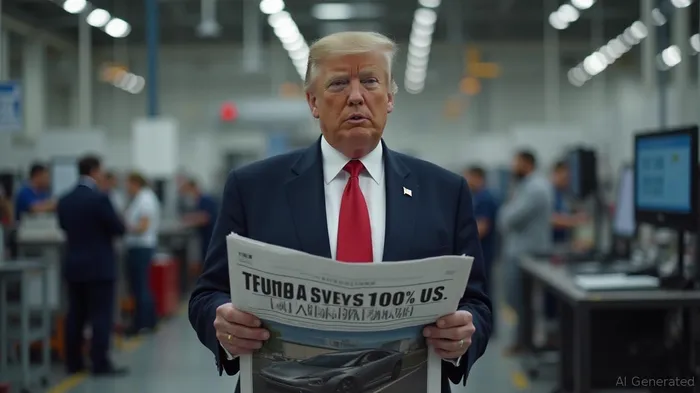
On May 30, Donald Trump made a significant statement regarding the manufacturing of vehicles, including those produced by TeslaTSLA--. Trump emphasized that he expects all vehicles, including those made by Tesla, to be 100% manufactured in the United States. This declaration comes as part of his broader stance on promoting domestic manufacturing and reducing reliance on foreign production.
Trump's comments were made in response to questions about the future of the U.S. automotive industry. Despite providing some flexibility on tariffs for U.S. automakers, Trump expressed his expectation that the industry would fully restore domestic production by next year. This move is seen as a continuation of his administration's efforts to bolster American manufacturing and create jobs within the country.
Trump highlighted the current practice of automakers sourcing parts from various countries, which he found confusing and inefficient. He stated that automakers often produce parts in Canada, Mexico, and Europe, and then assemble them in different locations, leading to a lack of transparency and control over the supply chain. Trump's new policy aims to address this issue by mandating that all components, including the final assembly, be manufactured within the United States.
For Tesla, which has been expanding its production capabilities globally, this could mean significant changes in its supply chain and manufacturing strategies. Tesla's CEO, Elon Musk, has previously indicated his intention to continue leading the company for at least the next five years, suggesting that the company will need to navigate these new requirements carefully. Musk recently shared on social media that he has returned to a 7x24-hour work schedule, focusing on critical projects such as X/xAI, Tesla, and the upcoming Star ship launch.
Trump's push for 100% domestic manufacturing aligns with his broader economic policies aimed at reducing the trade deficit and increasing domestic job opportunities. However, it also raises questions about the feasibility and potential impact on the global supply chain. Automakers often rely on a complex network of suppliers and manufacturing facilities spread across different countries to optimize costs and efficiency.
The automotive industry, including companies like Tesla, will need to assess the practicality of Trump's demands. While the push for domestic manufacturing could stimulate economic growth and job creation in the U.S., it may also lead to increased production costs and potential disruptions in the supply chain. Companies will need to evaluate the trade-offs and develop strategies to comply with these new requirements while maintaining their competitive edge in the global market.
In summary, Trump's call for 100% domestic manufacturing of vehicles, including those made by Tesla, represents a significant shift in U.S. automotive policy. The industry will need to adapt to these new demands, which could have far-reaching implications for production, supply chains, and global trade dynamics. The automotive sector will need to carefully consider the economic and operational impacts of this policy change and develop strategies to ensure compliance while maintaining profitability and competitiveness.

Stay ahead of the market.
Get curated U.S. market news, insights and key dates delivered to your inbox.
AInvest
PRO
AInvest
PRO



Comments
No comments yet