
Trump Defies Weak Jobs Data Predicts Near-Term Economic Recovery Amid Tariff Driven Uncertainty
 Aime Summary
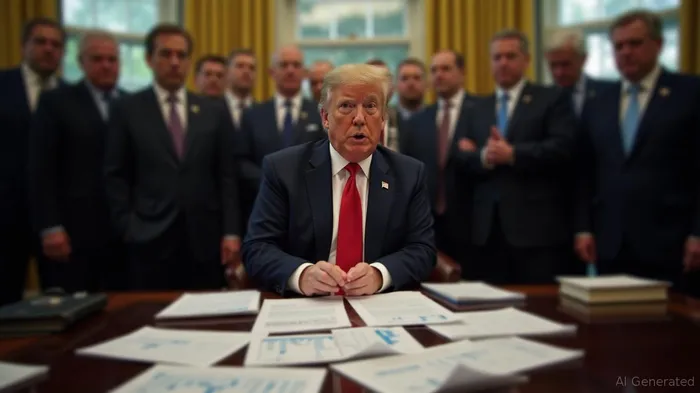
President Trump has reiterated his optimistic forecast that the U.S. economy will rebound within five to six months, despite mixed economic data and widespread skepticism from analysts and market participants [1]. The prediction comes amid a volatile economic climate, marked by recent tariff increases and a controversial response to the latest jobs report, which has raised concerns about the economy’s trajectory.
The July jobs report, released by the Bureau of Labor Statistics, showed a weak addition of just 106,000 jobs over the past three months, significantly below expectations. The data included substantial downward revisions for May and June, which the Labor Department described as abnormally large. These adjustments have led to questions about the labor market’s strength and the potential impact of Trump’s tariff policies on employment [1].
In response, Trump has taken a confrontational stance, removing the head of the Bureau of Labor Statistics and accusing her of politicizing economic data. This action has sparked sharp criticism from economists, who warn that the perception of politicization threatens the credibility of U.S. economic reporting. Harvard economist Jason Furman emphasized that while the data may not be directly manipulated, the public’s trust in its neutrality is at risk [1].
The market has shown a negative reaction to the growing economic uncertainty. Major indices, including the Dow Jones Industrial Average, S&P 500, and Nasdaq Composite, experienced notable declines following the release of the jobs report. Analysts such as Mark Vicker of Zacks Investment Research have noted that the labor market appears weaker than previously anticipated [1].
Tariffs remain a central element of Trump’s economic strategy, aimed at supporting domestic manufacturing and reducing reliance on foreign goods. However, these policies have also led to rising prices and concerns about potential stagflation. The International Monetary Fund (IMF) has projected U.S. economic growth at 1.9 percent for 2025, down from 2.8 percent in 2024, while the World Bank forecasts even slower growth at 1.4 percent [3]. These projections underscore the challenges facing the U.S. economy under Trump’s leadership.
Despite these negative indicators, Trump remains confident in his approach and has announced further modifications to tariff rates. The overall U.S. tariff level is now estimated to be between 17 and 18 percent, with some trading partners facing significantly higher rates. Critics argue that these tariffs will lead to slower economic growth and higher prices for consumers. Douglas Holtz-Eakin of the American Action Forum warned that the immediate effects of these tariffs are likely to be painful, with little evidence of the promised economic benefits in the short term [1].
The economic debate has also extended to the Federal Reserve. Trump has criticized Fed Chair Jerome Powell and called for his removal, urging the central bank to cut interest rates. The Fed has maintained rates between 4.25 percent and 4.5 percent, but recent dissent among board members has fueled speculation about future policy changes. Futures markets currently show an 80 percent chance of a rate cut at the Fed’s next meeting in September, reflecting the growing economic concerns [1].
GDP growth in the first half of 2025 stood at just 1.2 percent, down from 2.5 percent in the first half of 2024 [1]. Inflation has also shown signs of increasing, with the personal consumption price index rising to a 2.6 percent annual increase in June and the consumer price index at 2.7 percent. These figures raise concerns about the long-term stability of the economy and the potential for a more protracted slowdown.
As the economy continues to adjust to Trump’s policies, the coming months will be critical in determining whether his predictions of a rebound are accurate. For now, the data suggests a slowing economy and growing uncertainty about the future direction of U.S. economic policy [1].
Sources:
[1] The (https://thehill.com/business/5432944-trump-economy-jobs-report-bls-firing/)
[3] AOL.com (https://www.aol.com/key-us-inflation-gauge-rose-234116888.html)

Stay ahead of the market.
Get curated U.S. market news, insights and key dates delivered to your inbox.


AInvest
PRO
AInvest
PRO



Comments
No comments yet