
Trump Declares Strait Of Hormuz Open As Commercial Traffic Tells A Different Story
 Aime Summary
- U.S. President Trump announced the removal of all mines from the Strait of Hormuz, declaring a zero-tolerance policy for future placements.
- Commercial oil transits through the strait have collapsed to 5 million barrels per day, roughly one-fifth of pre-conflict levels.
- Iran demands an end to U.S. port blockades, compensation payments, and sanction removal before allowing vessels to navigate freely.
- Qatar and Oman are mediating a temporary joint shipping corridor to restore critical global energy supply chains.
U.S. President Donald Trump stated that all mines had been detonated or removed from the international waters of the Strait of Hormuz, signaling a decisive shift in military posture. In a post on Truth Social, Trump emphasized that the United States, through its Space Force, was monitoring every square inch of the critical waterway. He declared a zero-tolerance policy on mine placement to be in full force, warning that new mines would be destroyed.
Despite the U.S. military’s successful demining operations and the absence of direct air strikes between the U.S. and Iran for several weeks, the economic reality on the water tells a different story. Attacks on vessels have persisted as both sides vie for control of the narrow maritime passage, creating a dangerous environment for commercial shipping .
Provisional data from shiptracking firm Vortexa indicates that oil transits through the strait dropped to just 5 million barrels per day by late August 2026. This figure represents a catastrophic decline from the more than 20 million barrels per day recorded before the conflict began. The current volume equates to roughly one-fifth of the oil consumed worldwide, highlighting the severe disruption to global energy markets .
What Are Iran’s Conditions For Reopening The Strait?
Iran is actively preparing a list of conditions for reopening the Strait of Hormuz after mediators requested Tehran to define its requirements for resuming normal traffic. Mohsen Rezaei, secretary of Iran's Supreme National Security Council, stated that ending the regional war is among the primary conditions for normalization.
Rezaei revealed that Iran had agreed with Oman on a specific shipping corridor through the strait, with parts of the route located in Omani waters and others in Iranian waters. Under this proposal, ships would utilize a designated central channel provided the United States meets Iran's strict demands .
A senior source indicated that Iran and Oman are still finalizing the details of this agreement. A spokesperson for Iran's Revolutionary Guards added that Iran would not allow the strait to reopen unless Washington lifts what Tehran describes as a blockade of Iranian ports, pays compensation for damages, and removes existing sanctions .
How Are Mediators Proposing To Restore Navigation?
Qatar’s Prime Minister Sheikh Mohammed bin Abdulrahman Al Thani met with senior Iranian leaders in Tehran to emphasize the importance of respecting freedom of navigation under international law. The United States has disengaged from direct talks, favoring an economic pressure campaign, which has left Qatar and Pakistan facilitate a return to pre-war shipping status.
Qatar and Iran held high-level talks in Tehran regarding a proposed phased framework to establish a temporary joint shipping corridor through the Strait of Hormuz, involving Oman. According to Qatar’s foreign ministry, these discussions aim to create conditions for dialogue and reduce regional tensions.
The two nations also reviewed an agreement to implement a joint project to clear mines from the strait, a critical step toward restoring safe commercial navigation. The proposed corridor represents a diplomatic effort to bypass the stalemate between Washington and Tehran by involving Oman, a neutral neighbor, to facilitate a mechanism that allows shipping traffic to resume .
The focus on mine-clearing and joint administration of the strait suggests a pragmatic approach to de-escalation. Restoring traffic through this narrow waterway is economically significant, as it carries a substantial portion of global oil supplies .
The talks underscore the role of third-party mediators in stabilizing energy markets amid broader geopolitical conflict. Qatar is positioning itself as a key facilitator in regional security arrangements, aiming to bridge the gap between conflicting parties .
Previous ceasefire agreements announced by Washington and Tehran in April and June aimed to restore maritime traffic but ultimately failed to hold. A previous memorandum of understanding brokered by Qatar and Pakistan collapsed due to differing interpretations of Iran’s authority over shipping arrangements .
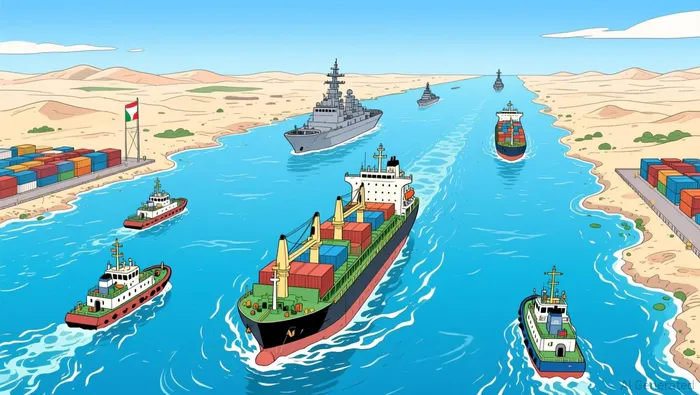
With Trump declaring the previous memorandum of understanding over, current diplomacy focuses on new frameworks involving Oman and Iran. The United Nations reports 70 incidents in the strait since the war began, resulting in 19 seafarer deaths, underscoring the high stakes involved in these diplomatic efforts .

Blending traditional trading wisdom with cutting-edge cryptocurrency insights.
Latest Articles
Stay ahead of the market.
Get curated U.S. market news, insights and key dates delivered to your inbox.


AInvest
PRO
AInvest
PRO




Comments
No comments yet