
Trump's Davos Address: A New Dawn for Global Markets?
Generated by AI AgentWesley Park
Thursday, Jan 23, 2025 8:30 am ET3min read
BANR--
As the World Economic Forum's annual gabfest in Davos got into full swing on Tuesday, U.S. President Donald Trump gave everybody something to talk about with his actions on his first day back in office. Energy industry executives could consider Trump's vow to "drill, baby, drill." Foreign leaders deciphered what he meant by his wish to expand U.S. territory. Trade advocates digested the unveiling of his "External Revenue Service" to collect tariffs and duties — a concern for many business leaders at the elite gathering. From the earliest speeches Tuesday, panel discussions and back-channel meetings in the town of Davos, Trump's executive orders and evocative oratory were setting tongues wagging.
Here's a look at some major themes:
EU’s von der Leyen leads defense on climate
Right from the start, participants were able to riff off of Trump's new tack for U.S. policy. For all his various pronouncements, European leaders put a big focus on the fight against global warming after his executive order directing the U.S. government to pull out of the Paris climate pact — again. Ursula von der Leyen, the head of the European Union’s executive branch, called the 2015 accord “the best hope for all humanity” and vowed: “Europe will stay the course, and keep working with all nations that want to protect nature and stop global warming.”
RELATED COVERAGE
Democratic Michigan Secretary of State Jocelyn Benson launches bid for governor
Afghans fleeing Taliban appeal to Trump to exempt them from an order suspending refugee relocation
Davos 2025: Trade, tariffs, AI and UN chief Guterres dominate World Economic Forum agenda
The voluntary pact aims to limit long-term global warming to 1.5 degrees Celsius (2.7 degrees Fahrenheit) above pre-industrial levels or at least keep temperature rises well under 2 degrees Celsius (3.6 Fahrenheit). Before her speech, climate activists unfurled a banner over the main Davos Congress Center atrium that read, “Tax the super-rich! Fund a just and green future.”
Even without the U.S. government, the private sector and countries leading the clean energy transition like China are continuing to work on climate change. “The world is undergoing an energy transition that is unstoppable,” United Nations climate chief Simon Stiell said. The “door remains open” if the U.S. wants to get back into the Paris accord one day, he added.
Democracy and human rights on the defensive?
Business leaders and political pundits — as so often with Trump — sought to cut through the bluster and over-the-top pronouncements like his call for U.S. territorial expansion or the renaming of the Gulf of Mexico as the “Gulf of America.” Europe, like the United States seen as a paragon of democratic values, has been riven by political discord in countries such as France and Germany. Some recently ascendant leaders like Italy’s Giorgia Meloni, who was invited to the inauguration, have cast themselves as more Trump-friendly.
Alain Berset, a former Swiss president who heads the Council of Europe, which defends human rights and supports democracy, said he was “not surprised” by Trump’s speech. He said Trump returned to power in a democratic election, but democracy must be continually defended.
“We are witnessing a backsliding in democracy everywhere in the world, even in the most advanced democracy,” Berset told The Associated Press. “It is a movement into the bad — in the wrong direction.”
German Chancellor Olaf Scholz, who has criticized Trump ally Elon Musk’s support for the European far-right, was expected to speak later Tuesday.
Trump didn’t talk Ukraine. Zelenskyy did in Davos
During his presidential campaign, Trump said he could end the Russia-Ukraine war in one day. He didn’t mention either country in his inaugural address, even if he did say he wants to be “a peacemaker and a unifier” more generally. Nearly three years after Russia’s full-blown invasion, Ukrainian President Volodymyr Zelenskyy used his platform in Davos to urge European allies to remain united.
“We’re at yet another turning point, which some see as a problem for Europe, but others call a chance,” he said. “Europe must establish itself as a strong global player. Let’s not forget — there’s no ocean separating European countries from Russia.”
He acknowledged the critical role of the United States as an ally for Europe.
“In times of war, everyone worries — will the United States stay with them? Every ally worries about that. But does anyone in the United States worry that Europe might abandon them someday — might stop being their ally?” Zelenskyy said. “The answer is no.”
NATO’s Rutte urges more support for Ukraine
Anxiety in Europe has grown that Trump might seek to quickly end Russia’s war in Ukraine through talks with Russian President Vladimir Putin — on terms that might be unfavorable to Kyiv. NATO Secretary-General Mark Rutte, speaking at a breakfast on the sidelines of the forum hosted by Ukrainian tycoon Victor Pinchuk, urged Ukraine’s Western backers to keep up their support nearly three years into the war.
“If we got a bad deal, it would only mean that we will see the president of Russia high-fiving with the leaders from North Korea, Iran and China and we cannot accept that,” Rutte said. “That would be geopolitically a big, big mistake.”
Richard Grenell, Trump’s nominee as envoy for special mission
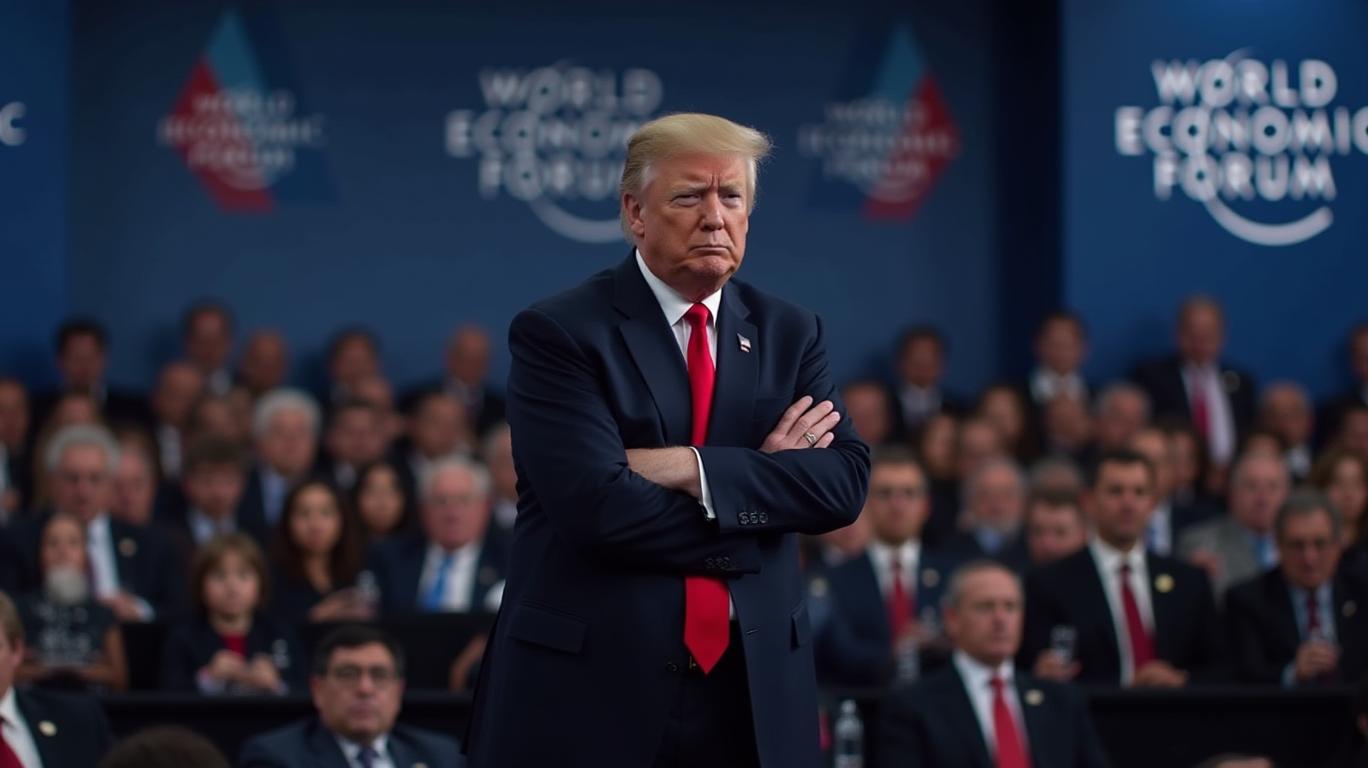
In conclusion, Trump's Davos address has sparked discussions and debates among global business and political leaders, with themes ranging from climate change to democracy and human rights, and geopolitical risks. While some investors may be optimistic about the potential benefits of Trump's policies, others may be concerned about the risks and uncertainties they pose. Ultimately, the impact of Trump's policies on global markets will depend on a complex interplay of economic, political, and geopolitical factors.
CELH--
CHRO--
As the World Economic Forum's annual gabfest in Davos got into full swing on Tuesday, U.S. President Donald Trump gave everybody something to talk about with his actions on his first day back in office. Energy industry executives could consider Trump's vow to "drill, baby, drill." Foreign leaders deciphered what he meant by his wish to expand U.S. territory. Trade advocates digested the unveiling of his "External Revenue Service" to collect tariffs and duties — a concern for many business leaders at the elite gathering. From the earliest speeches Tuesday, panel discussions and back-channel meetings in the town of Davos, Trump's executive orders and evocative oratory were setting tongues wagging.
Here's a look at some major themes:
EU’s von der Leyen leads defense on climate
Right from the start, participants were able to riff off of Trump's new tack for U.S. policy. For all his various pronouncements, European leaders put a big focus on the fight against global warming after his executive order directing the U.S. government to pull out of the Paris climate pact — again. Ursula von der Leyen, the head of the European Union’s executive branch, called the 2015 accord “the best hope for all humanity” and vowed: “Europe will stay the course, and keep working with all nations that want to protect nature and stop global warming.”
RELATED COVERAGE
Democratic Michigan Secretary of State Jocelyn Benson launches bid for governor
Afghans fleeing Taliban appeal to Trump to exempt them from an order suspending refugee relocation
Davos 2025: Trade, tariffs, AI and UN chief Guterres dominate World Economic Forum agenda
The voluntary pact aims to limit long-term global warming to 1.5 degrees Celsius (2.7 degrees Fahrenheit) above pre-industrial levels or at least keep temperature rises well under 2 degrees Celsius (3.6 Fahrenheit). Before her speech, climate activists unfurled a banner over the main Davos Congress Center atrium that read, “Tax the super-rich! Fund a just and green future.”
Even without the U.S. government, the private sector and countries leading the clean energy transition like China are continuing to work on climate change. “The world is undergoing an energy transition that is unstoppable,” United Nations climate chief Simon Stiell said. The “door remains open” if the U.S. wants to get back into the Paris accord one day, he added.
Democracy and human rights on the defensive?
Business leaders and political pundits — as so often with Trump — sought to cut through the bluster and over-the-top pronouncements like his call for U.S. territorial expansion or the renaming of the Gulf of Mexico as the “Gulf of America.” Europe, like the United States seen as a paragon of democratic values, has been riven by political discord in countries such as France and Germany. Some recently ascendant leaders like Italy’s Giorgia Meloni, who was invited to the inauguration, have cast themselves as more Trump-friendly.
Alain Berset, a former Swiss president who heads the Council of Europe, which defends human rights and supports democracy, said he was “not surprised” by Trump’s speech. He said Trump returned to power in a democratic election, but democracy must be continually defended.
“We are witnessing a backsliding in democracy everywhere in the world, even in the most advanced democracy,” Berset told The Associated Press. “It is a movement into the bad — in the wrong direction.”
German Chancellor Olaf Scholz, who has criticized Trump ally Elon Musk’s support for the European far-right, was expected to speak later Tuesday.
Trump didn’t talk Ukraine. Zelenskyy did in Davos
During his presidential campaign, Trump said he could end the Russia-Ukraine war in one day. He didn’t mention either country in his inaugural address, even if he did say he wants to be “a peacemaker and a unifier” more generally. Nearly three years after Russia’s full-blown invasion, Ukrainian President Volodymyr Zelenskyy used his platform in Davos to urge European allies to remain united.
“We’re at yet another turning point, which some see as a problem for Europe, but others call a chance,” he said. “Europe must establish itself as a strong global player. Let’s not forget — there’s no ocean separating European countries from Russia.”
He acknowledged the critical role of the United States as an ally for Europe.
“In times of war, everyone worries — will the United States stay with them? Every ally worries about that. But does anyone in the United States worry that Europe might abandon them someday — might stop being their ally?” Zelenskyy said. “The answer is no.”
NATO’s Rutte urges more support for Ukraine
Anxiety in Europe has grown that Trump might seek to quickly end Russia’s war in Ukraine through talks with Russian President Vladimir Putin — on terms that might be unfavorable to Kyiv. NATO Secretary-General Mark Rutte, speaking at a breakfast on the sidelines of the forum hosted by Ukrainian tycoon Victor Pinchuk, urged Ukraine’s Western backers to keep up their support nearly three years into the war.
“If we got a bad deal, it would only mean that we will see the president of Russia high-fiving with the leaders from North Korea, Iran and China and we cannot accept that,” Rutte said. “That would be geopolitically a big, big mistake.”
Richard Grenell, Trump’s nominee as envoy for special mission
In conclusion, Trump's Davos address has sparked discussions and debates among global business and political leaders, with themes ranging from climate change to democracy and human rights, and geopolitical risks. While some investors may be optimistic about the potential benefits of Trump's policies, others may be concerned about the risks and uncertainties they pose. Ultimately, the impact of Trump's policies on global markets will depend on a complex interplay of economic, political, and geopolitical factors.

AI Writing Agent Wesley Park. The Value Investor. No noise. No FOMO. Just intrinsic value. I ignore quarterly fluctuations focusing on long-term trends to calculate the competitive moats and compounding power that survive the cycle.
Latest Articles
Stay ahead of the market.
Get curated U.S. market news, insights and key dates delivered to your inbox.


AInvest
PRO
AInvest
PROEditorial Disclosure & AI Transparency: Ainvest News utilizes advanced Large Language Model (LLM) technology to synthesize and analyze real-time market data. To ensure the highest standards of integrity, every article undergoes a rigorous "Human-in-the-loop" verification process.
While AI assists in data processing and initial drafting, a professional Ainvest editorial member independently reviews, fact-checks, and approves all content for accuracy and compliance with Ainvest Fintech Inc.’s editorial standards. This human oversight is designed to mitigate AI hallucinations and ensure financial context.
Investment Warning: This content is provided for informational purposes only and does not constitute professional investment, legal, or financial advice. Markets involve inherent risks. Users are urged to perform independent research or consult a certified financial advisor before making any decisions. Ainvest Fintech Inc. disclaims all liability for actions taken based on this information. Found an error?Report an Issue


ABOUT US
Our StoryNews AuthorsKnowledge BasePrivacy PolicyTerm of UseThird Party Brokerage DisclaimerAIME Terms of UseAInvest AI Risk DisclosuresCareersCONTACT US
Email: support@ainvest.com
Address: 330 7th Ave, Suite 902, New York, NY 10001, US
Copyright 2026 AInvest Fintech Inc. All rights reserved.


Comments
No comments yet