
"Trump's Crypto Reserve Divides Industry: Bitcoin vs. Multi-Token Debate"
The debate over the United States’ proposed Crypto Strategic Reserve has intensified following President Donald Trump’s announcement, with industry leaders divided on which assets should be included. While some like Ripple’s Brad Garlinghouse and Cardano’s Charles Hoskinson advocate for a multi-token approach, others argue that only Bitcoin meets the criteria for being a US reserve asset.
Gemini co-founder Tyler Winklevoss argued that only Bitcoin qualifies as “hard money” and a “proven store of value like gold,” making it the only digital asset suitable for a strategic reserve. His brother and Gemini co-founder Cameron Winklevoss agreed, suggesting that Ethereum could potentially be considered alongside Bitcoin, comparing them to America’s physical gold and oil reserves.
Coinbase CEO Brian Armstrong shared a similar perspective, stating that Bitcoin’s simplicity and status as the most widely recognized and accepted digital asset make it the best choice for a reserve. However, he also proposed an alternative approach, where the US could adopt a market cap-weighted index of cryptocurrencies to eliminate potential bias in asset selection.
Bitcoin advocate and Jan3 CEO Samson Mow took a stricter stance, arguing that only proof-of-work cryptocurrencies should be included in the reserve. He claimed that proof-of-stake assets are susceptible to manipulation by foreign actors, making Bitcoin and potentially Litecoin the only suitable assets.
Despite the skepticism from Bitcoin maximalists, executives from Cardano and Ripple defended the inclusion of their respective tokens. Cardano’s Charles Hoskinson rejected criticism from gold advocate Peter Schiff, stating that XRP demonstrated resilience and maintained a strong community over the years. Ripple CEO Brad Garlinghouse also long supported a multi-token reserve.
The Crypto Strategic Reserve proposal was made after extensive discussions from Trump’s newly established Working Group on Digital Assets, which has been evaluating its structureGPCR-- and potential impact. Trump is also set to host the first White House Crypto Summit on March 7, where discussions will cover regulatory policies, stablecoin oversight, and broader crypto market dynamics.
Although Trump’s plan has been met with some optimism, experts still warn that it does not replace the need for clearer regulatory guidelines. Patrick Young, go-to-market lead at Web3 app Galxe, believes that while the initiative signals growing government interest in crypto, long-term growth will depend on regulatory clarity.
Trump’s announcement led to a short-term surge in crypto prices, with 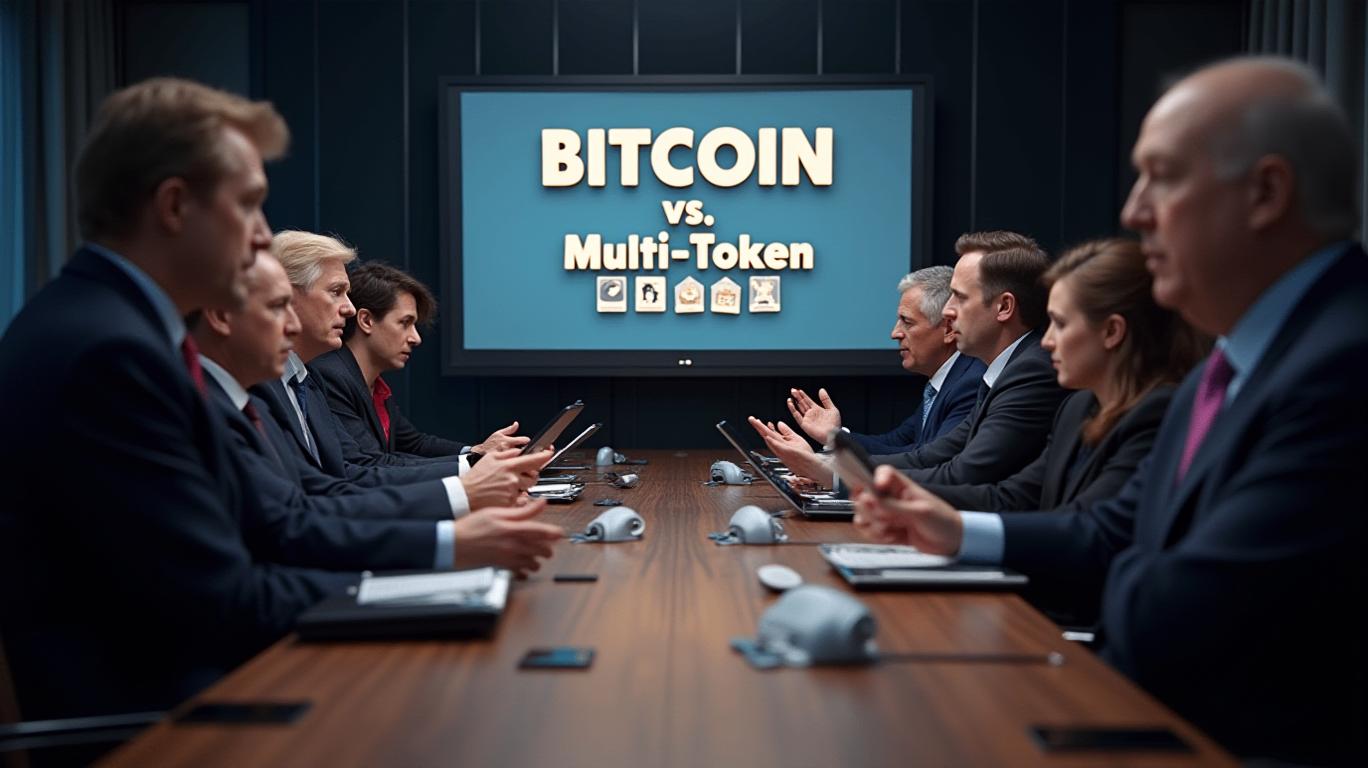

Stay ahead of the market.
Get curated U.S. market news, insights and key dates delivered to your inbox.




Comments
No comments yet