
Trump's Crypto Project Announces USD1 Stablecoin, Raising Conflict Concerns
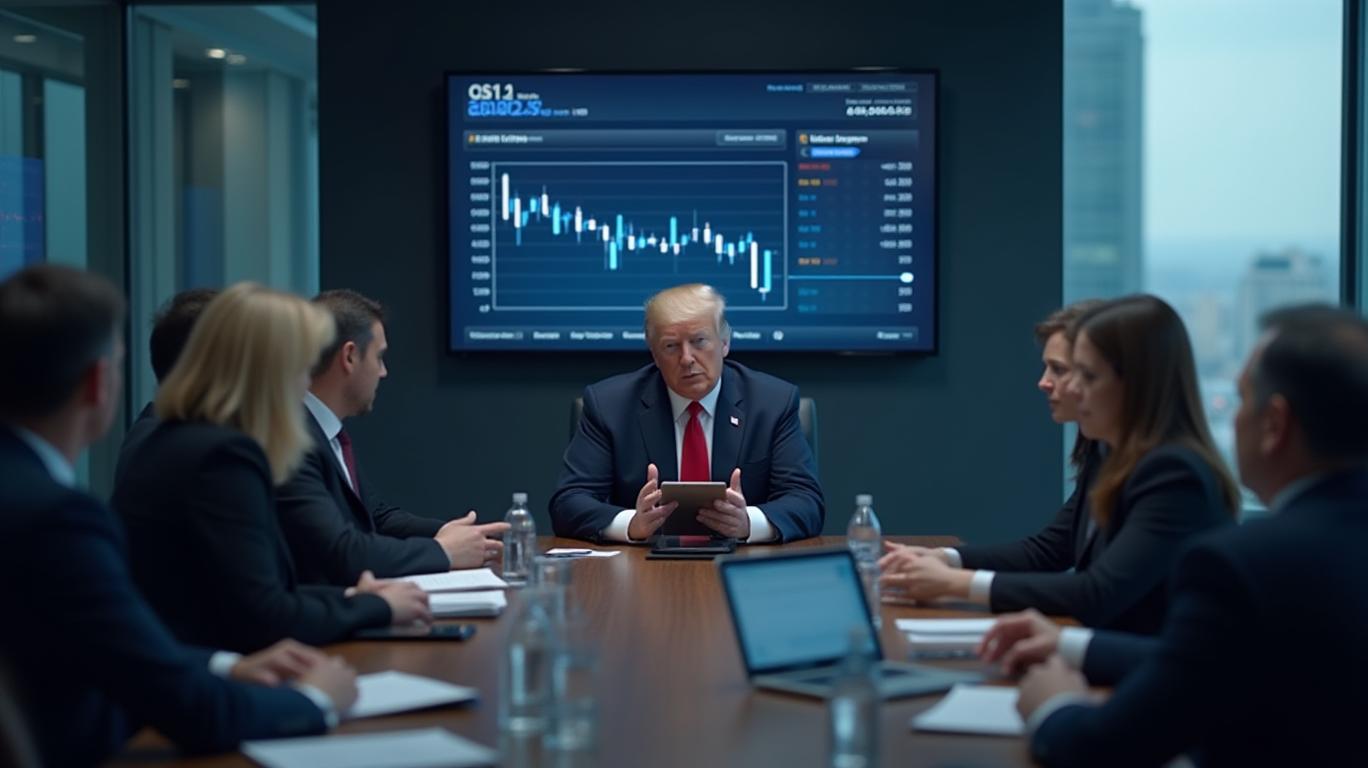
World Liberty Financial (WLFI), the Trump family’s crypto project, has announced plans to release a stablecoin, USD1, which has raised concerns over potential conflicts of interest involving the US president. The stablecoin is said to be "100% backed by short-term US government treasuries, US dollar deposits, and other cash equivalents," according to WLFIWLFC-- co-founder Zach Witkoff. The announcement comes just days after WLFI secured more than $500 million through the sale of its own $WLFI tokens.
Observers have expressed alarm over the potential security risks and market manipulation that could arise from a stablecoin connected to the president. There are also concerns about violations of the emoluments clause of the US Constitution, which protects against undue influence over American leaders. Cyber and digital media attorney Andrew Rossow stated that the stablecoin is "a direct affront to constitutional safeguards meant to prevent conflicts of interest." With the Trump family controlling 60% of World Liberty’s equity interests, the USD1 stablecoin could facilitate indirect financial gains or undue foreign influence over US policy, particularly if foreign entities invest in or use the stablecoin.
Corey Frayer, who worked on crypto policy at the SEC under Joe Biden, highlighted the potential for foreign influence, noting that the project’s emphasis on cross-border payments is particularly worrisome. Frayer suggested that foreign entities may invest in the stablecoin as a way to gain favor with Trump. US policymakers have already noted the possibility for foreign influence following the launch of Trump’s eponymous memecoin in January. Democratic Representative Maxine Waters wrote that "Anyone globally, even individuals who have been sanctioned by the U.S. or banned from our capital markets, can now trade and profit off of $TRUMP through various unregulated platforms."
In addition to potential foreign influence, observers are concerned that Trump’s crypto ventures could threaten market stability and integrity, and open up global markets to manipulation. Heath Mayo, the founder of the Trump-alternative conservative movement Principles First, stated that a sitting president issuing an instrument backed by public debt should be illegal, adding that the project had "terrible incentives and corrupt use of US taxpayer credit." Rossow also noted that the president’s role in a stablecoin project while at the same time working to craft stablecoin legislation in the form of the GENIUS Act is "a constitutional violation that could destabilize regulatory integrity."
Trump’s influence over the industry and ability to drop enforcement actions against crypto executives who support him creates "an uneven playing field, disadvantaging competitors and violating principles of equal protection under the law." The presidential administration has already shown that it is willing to defy orders from federal judges, as seen earlier this month when it ignored a verbal order from a federal judge to turn around two planes full of alleged gang members bound for the Terrorism Confinement Center in El Salvador.
Senator Elizabeth Warren has called for an ethics probe into Trump’s crypto activities, stating that the president’s memecoin "massively enriched Trump personally, enabled a mechanism for the crypto industry to funnel cash to him, and created a volatile financial asset that allows anyone in the world to financially speculate on Trump’s political fortunes." However, the probe does not appear to have gone anywhere, and Congressional Republicans are busy working on the GENIUS Act, which even has the support of a handful of Democrats.
Despite changes in SEC leadership, other agencies like the Financial Crime Enforcement Network could still pursue investigations. State-level action from local regulators and Attorneys General is also possible, especially in states with robust consumer protection laws. International regulatory bodies could exert pressure, given the global nature of crypto, to work for better oversight and more robust regulations. The current situation demands multi-faceted action to safeguard the principles of fair governance and maintain the US's credibility in the global financial system.
Some in the crypto industry see no problem with the president’s involvement, viewing it as another sign of how the industry is reaching mainstream appeal. Chris Barrett, senior director of communications at Chainlink, congratulated the project, stating that "The global financial world runs on the U.S. dollar, and stablecoins are about to make that even harder to change." Arnoud Star Busman, CEO of European stablecoin issuer Quantoz Payments, told that USD1 is reflective of "increasing validation from world-leading brands that stablecoins are carving the path for the mainstream financial industry to access crypto assets and tokenized real-world assets."

Comprender rápidamente la historia y el origen de diversas monedas de renombre
Latest Articles
Stay ahead of the market.
Get curated U.S. market news, insights and key dates delivered to your inbox.


AInvest
PRO
AInvest
PRO



Comments
No comments yet