
Trump's Crypto Portfolio Rebalancing and U.S. Regulatory Shifts: A Strategic Alignment for Institutional Adoption


 Aime Summary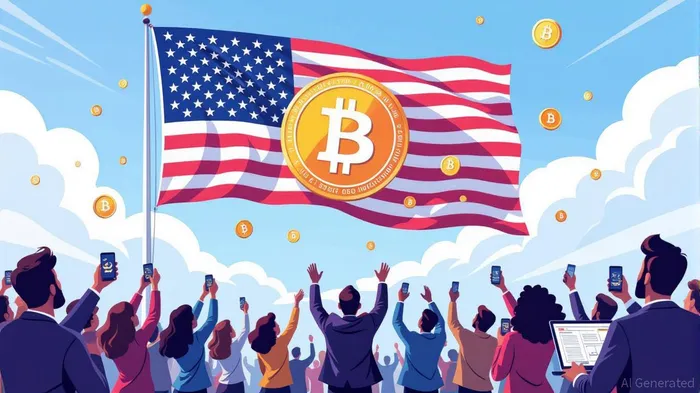
The U.S. crypto landscape in 2025 has undergone a seismic transformation under President Trump's administration, marked by a deliberate rebalancing of regulatory priorities and institutional adoption strategies. This shift, driven by executive orders, legislative action, and agency-level reforms, has created a policy tailwind that aligns with high-conviction crypto assets such as BitcoinBTC--, stablecoins, and DeFi protocols. For investors, the convergence of regulatory clarity and institutional infrastructure presents a unique opportunity to capitalize on assets poised to benefit from this strategic realignment.
Regulatory Clarity as a Catalyst for Institutional Adoption
The cornerstone of Trump's crypto rebalancing is the establishment of a coherent federal framework that reduces uncertainty for market participants. Executive Order 14178, issued in January 2025, dismantled the Biden-era enforcement-heavy approach and prioritized innovation. By revoking the Treasury's 2022 CBDC framework and banning the creation of a U.S. CBDC, the administration signaled a preference for organic market-driven solutions. Simultaneously, the Strategic Bitcoin Reserve (SBR), established in March 2025, institutionalized Bitcoin as a strategic asset. The SBR's exclusive focus on BTC—acquired through forfeitures and penalties—has normalized its role in U.S. financial policy, encouraging institutional investors to treat Bitcoin as a legitimate reserve asset.
The SEC's pivot under Chairman Paul Atkins further underscores this trend. By de-scoping memecoins, proof-of-work mining, and staking activities from regulatory oversight, the agency has reduced friction for crypto-native businesses. The approval of in-kind creation and redemption mechanisms for crypto ETPs in July 2025, for instance, has streamlined institutional access to Bitcoin and etherETH--, enabling seamless integration into traditional portfolios. This move mirrors the SEC's broader Project Crypto initiative, which aims to position the U.S. as the “crypto capital of the world” by harmonizing digital assetDAAQ-- regulations with existing financial infrastructure.
Stablecoins and the GENIUS Act: A New Era of Legitimacy
Stablecoins, long plagued by regulatory ambiguity, have emerged as a critical component of the U.S. digital asset ecosystem. The bipartisan passage of the GENIUS Act in July 2025—mandating 1:1 U.S. dollar backing for payment stablecoins—has provided a federal framework that balances innovation with consumer protection. By exempting stablecoins from the Howey Test and aligning them with BSA/AML regulations, the Act has legitimized their role in cross-border payments and decentralized finance.
This regulatory clarity has already spurred institutional adoption. Major banks and fintech firms are now exploring stablecoin-based settlement systems, leveraging their speed and cost efficiency. For investors, stablecoins like USDCUSDC-- and USDTUSDC-- are no longer speculative tokens but foundational assets in a modernized financial infrastructure. However, state-level pushback—such as Pennsylvania's Money Transmission Act updates—highlights the need for continued federal oversight to prevent fragmentation.
DeFi and the SEC's Legal Guidance: Reducing Risk, Enhancing Innovation
Decentralized Finance (DeFi) has also benefited from the administration's regulatory rebalancing. The SEC's July 2025 guidance on liquid staking, which clarified that administrative staking activities do not constitute securities offerings, has alleviated a major compliance burden for DeFi platforms. This ruling, rooted in the Howey Test, ensures that DeFi protocols can operate without the threat of retroactive enforcement actions.
The CFTC's parallel efforts to enable spot crypto trading on U.S. exchanges further amplify this momentum. By treating non-security digital assets as commodities, the CFTC has opened the door for institutional-grade trading platforms to expand their offerings. This alignment with traditional markets is critical for DeFi's long-term viability, as it attracts capital from asset managers and hedge funds seeking diversified exposure.
Investment Implications: High-Conviction Assets in a Policy-Friendly Environment
For investors, the current regulatory environment presents a rare alignment of policy tailwinds and market fundamentals. Bitcoin, now institutionalized through the SBR and ETP approvals, is a core holding for portfolios seeking exposure to a globally recognized store of value. Its price trajectory——reflects growing institutional demand, with the Strategic Bitcoin Reserve's accumulation efforts acting as a de facto floor.
Stablecoins, meanwhile, offer a dual opportunity: as a medium for efficient capital movement and as a hedge against volatility in other crypto assets. The GENIUS Act's emphasis on transparency and liquidity ensures that stablecoins will remain a cornerstone of both on-chain and off-chain financial systems.
DeFi protocols, now operating under a clearer legal framework, are well-positioned to capture market share from traditional intermediaries. Investors should prioritize platforms with robust governance models and compliance-first approaches, as these will thrive in a regulated environment.
Conclusion: A Strategic Inflection Point
President Trump's crypto portfolio rebalancing is more than a regulatory overhaul—it is a strategic repositioning of the U.S. as a global leader in digital assets. By fostering innovation, reducing uncertainty, and institutionalizing key assets like Bitcoin and stablecoins, the administration has created a fertile ground for long-term growth. For investors, the path forward is clear: align with assets that directly benefit from this policy convergence, and position portfolios to capitalize on the next phase of the crypto cycle.

Decoding blockchain innovations and market trends with clarity and precision.
Latest Articles
Stay ahead of the market.
Get curated U.S. market news, insights and key dates delivered to your inbox.


AInvest
PRO
AInvest
PRO



Comments
No comments yet