
Trump's Crypto Agenda: Fostering Innovation or Fueling Cronyism?
 Aime Summary
US President Donald Trump's deepening ties to the cryptocurrency sector have drawn scrutiny from Democrats, who accuse him of leveraging political power for personal and familial financial gain. Recent reports reveal Trump's administration is favoring crypto-friendly figures for key regulatory roles, including Kevin Hassett, a top economic adviser with a reported stake in CoinbaseCOIN-- and a history of advocating for favorable digital asset policies. Hassett, who oversaw the White House's digital asset working group, is a leading candidate to replace Federal Reserve Chair Jerome Powell, despite the Fed's limited regulatory oversight of crypto. His potential nomination has raised concerns about how Trump's agenda could shape monetary policy to benefit the industry.
The controversy extends beyond personnel decisions. Trump's family has reaped substantial financial rewards from crypto ventures, particularly through World Liberty FinancialWLFI-- (WLFI), a project linked to the Trump Organization. WLFI's token has plummeted nearly 50% since its January launch, yet the family has continued aggressive buybacks to prop up its value. In a single week, the project spent $7.7 million purchasing WLFIWLFI-- tokens, with broader buyback strategies aiming to reduce supply and boost demand. These efforts have coincided with a $5 billion valuation for the Trump family's crypto holdings, though their fortune has since dropped over $1 billion following a broader market crash in October according to reports.
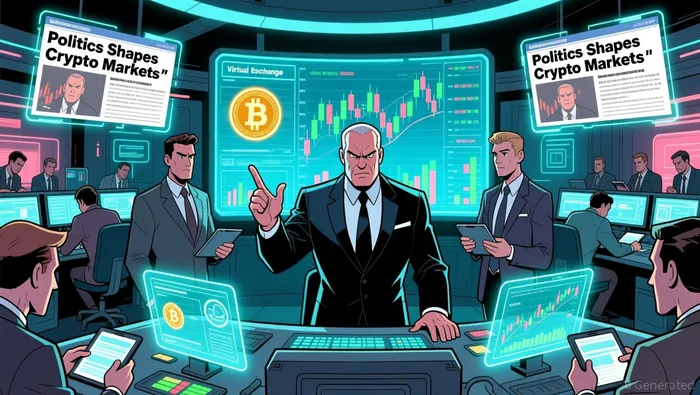 House Democrats have launched investigations into what they describe as a "pay-for-play" system, where crypto executives and investors have donated to Trump's political groups while benefiting from lenient regulatory treatment. The administration's pardoning of high-profile figures like Binance's Changpeng Zhao and BitMEX executives has further fueled concerns of cronyism. "America has never seen corruption on this scale take place inside the White House," said Rep. Jamie Raskin, who chairs the Judiciary Committee's probe according to Bloomberg. The report alleges that foreign actors and bad actors have exploited Trump's crypto agenda to influence U.S. policy, with WLFI's USD1 stablecoin becoming a focal point of scrutiny after a 60 Minutes investigation tied it to a $2 billion Binance deal.
The White House has consistently defended Trump's crypto policies, emphasizing their role in fostering innovation and economic growth. Press Secretary Karoline Leavitt asserted that neither the president nor his family engages in conflicts of interest, citing initiatives like the GENIUS Act as evidence of broad public benefit according to Forbes. However, critics argue that the administration's cozy relationship with the industry risks undermining regulatory integrity. As the 2026 midterm elections approach, Democrats warn that Trump's crypto-centric policies could leave the sector vulnerable to political backlash if their party regains congressional control.

Stay ahead of the market.
Get curated U.S. market news, insights and key dates delivered to your inbox.
AInvest
PRO
AInvest
PRO



Comments
No comments yet