
Trump Criticizes Powell Over High Interest Rates Dollar Slides
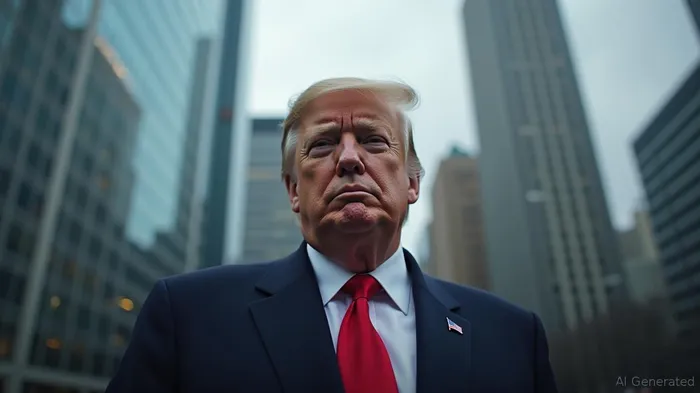
Donald Trump has publicly criticized Federal Reserve Chair Jerome Powell and the Federal Reserve’s interest rate policies, questioning the current economic strategy and future interest costs. Trump's critique, made via Twitter on July 1st, 2025, adds to the ongoing debates about Federal Reserve policies. Trump accused the Federal Reserve of failing to manage U.S. interest rates effectively, claiming that their actions impose unnecessarily high costs on the U.S. economy. He stated, "Powell and his whole committee should be ashamed of themselves for what they are doing to our country. Their job is one of the most important in the country but also the easiest. They had one job to do, and they failed at it, and they continue to fail. If they did what they were supposed to do, we would be saving tens of trillions of dollars in interest costs. Instead, the Fed sits and watches with their hands on the trigger. They can't allow themselves to make even a small mistake which is why the U.S. must win. Our interest costs should be much lower, we should be leading instead of being led!"
While Trump's statements are pointed, they reflect political critique rather than quantifiable market data. The debate over the Fed's policy direction intensifies as market reactions show no immediate changes in major crypto or traditional asset markets. Prominent figures, including Jerome Powell, have yet to publicly respond. Historical patterns suggest future policy decisions might influence asset prices. Trump's criticism of Powell and the Fed's interest rate policies has had an impact on the markets. The dollar slid on Trump's renewed criticism, showing that investors already foresee the president influencing monetary policy. Trump's focus on changing the Fed's approach to interest rates has raised concerns about the independence of the central bank and its ability to make decisions based on economic data rather than political pressure.
Historically, explicit Federal Reserve actions—not political critiques—drive significant crypto market responses. Political statements may increase volatility but lack direct influence on cryptocurrency market movements. Future Federal Reserve announcements may drastically influence crypto market liquidity and sentiment. Historically, these events often coincide with BTC and ETH price fluctuations, suggesting a continued reliance on central bank policy direction. The President has repeatedly criticized Federal Reserve Chairman Jerome Powell for the central bank's interest rate policies. Trump has accused Powell of keeping interest rates too high, which he believes will increase the country's debt burden. The President has also suggested that Powell is artificially inflating interest rates and has called for rates to be cut.
Trump's criticism of Powell comes as the Federal Reserve has been cautious in its approach to interest rate cuts. The President has expressed frustration with the Fed's strategy, which has led him to consider replacing Powell. Trump has also slammed Powell for the Fed's decision to keep interest rates unchanged, despite calls for a cut. The President's calls for the Fed to cut rates risk undermining the institution's credibility, regardless of how the Fed responds. If the Fed were to cut rates, it could be seen as bowing to political pressure, which could damage the Fed's independence and credibility. On the other hand, if the Fed does not cut rates, it could face further criticism from Trump and other politicians.
During testimony to the House Financial Services Committee, Powell evaded questions about the impact of monetary policy on housing. Powell asserted that Fed policy is not a driver of longer-run housing supply, but rather affects housing demand in the short run. He also noted that the best thing the Fed can do for the housing market is to restore price stability so that rates come down. Powell's comments come as the housing market has seen significant volatility in recent years. The Fed's aggressive purchases of mortgage-backed securities (MBS) and sales of to-be-announced (TBA) contracts in the secondary market for home mortgages have forced interest rates down and home prices surged higher. This has contributed to a massive increase in consumer inflation and has made it more difficult for first-time homebuyers to enter the market.
The Fed's primary concern has been preserving the Treasury's access to the debt markets, which has led to a focus on maintaining liquidity in the Treasury market. This has had the unintended consequence of driving up home prices and contributing to inflation. The Fed's decision to continue purchases of Treasury debt and MBS has also driven up housing prices, but the motivation has not been full employment or price stability. The huge decline in interest rates engineered by Powell and the FOMC from 2019 to 2022 drove up prices for single-family homes by double digits annually, destroying a key component of the American dream of home ownership. The fact of the massive federal debt prevented the Fed from tightening enough to force home prices down, as Fed Chairman Paul Volcker did in the 1980s.

Stay ahead of the market.
Get curated U.S. market news, insights and key dates delivered to your inbox.


AInvest
PRO
AInvest
PRO



Comments
No comments yet