
Trump's Criticism Undermines Fed Chairman Credibility
President Trump's frequent criticism and threats to prematurely dismiss current Federal Reserve Chairman Jerome Powell have cast a significant shadow over the independence and integrity of the Federal Reserve. The upcoming appointment of the next Fed Chairman remains uncertain, but the credibility of the position has already been significantly undermined by Trump's actions.
Economists and former policymakers have expressed concerns that Trump's demands for interest rate cuts could erode investor confidence in the next Fed Chairman. There is a growing suspicion that the next appointee might be seen as a puppet of the President, rather than an independent economic decision-maker. John Silvia, president of Dynamic Economic Strategy and former chief economist of the Senate Banking Committee, noted that it is difficult to expect the market to trust the credibility of a successor after such public denigration of Powell.
The independence of the Federal Reserve has been a cornerstone of U.S. economic policy since the 1980s, when it successfully curbed high inflation. This independence allows the Fed to implement effective monetary policies without political interference. Historically, presidents have respected this independence, understanding that pressuring the Fed could backfire and make policy implementation more challenging. Lawrence Summers, a prominent economist and former Treasury Secretary under Clinton, stated that public attacks on the Fed are counterproductive. Such actions either force the Fed to ignore the pressure or to prove its independence by maintaining or even raising interest rates, leading to market uncertainty and higher long-term rates.
David Wilcox, an economist at the Peterson Institute for International Economics and former senior advisor to the Fed, echoed these sentiments. He noted that Trump's recent attacks on Powell will cast a shadow of doubt over the next Chairman. The market participants are likely to believe that the next Chairman will be more compliant with Trump's wishes, further undermining the Fed's authority.
The extent to which Trump can reshape the Fed remains to be seen. Powell's term as Chairman ends in May 2026, and Trump has the opportunity to replace at least one Fed governor and nominate one of the seven governors as the next Chairman. However, the Fed's structureGPCR--, with its 12 regional presidents and 6 other governors, limits the Chairman's influence. The Chairman's role is more akin to a quarterback in a football team, directing the game but not guaranteeing that everyone follows the plan.
Jason Furman, a senior economic advisor during the Obama administration, emphasized that if Trump does not have the power to dismiss Fed governors, the current institutional checks and balances will prevent the Fed from being overly politicized. The Federal Open Market Committee (FOMC), composed of 7 Washington governors and 5 rotating regional presidents, will not blindly follow a politically motivated Chairman.
The potential candidates for the next Fed Chairman include Kevin Warsh, a former Fed governor and advisor to President George W. Bush, and Kevin Hassett, the current chair of the White House National Economic Council. Treasury Secretary Steven Mnuchin has also been mentioned as a possible candidate. Christopher Waller, a current Fed governor appointed by Trump, has also been considered a potential successor. Waller emphasized the importance of the next Chairman continuing the tradition of independent, non-political policymaking.
In summary, while the next Fed Chairman has not yet been determined, Trump's actions have already tarnished the position's credibility. The independence and integrity of the Fed are at stake, and the market's trust in the next Chairman will be crucial for maintaining effective monetary policy. 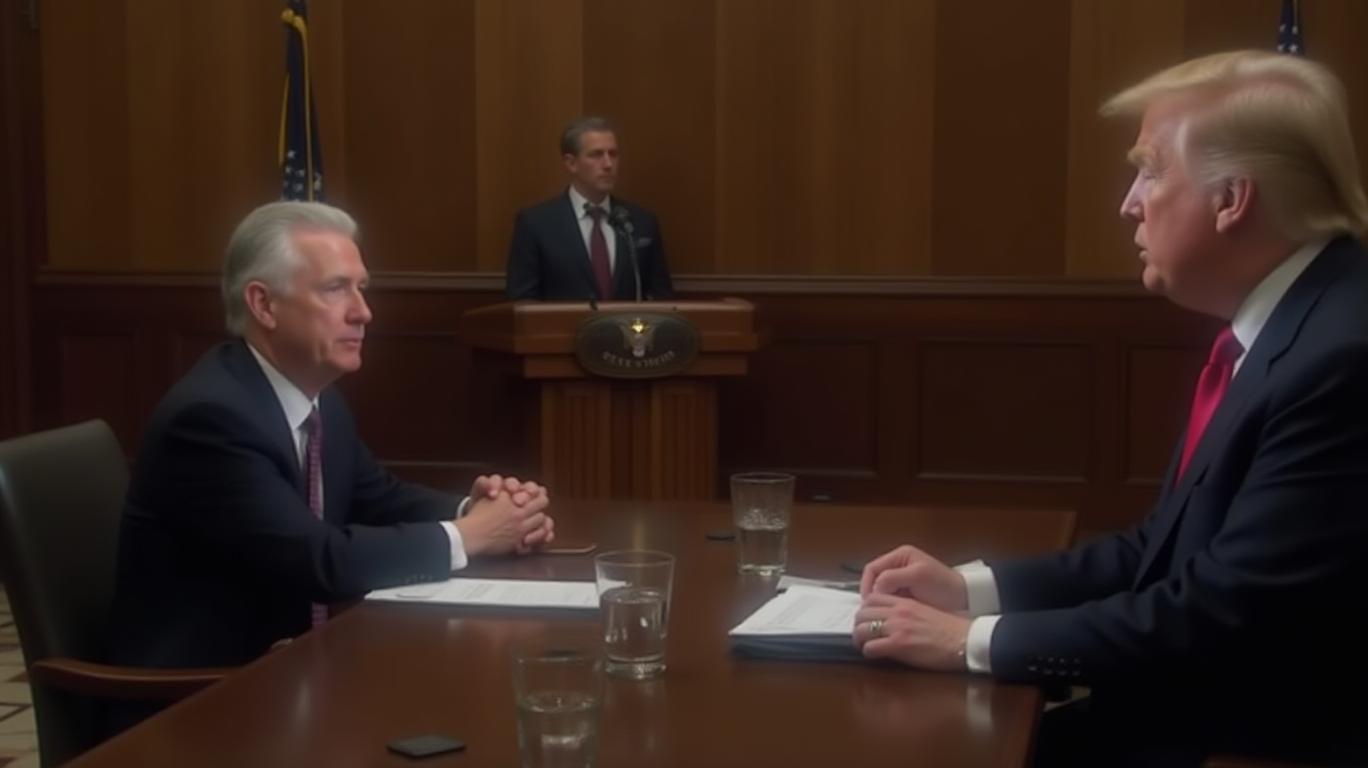

Stay ahead of the market.
Get curated U.S. market news, insights and key dates delivered to your inbox.


AInvest
PRO
AInvest
PRO



Comments
No comments yet