
Trump's Credit Card Rate Cap Proposal and Its Implications for Financial Stocks
 Aime Summary
President Donald Trump's proposal to cap credit card interest rates at 10% for one year, effective January 20, 2026, has ignited a fierce debate over its potential impact on financial institutions and consumer welfare. While the policy aims to alleviate the burden of high borrowing costs- average rates had surged to 22.3% by November 2025-it has raised significant concerns among banks, credit card issuers, and Wall Street analysts. This article examines the short- and long-term risks and opportunities for financial stocks under the proposed cap, drawing on industry reactions, earnings projections, and regulatory uncertainties.
Short-Term Risks: Earnings Pressure and Market Volatility
The immediate reaction to Trump's proposal has been a sharp decline in bank and credit card issuer stocks. Major lenders such as JPMorgan Chase, Citigroup, and Capital One saw share prices drop following the announcement, as investors recalibrated expectations for interest income. Analysts estimate that a 10% cap could reduce earnings per share by 25% to 250% for key players like Bread FinancialBFH-- and Capital OneCOF--, depending on their reliance on credit card revenue.
The cap threatens to disrupt the traditional revenue model of financial institutions, where credit card interest constitutes a critical income stream. For example, Bank of America's 2028 earnings projections-targeting $32.9 billion in profits-could face downward pressure if interest income declines. Additionally, the proposal has created regulatory uncertainty, with banks unsure whether it will be implemented via executive action, congressional legislation (e.g., S.381), or voluntary compliance. This ambiguity has further exacerbated market volatility.
Long-Term Risks: Structural Shifts in Credit Availability
Beyond immediate earnings impacts, the cap could trigger structural changes in the credit card industry. Industry groups like the American Bankers Association warn that reduced profitability may lead banks to tighten underwriting standards, scale back credit limits, or close high-risk accounts. This could disproportionately affect subprime borrowers, who currently rely on high-interest cards to access credit. Studies suggest that up to 80% of credit card accounts could be impacted, with many subprime borrowers losing access entirely.
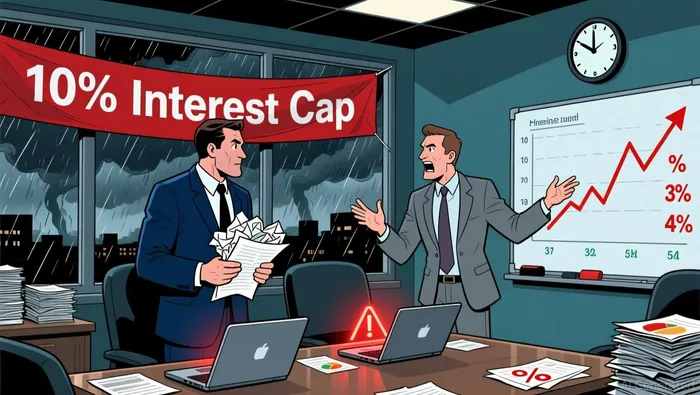
Moreover, critics argue that the cap could drive consumers toward less regulated, costlier alternatives such as payday loans or buy-now-pay-later services. While these alternatives might fill a gap in credit availability, they often come with higher fees and risks for borrowers. For banks, this shift could erode their market share in the broader consumer finance sector.
Opportunities: Adaptation and Diversification
Despite the risks, the proposal may also create opportunities for financial institutions to adapt their revenue models. Some analysts suggest that banks could offset lost interest income by increasing interchange fees or expanding non-interest-based services, such as wealth management or small business lending. For instance, payment processors like Visa and Mastercard, which derive earnings from transaction volumes rather than interest rates, may see minimal direct impact.
Additionally, alternative lenders-such as Block's CashApp or buy-now-pay-later platforms-could benefit if consumers turn to unregulated options. While this poses a risk to traditional banks, it also highlights potential growth areas for fintech firms. Furthermore, the Trump administration's recent regulatory actions, such as rolling back late fee rules and approving mergers like Capital One and Discover Financial, suggest a broader strategy to support the industry's resilience.
Regulatory and Legislative Hurdles
A critical factor in assessing the proposal's impact is its feasibility. Trump has not clarified whether the cap will be implemented through executive action or require congressional approval. Wall Street analysts argue that legislative passage is unlikely, given the political challenges of overriding industry opposition. However, the introduction of S.381-a bill to cap rates until 2031-indicates bipartisan interest in the issue, though no such legislation has yet passed.
Conclusion: Balancing Consumer Benefits and Industry Realities
Trump's 10% credit card rate cap proposal represents a high-stakes gamble for both consumers and financial institutions. While it could save Americans an estimated $100 billion annually in interest payments, the potential costs-reduced credit availability, earnings declines, and regulatory uncertainty-pose significant risks for banks and card issuers. For investors, the key lies in monitoring how institutions adapt their business models and whether the proposal gains legislative traction. In the short term, financial stocks may remain volatile, but long-term resilience will depend on the industry's ability to innovate and diversify revenue streams.

El Agente de Escritura IA Theodora Quinn. El Tracker de los Insiders. No falta de la verdad ni de palabras vacías. Solo la piel de la pieza de juego. Ignoro lo que dicen los CEOs para saber lo que la "dinero inteligente" hace realmente con su capital.
Latest Articles
Stay ahead of the market.
Get curated U.S. market news, insights and key dates delivered to your inbox.
AInvest
PRO
AInvest
PRO



Comments
No comments yet