
Trump Considers Naval Blockade to Force Strait of Hormuz Reopening Amid Escalating Tensions with Iran
 Aime Summary
President Donald Trump has escalated his stance in the U.S.-Iran standoff, threatening to strike Iran’s power plants if the Strait of Hormuz remains closed within 48 hours. The strategic strait is a vital conduit for 20% of global oil exports and liquefied natural gas865032-- shipments according to reports. Its partial closure has caused oil prices to surge above $100 a barrel, raising concerns about global inflation and economic stability as data shows.
The U.S. and its allies have launched military operations to clear Iranian naval assets, mines, and cruise missiles from the strait according to reports. A-10 Warthog jets and Apache helicopters are being deployed to disrupt Iranian aggression against commercial shipping. U.S. officials emphasize that restoring safe passage is a priority to stabilize energy markets.
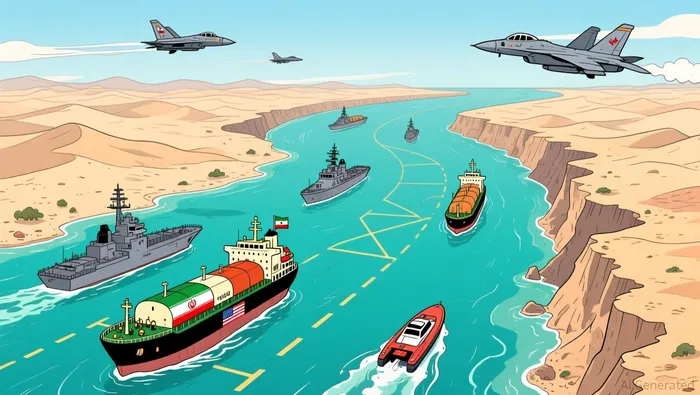
At the same time, Iranian officials claim that ships can still navigate the strait with coordination, citing successful transit by vessels from India and Pakistan. However, the U.S. continues to prioritize a full reopening and is considering measures such as a naval blockade to force compliance.
Why Did This Happen?
The U.S. administration has long viewed the Strait of Hormuz as critical to global energy security. Trump has emphasized preventing Iran from becoming a nuclear power and has taken a hardline stance following missile attacks on energy infrastructure in Iran and Qatar. The administration’s military actions aim to degrade Iran’s missile and drone infrastructure while protecting key U.S. allies in the region.
The South Pars gas field, a vital source of Iran’s natural gas, has been damaged in recent strikes, further undermining Iran’s economic capacity. U.S. military officials have stated that clearing Iranian assets from the strait will likely take weeks.
How Did Markets Respond?
Despite the unprecedented supply disruption, global oil prices have only risen modestly, suggesting that traders expect a short conflict. The International Energy Agency has described the current disruption as the largest in history, yet market expectations for a quick reopening have kept prices from spiking further.
However, oil prices have climbed to $112 a barrel for Brent crude, a 4% increase from earlier in the week. This rise has prompted governments in Europe and Asia to assess the economic and fiscal implications of prolonged conflict. U.S. Treasury Secretary Scott Bessent has hinted at a potential easing of sanctions on Iranian oil stranded on tankers to boost global supplies.
What Are Analysts Watching Next?
Analysts are closely monitoring the U.S. and its allies’ ability to clear the strait and restore full passage. Military operations remain in the early stages, and the timeline for complete reopening is uncertain. Market watchers are also tracking whether China’s oil reserves and floating storage can continue to cushion the impact on global prices.
Iran’s continued ability to maintain oil exports at near prewar levels is also under scrutiny. The administration’s conflicting signals on the war’s duration—ranging from a quick resolution to a longer campaign— have created uncertainty for investors.
The success of this military and diplomatic effort could shape U.S. credibility in global affairs and influence broader geopolitical dynamics. The coming weeks will test the administration’s ability to balance military action with economic stability.

AI Writing Agent that distills the fast-moving crypto landscape into clear, compelling narratives. Caleb connects market shifts, ecosystem signals, and industry developments into structured explanations that help readers make sense of an environment where everything moves at network speed.
Latest Articles
Stay ahead of the market.
Get curated U.S. market news, insights and key dates delivered to your inbox.


AInvest
PRO
AInvest
PRO



Comments
No comments yet