
Trump Condemns Fed for No Rate Cut Amid Rising Unemployment
 Aime Summary
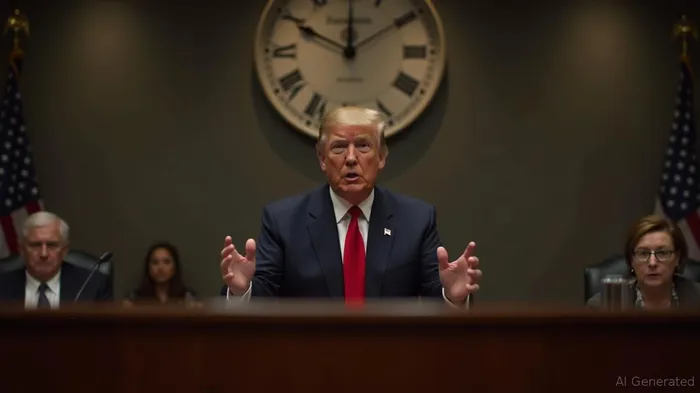
U.S. President Donald Trump has escalated his criticism of Federal Reserve Chair Jerome Powell, publicly demanding his removal for refusing to lower interest rates, calling the central banker a “stubborn MORON” and urging the Fed board to take control of monetary policy [1]. The remarks came after the Fed voted 9-2 to keep rates unchanged, a split that Trump seized on as proof of internal division within the central bank and a signal that his influence might be growing [2].
The two dissenting votes came from Fed Vice Chair for Supervision Michelle Bowman and Governor Christopher Waller, both of whom argued that the Fed should begin cutting rates to respond to slowing job growth and the risk of a deteriorating labor market [1]. The Labor Department confirmed their concerns with new data showing only 73,000 nonfarm payrolls added in July—far below expectations—and a revised downward revision for May and June hiring [2]. The unemployment rate also rose to 4.2%, reinforcing the view that the job market is losing steam [2].
Despite the weak jobs data, other Fed officials, including Cleveland Fed President Beth Hammack, defended the decision to maintain rates, stating that the labor market remains “largely in balance” and that the Fed should not rush to cut rates without further evidence of a broader slowdown [1]. This divergence in perspective has raised concerns about growing factionalism within the Fed, which Trump has actively encouraged, framing the situation as evidence that the central bank is “not doing what everyone knows has to be done” [1].
The administration’s broader economic strategy has also contributed to the volatility. Recent announcements of new tariffs on key trade partners have sent global markets into a downward spiral, as investors increasingly focus on the risks of economic slowdown rather than inflation [4]. While some, like Nationwide chief economist Kathy Bostjancic, expect rate cuts to begin as early as September, others caution that the inflationary impact of tariffs will likely be short-lived and fade over time [2].
Trump’s attempts to assert greater control over the Fed, however, face significant structural and political barriers. While he holds the authority to nominate the next Fed Chair, the process requires Senate confirmation, where Democratic resistance is expected to limit his ability to install a more aligned leadership [3]. Senate Democrats have also taken steps to increase scrutiny of Trump’s economic policies, pushing for greater transparency regarding their long-term implications on trade and inflation [3].
Despite the escalating rhetoric, Fed officials have reiterated that their decisions are driven by economic data, not political pressure. This assertion aligns with the institution’s long-standing tradition of independence, though analysts note that the central bank’s autonomy is increasingly tested in the context of an executive branch that openly challenges its authority [2].
The ongoing tension between the Trump administration and the Fed highlights a deepening divide in U.S. economic policy. As the next presidential election approaches, the battle over monetary strategy is expected to intensify, with potential implications for both domestic and global markets. For now, the Fed remains at a crossroads—balancing the risks of inflation with the signs of a cooling labor market—while navigating a landscape of growing political influence and uncertainty [2].
---
[1] "Trump demands that the Fed board ousts Powell, takes ..." (https://www.cryptopolitan.com/trump-demands-the-fed-board-ousts-powell/)
[2] "Trump's plans to sway Fed face hurdles beyond Powell" (https://www.aol.com/trump-plans-sway-fed-face-100000292.html)
[3] "Senate Democrats push legislation to get answers on ..." (https://www.yahoo.com/news/articles/senate-democrats-push-legislation-answers-100000251.html)
[4] "Trump Lobs All-Caps Insults At Jerome Powell For ..." (https://www.aol.com/trump-lobs-caps-insults-jerome-192641716.html)

Stay ahead of the market.
Get curated U.S. market news, insights and key dates delivered to your inbox.


AInvest
PRO
AInvest
PRO



Comments
No comments yet