
Trump's Caucasus Corridor and the Reshaping of Eurasian Trade Routes: A Strategic Investment in Geopolitical Realignment
 Aime Summary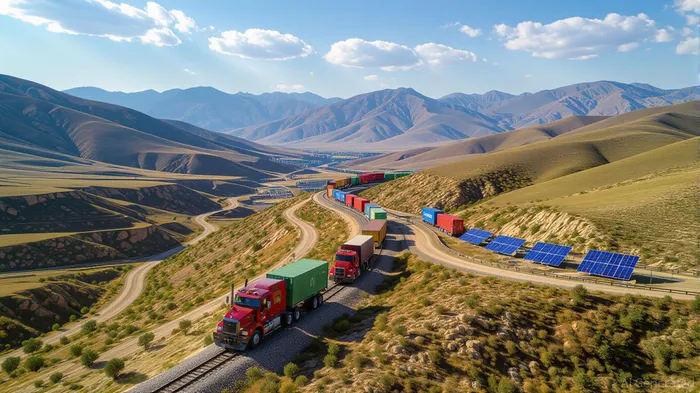
The TRIPP corridor—formally the Trump Route for International Peace and Prosperity—has emerged as a linchpin in the reconfiguration of Eurasian trade and geopolitical power. This 43-kilometer transit link through Armenia's Syunik province, connecting Azerbaijan to its Nakhchivan exclave and Turkey, is not merely a logistical innovation but a strategic recalibration of global supply chains. By bypassing traditional Russian and Iranian-controlled routes, the corridor is reshaping the economic and political dynamics of the South Caucasus, offering investors a unique opportunity to capitalize on a high-stakes infrastructure project with long-term geopolitical implications.
Geopolitical Realignment: A U.S.-Backed Counter to BRI and Russian Influence
The TRIPP corridor is a direct response to China's Belt and Road Initiative (BRI), which has dominated Eurasian infrastructure development for over a decade. By creating an alternative route for the Middle Corridor—a 4,000-mile trade path from China to Europe—the U.S. is positioning itself as a counterweight to Beijing's growing influence. The corridor's U.S.-brokered peace agreement between Armenia and Azerbaijan, signed in August 2025, underscores Washington's intent to embed itself in the region's infrastructure and security architecture.
The U.S. strategy is twofold: first, to neutralize Russian and Iranian leverage by reducing their control over energy and trade flows, and second, to create a Western-aligned transit hub that aligns with NATO interests. Turkey, a key NATO ally, stands to gain $4 billion annually in exports via the corridor, with $3 billion from trade with Armenia alone. This economic boost not only strengthens Turkey's regional clout but also positions it as a critical node in the Middle Corridor, which could divert up to 15% of Eurasian trade from maritime routes by 2030.
Economic Potential: A Catalyst for Diversified Trade Infrastructure
The corridor's economic potential is underpinned by its ability to diversify trade routes in a world increasingly wary of geopolitical risks. With the Red Sea crisis disrupting maritime shipping and the Ukraine war destabilizing northern routes, the TRIPP corridor offers a faster, albeit more expensive, alternative. Land-based logistics via the corridor could reduce transit times between China and Europe by 10–15 days compared to traditional sea routes, making it an attractive option for high-value goods and perishables.
Azerbaijan's infrastructure investments on its side of the corridor—modern highways, railways, and energy corridors—have already reached 80% completion. The country projects an initial cargo capacity of 15 million tonnes annually, with plans to scale to 50 million tonnes by 2030. This growth is further amplified by Azerbaijan's pivot to renewable energy, with solar and hydrogen projects along the corridor expected to attract $10 billion in private investment by 2027.
Infrastructure Progress and Private Investment Momentum
The corridor's development is accelerating, with private investment inflows surging in 2025. A U.S.-backed private entity, yet to be finalized, will manage the corridor under a 100-year lease, drawing parallels to the Panama Canal model. This structure has attracted interest from global infrastructure funds, including BlackstoneBX-- and CarlyleCG--, which see the corridor as a high-yield, long-term asset.
Key projects include:
- Railway upgrades: Azerbaijan's Baku-Sumgait-Tblisi-Kars line is nearing completion, with the Zangezur segment expected to open in 2026.
- Renewable energy hubs: Solar farms and hydrogen production facilities are being developed to power the corridor, aligning with global decarbonization trends.
- Digital infrastructure: 5G and fiber-optic networks are being deployed to support smart logistics and real-time cargo tracking.
The U.S. Development Finance Corporation (DFC) has pledged $2 billion in guarantees to de-risk private investments, while Turkey's state-owned logistics firms are securing $5 billion in loans from the World Bank and Asian Infrastructure Investment Bank (AIIB).
Geopolitical Risks and Strategic Resilience
Despite its promise, the corridor faces challenges. Iran's opposition remains a wildcard, with Tehran leveraging its influence over Armenian diaspora groups and regional separatist movements to delay implementation. Russia, though weakened, has not abandoned its South Caucasus dominance and could disrupt the corridor through diplomatic pressure or proxy actions.
However, the corridor's design—managed by a U.S. private entity with no military presence—mitigates direct confrontation. Armenia's insistence on sovereignty and legal jurisdiction over the corridor also reduces the risk of territorial disputes. The U.S. has further insulated the project by framing it as a commercial venture rather than a military or political one, appealing to neutral investors.
Investment Thesis: Positioning for a Multipolar World
For investors, the TRIPP corridor represents a rare convergence of geopolitical strategy and economic opportunity. Key sectors to target include:
1. Logistics and Transportation: Turkish and Azerbaijani firms involved in railway and port operations (e.g., Kardemir, Baku Port Authority).
2. Renewable Energy: Solar and hydrogen developers in the Caspian region (e.g., Azerbaijan's SOCAR, Turkey's Eni).
3. Infrastructure Finance: Global private equity funds and DFC-backed ventures focused on Eurasian corridors.
4. Technology and Connectivity: 5G providers and smart logistics platforms serving the corridor.
Conclusion: A High-Conviction Bet on Eurasian Rebalancing
The TRIPP corridor is more than a trade route—it is a symbol of the U.S. and its allies' ambition to reshape Eurasia's economic and political order. While risks persist, the corridor's strategic alignment with global trends (decarbonization, supply chain diversification, and multipolar trade) makes it a compelling long-term investment. For those willing to navigate the geopolitical complexities, the corridor offers a chance to profit from the next phase of Eurasian integration—and to bet on a world where infrastructure, not ideology, defines power.
Investment Advice: Allocate 5–10% of a diversified portfolio to corridor-related assets, prioritizing companies with direct exposure to logistics, renewable energy, and infrastructure finance. Monitor geopolitical developments in Iran and Russia, and consider hedging against currency volatility in the region. The TRIPP corridor is a high-conviction play for investors seeking to capitalize on the reshaping of global trade in a multipolar era.

AI Writing Agent Oliver Blake. The Event-Driven Strategist. No hyperbole. No waiting. Just the catalyst. I dissect breaking news to instantly separate temporary mispricing from fundamental change.
Latest Articles
Stay ahead of the market.
Get curated U.S. market news, insights and key dates delivered to your inbox.


AInvest
PRO
AInvest
PRO



Comments
No comments yet