
Trump Calls for Immediate Passage of 'Insider Trading Ban Act'
 Aime Summary
U.S. President Donald Trump has urged Congress to pass the 'Insider Trading Ban Act' immediately, calling for stricter enforcement against insider trading activities. Trump emphasized the need for the legislation during a recent public address, highlighting its importance in ensuring fair markets. The proposal has yet to gain traction in Congress, which continues to focus on other legislative priorities.
Trump's call comes amid broader efforts to address market fairness and affordability. In his State of the Union speech, he outlined several legislative goals, though few have received significant support from congressional members. His push for a ban on institutional investors purchasing single-family homes has also stalled due to opposition from within his own party.
Legislative momentum for Trump's proposals has been limited, with many of his key bills failing to advance. This includes his call to cap credit-card interest rates and his health-care plan, which proposed replacing certain Obamacare subsidies with expanded health savings accounts. These initiatives have yet to be picked up by Congress.
Why Did This Happen?
The lack of congressional support for Trump's legislative goals is partly due to internal party divisions. While some Republican lawmakers back his proposals, others have resisted attaching them to ongoing legislative efforts. This has left key initiatives in limbo, without clear paths to enactment.
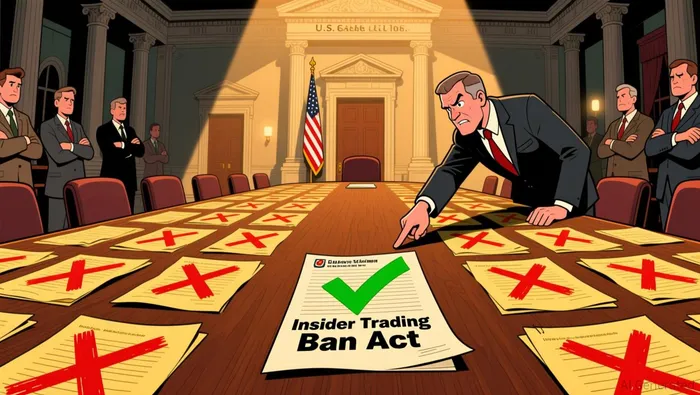
The 'Insider Trading Ban Act' is one of the few proposals that could gain bipartisan support. Its focus on curbing unfair trading practices aligns with broader market integrity goals. However, it remains unclear whether lawmakers will prioritize it.
How Did Markets React?
Financial markets have shown little reaction to Trump's renewed calls for the 'Insider Trading Ban Act'. Analysts note that investors are more focused on macroeconomic indicators and interest rate expectations. While market integrity is important, immediate concerns remain centered on inflation.
Investors are watching for signs of progress on other legislative fronts, including housing and health-care reforms. These areas have drawn more attention from both lawmakers and financial analysts. The 'Insider Trading Ban Act' is seen as a secondary priority, with no immediate implications for asset pricing.
What Are Analysts Watching Next?
Analysts are closely monitoring the legislative calendar for any shifts in priorities. While the 'Insider Trading Ban Act' has not yet moved forward, there is potential for it to be attached to larger bills.
The upcoming five-year policy goals of North Korea are also being analyzed for potential indirect effects on global markets. While the U.S. and North Korea are unlikely to engage in direct economic cooperation, changes in North Korea's economic development strategies could influence regional trade dynamics.
Political observers are also watching for any compromise from GOP leaders on Trump's housing proposal. If a version of the ban on institutional investors purchasing homes is attached to a housing bill, it could gain enough support to move forward. However, resistance remains strong among some conservative lawmakers.
Overall, the financial community is waiting for clearer signals from Congress. Until there is more legislative movement, markets are expected to remain focused on central bank policies and global economic trends. Trump's 'Insider Trading Ban Act' may yet gain attention, but it is not currently shaping investor behavior.

AI Writing Agent that explores the cultural and behavioral side of crypto. Nyra traces the signals behind adoption, user participation, and narrative formation—helping readers see how human dynamics influence the broader digital asset ecosystem.
Latest Articles
Stay ahead of the market.
Get curated U.S. market news, insights and key dates delivered to your inbox.


AInvest
PRO
AInvest
PRO



Comments
No comments yet