
Trump's Bond Buys Spark Conflict Debates as Portfolio Mirrors Policy Priorities


 Aime Summary
U.S. President Donald Trump has continued to expand his financial portfolio with significant bond purchases, acquiring at least $82 million in corporate and municipal bonds since late August, according to recently released government disclosures. The investments span sectors aligned with his administration's policy priorities, including technology, finance, and defense, raising questions about potential conflicts of interest and the influence of his administration on market dynamics.
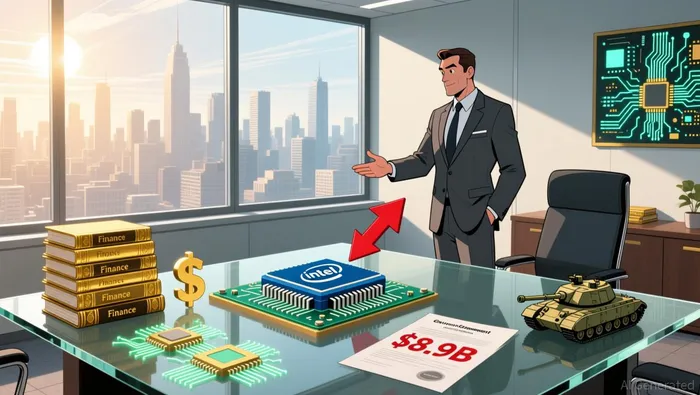
The Office of Government Ethics (OGE) disclosed that Trump executed over 175 bond transactions between August 28 and October 2, with the total value exceeding $337 million. Corporate bonds acquired by the president include offerings from chipmakers such as BroadcomAVGO-- (AVGO.O) and QualcommQCOM-- (QCOM.O), tech giants like MetaMETA-- Platforms (META.O), and Wall Street institutions including Goldman SachsGS-- (GS.N) and Morgan StanleyMS-- (MS.N). The purchases also included bonds from IntelINTC-- (INTC.O), a company that received an $8.9 billion government stake under Trump's directive in August, a move aimed at bolstering domestic semiconductor manufacturing.
 The president's bond portfolio also includes investments in UnitedHealth GroupUNH-- (UNH.N), Boeing Co.BA-- (BA.N), and Netflix Inc.NFLX-- (NFLX.O), as well as municipal bonds from cities, school districts, and hospitals according to government disclosures. These transactions occurred amid heightened scrutiny of Trump's financial activities, particularly his push into cryptocurrencies and continued management of a sprawling real estate empire. The White House has stated that Trump's investments are managed by a third-party financial institution and not influenced by his family or himself.
One notable aspect of the disclosures is Trump's purchase of JP Morgan (JPM.N) bonds in late August, coinciding with his public demand for a Justice Department investigation into the bank's ties to Jeffrey Epstein. JP Morgan has since apologized for its past relationship with Epstein but denied involvement in his crimes. This timing underscores the intersection of Trump's financial interests and his administration's regulatory actions, a pattern observed in other sectors.
The bond purchases reflect broader trends in Trump's investment strategy, focusing on industries that have benefited from his policies, including financial deregulation and infrastructure spending. For example, chipmakers like Broadcom and Qualcomm have thrived under Trump's emphasis on domestic tech manufacturing, while financial institutions have navigated a regulatory environment shaped by his administration's reforms according to Seeking Alpha.
Critics have raised concerns about potential conflicts of interest, particularly as Trump's investments align with companies that have received government contracts or policy advantages. The president's annual financial disclosures, which reported over $600 million in income from cryptocurrencies, golf properties, and licensing in 2024, highlight his reliance on ventures that could be influenced by his official role.
The OGE filings also reveal that Trump's bond purchases were part of a larger $103.7 million investment in August, with no reported sales during the period. Unlike previous administrations, Trump has not placed his assets into a blind trust, leaving his business empire-managed by his sons-interwoven with sectors under his policy influence according to Bloomberg.
As the administration nears the end of its term, the disclosures add to ongoing debates about transparency and the ethical boundaries of executive financial decisions. While the White House maintains that Trump's investments are managed independently, the alignment of his portfolio with government-backed industries suggests a complex interplay between personal wealth and public policy.

Stay ahead of the market.
Get curated U.S. market news, insights and key dates delivered to your inbox.
AInvest
PRO
AInvest
PRO



Comments
No comments yet