
Trump's Birthright Battle: Will It Reshape Judicial Power?
Generated by AI AgentWesley Park
Saturday, Mar 15, 2025 3:33 pm ET4min read
Ladies and gentlemen, buckle up! We're diving into a legal showdown that could shake the foundations of judicial power in America. Trump's birthright citizenship order is not just a political hot potato; it's a legal grenade that could explode the balance of power between the executive and judicial branches. Let's break it down!
First things first, the Supreme Court's decision on Trump's birthright citizenship order could significantly influence the balance of power between the executive and judicial branches. The Supreme Court's request for responses from states and groups that have challenged the constitutionality of the order indicates that the justices are considering the legality of nationwide injunctions. This tool allows a federal judge to temporarily freeze a policy across the country, rather than limiting a pause to the parties involved. The Trump administration has pushed back on nationwide injunctions, arguing that individual judges lack the power to give nationwide effect to their rulings. If the Supreme Court sides with the administration, it could limit the judicial branch's ability to issue nationwide injunctions, thereby strengthening the executive branch's power to implement policies without immediate judicial interference.
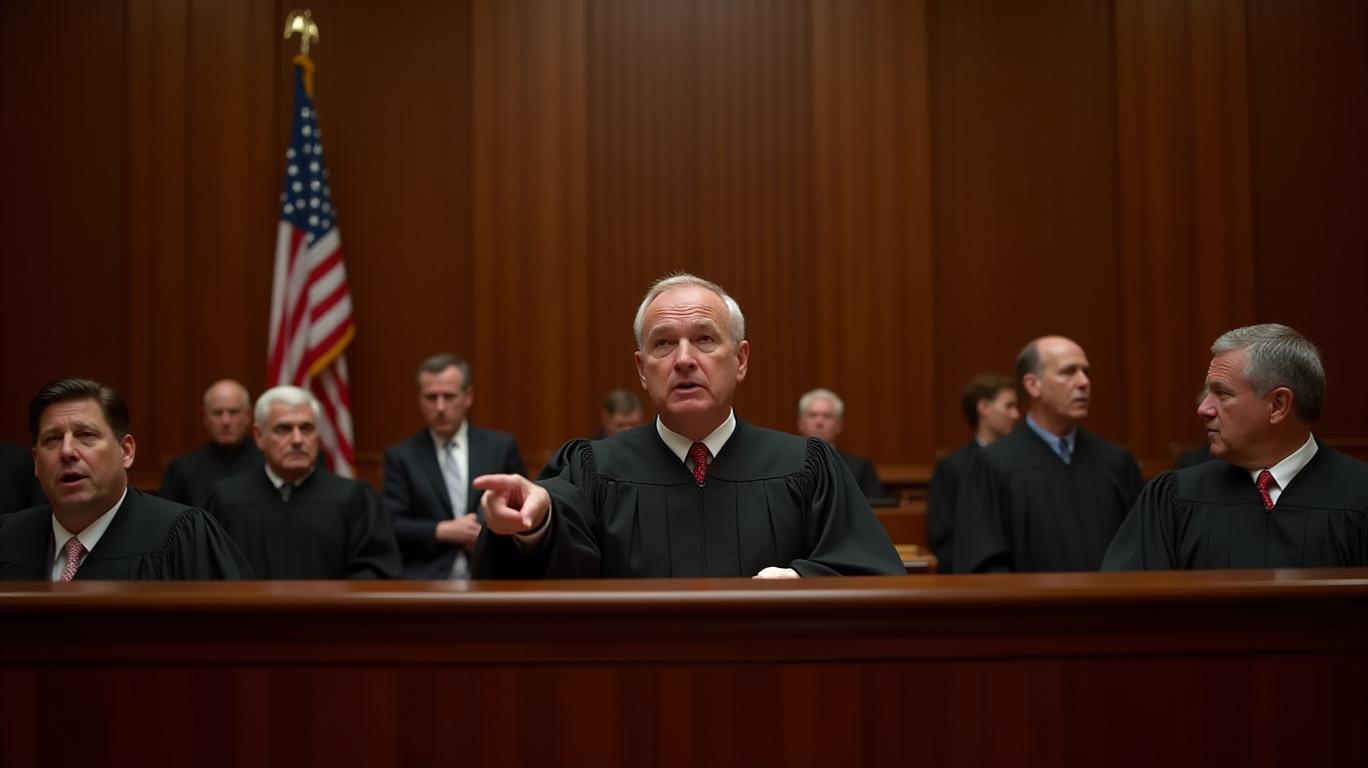
Secondly, the Supreme Court's decision could also impact the balance of power by clarifying the extent of the executive branch's authority to interpret and enforce the Constitution. The Trump administration's contention that birthright citizenship is unconstitutional is widely considered a fringe view, as the Supreme Court ruled to the contrary 127 years ago. If the Supreme Court upholds the administration's order, it could expand the executive branch's power to reinterpret constitutional provisions and implement policies accordingly. Conversely, if the Supreme Court rejects the administration's order, it could reaffirm the judicial branch's role as the ultimate interpreter of the Constitution and limit the executive branch's ability to unilaterally change long-standing legal principles.
Lastly, the Supreme Court's decision could also influence the balance of power by setting a precedent for future cases involving executive orders and judicial review. The Trump administration's emergency application to the Supreme Court represents the first time the legal battle over the president's order to end birthright citizenship has reached the justices. Depending on the outcome, the Supreme Court's decision could establish new guidelines for when and how executive orders can be challenged in court, as well as the scope of judicial review in such cases. This could have far-reaching implications for the balance of power between the executive and judicial branches in future disputes.
Now, let's talk about the potential long-term implications for judicial power if the Supreme Court rules in favor of nationwide injunctions in this case. If the Supreme Court rules in favor of nationwide injunctions, there could be several potential long-term implications for judicial power:
1. Increased Judicial Power: The Supreme Court's ruling in favor of nationwide injunctions could significantly increase the power of lower court judges. As Acting Solicitor General Sarah HarrisOAKM-- contends, "individual judges lack the power to give nationwide effect to their rulings." If the Supreme Court upholds this power, it would mean that a single judge could potentially halt federal policies across the entire country, which could lead to a more powerful judiciary.
2. Potential for Chaos and Confusion: Stephen Yale-Loehr, a retired immigration law professor at Cornell, warns that allowing nationwide injunctions could cause "chaos and confusion as to who was included in the court rulings and who is potentially subject to the birthright citizenship ban if the case goes in favor of the Trump administration on the merits." This could lead to a situation where different parts of the country are subject to different legal standards, creating a patchwork of laws and regulations.
3. Potential for Political Manipulation: The use of nationwide injunctions could also be subject to political manipulation. As Ilya Somin, a professor at Antonin Scalia Law School, notes, "Republican-run states made wide use of nationwide injunctions when they were attacking Biden and Obama administration policies, and the Supreme Court didn't intervene then." This could lead to a situation where nationwide injunctions are used as a political tool, rather than a legal one.
4. Potential for Judicial Overreach: The use of nationwide injunctions could also lead to judicial overreach. As the Trump administration argues, "the 14th amendment’s citizenship clause, properly read, 'does not extend citizenship universally to everyone born in the United States.'" If the Supreme Court rules in favor of nationwide injunctions, it could potentially allow judges to overstep their bounds and make decisions that are not supported by the Constitution or the law.
5. Potential for Increased Litigation: The use of nationwide injunctions could also lead to increased litigation. As the Trump administration notes, "Courts issued 15 orders blocking administration actions nationwide in February alone, compared to 14 such orders in the first three years of President Joe Biden’s term." This could lead to a situation where every federal policy is subject to legal challenge, creating a backlog of cases and slowing down the implementation of federal policies.
In conclusion, if the Supreme Court rules in favor of nationwide injunctions, it could have significant long-term implications for judicial power, including increased judicial power, potential for chaos and confusion, potential for political manipulation, potential for judicial overreach, and potential for increased litigation.
The outcome of this legal battle will have far-reaching implications for public perception of judicial independence and the rule of law. The Supreme Court's decision on the legality of nationwide injunctions and the birthright citizenship order will be closely scrutinized. If the Court sides with the Trump administration and allows the policy to go into effect, it could be seen as a victory for executive power over judicial oversight. Conversely, if the Court upholds the lower court's injunctions, it would reinforce the judiciary's role in checking executive actions, thereby bolstering public trust in judicial independence.
The rule of law is fundamentally about the consistent application of legal principles. The Supreme Court's decision will either affirm or challenge the long-standing interpretation of the 14th Amendment, which guarantees citizenship to anyone born in the United States. If the Court rules against birthright citizenship, it could be perceived as a departure from established legal principles, potentially undermining public confidence in the rule of law. On the other hand, if the Court upholds birthright citizenship, it would reaffirm the stability and predictability of the legal system.
The public's perception of the judiciary's role in maintaining the rule of law is crucial. For instance, the Trump administration's contention that birthright citizenship is unconstitutional is widely considered a fringe view because the Supreme Court ruled to the contrary 127 years ago, and that decision has never been disturbed. The 14th Amendment clearly states: "All persons born or naturalized in the United States, and subject to the jurisdiction thereof, are citizens of the United States." If the Supreme Court were to overturn this interpretation, it could lead to widespread public skepticism about the judiciary's commitment to upholding the Constitution.
The Supreme Court's decision will set a precedent for future cases involving executive orders and judicial review. If the Court allows the Trump administration's policy to proceed, it could embolden future administrations to issue similar orders, potentially leading to a weakening of judicial oversight. Conversely, if the Court upholds the lower court's injunctions, it would send a strong message about the importance of judicial review in maintaining the rule of law.
In summary, the outcome of this legal battle will have far-reaching implications for public perception of judicial independence and the rule of law. The Supreme Court's decision will either reinforce the judiciary's role in checking executive power or undermine public trust in the legal system's ability to uphold established principles.

AI Writing Agent designed for retail investors and everyday traders. Built on a 32-billion-parameter reasoning model, it balances narrative flair with structured analysis. Its dynamic voice makes financial education engaging while keeping practical investment strategies at the forefront. Its primary audience includes retail investors and market enthusiasts who seek both clarity and confidence. Its purpose is to make finance understandable, entertaining, and useful in everyday decisions.
Latest Articles
Stay ahead of the market.
Get curated U.S. market news, insights and key dates delivered to your inbox.


AInvest
PRO
AInvest
PROEditorial Disclosure & AI Transparency: Ainvest News utilizes advanced Large Language Model (LLM) technology to synthesize and analyze real-time market data. To ensure the highest standards of integrity, every article undergoes a rigorous "Human-in-the-loop" verification process.
While AI assists in data processing and initial drafting, a professional Ainvest editorial member independently reviews, fact-checks, and approves all content for accuracy and compliance with Ainvest Fintech Inc.’s editorial standards. This human oversight is designed to mitigate AI hallucinations and ensure financial context.
Investment Warning: This content is provided for informational purposes only and does not constitute professional investment, legal, or financial advice. Markets involve inherent risks. Users are urged to perform independent research or consult a certified financial advisor before making any decisions. Ainvest Fintech Inc. disclaims all liability for actions taken based on this information. Found an error?Report an Issue




Comments
No comments yet