
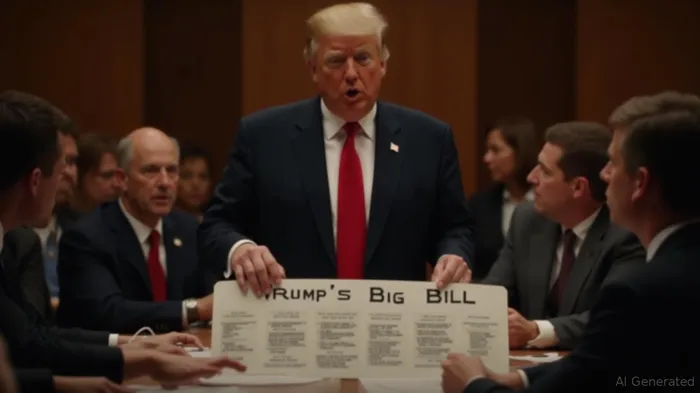
Trump's Big Bill Passes House 218-214, Faces Fiscal Criticism
President Donald Trump's ambitious economic package, dubbed the "Big Beautiful Bill," has successfully navigated through the U.S. House of Representatives with a narrow margin of 218 to 214 votes. This comprehensive legislation, which includes deep tax cuts and extensive spending reforms, is scheduled to be signed into law on July 4, coinciding with Independence Day celebrations.
Despite strong support from Republican leadership, the bill faced internal opposition from within Trump's own party. GOP lawmakers Thomas Massie and Brian Fitzpatrick voted against it in the House, aligning with Senate Republicans Rand Paul, Susan Collins, and Thom Tillis, who had previously expressed their disapproval. Their concerns centered around the bill's steep cuts to Medicaid, expanded tax breaks for the wealthy, and the potential for a significant increase in the national deficit.
However, House Republicans managed to secure the necessary votes, convincing holdout Ralph Norman to change his stance. With Vice President J.D. Vance casting the tie-breaking vote in the Senate, the path was cleared for the bill's final approval.
Economic analysts have raised alarms about the potential fiscal impact of the bill. The Committee for a Responsible Federal Budget (CRFB) warns that if the provisions become permanent, the bill could add a massive $5.5 trillion to the national debt. This could cause the U.S. debt, currently near 100% of GDP, to soar to 127% by 2034. Moody’sMCO-- has also expressed concerns about growing investor unease and potential bond market volatility due to the legislation’s long-term fiscal risks.
Critics, including Joe Biden and American Congresswoman Alexandria Ocasio-Cortez, have labeled the bill "reckless and cruel." They argue that it could strip healthcare from millions of Americans due to the proposed Medicaid cuts and raise taxes on those earning less than $50,000. Biden emphasized that the bill favors the rich while threatening the social safety net. Elon Musk, a one-time Trump ally, has also voiced strong disapproval, signaling plans to campaign against lawmakers who backed the bill.
With the bill's signing imminent, attention now turns to its implementation and the political fallout. As Trump pushes forward with his economic vision, critics are preparing for a fierce battle over the nation’s fiscal future. The impact of this legislation on the national debt and fiscal policy remains a contentious issue, with analysts predicting that it will deepen existing imbalances and potentially lead to long-term economic challenges. Voters will likely have the final say in the 2026 elections.

Stay ahead of the market.
Get curated U.S. market news, insights and key dates delivered to your inbox.


AInvest
PRO
AInvest
PRO



Comments
No comments yet