
Trump-Backed Thumzup's $153.8M Dogehash Acquisition: A Strategic Play to Capture Dogecoin's Next Growth Phase?
 Aime Summary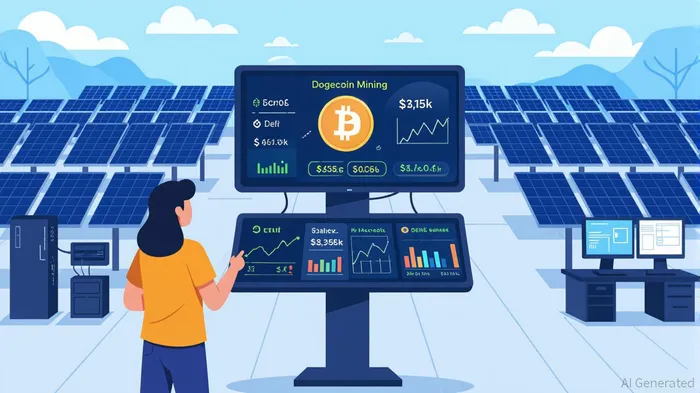
The acquisition of Dogehash by Thumzup MediaTZUP-- Corporation—now rebranded as Dogehash Technologies Holdings (XDOG)—marks a bold pivot into the cryptocurrency mining sector, leveraging renewable energy, Scrypt ASICs, and Dogecoin's unique economic model. This $153.8 million all-stock deal, set to close in Q4 2025, positions the new entity to capitalize on Dogecoin's fixed block rewards and DeFi/Layer-2 innovations. But does this strategy offer a sustainable path to long-term value, or is it a speculative gamble in a volatile market?
Strategic Rationale: Renewable Energy, Scrypt, and Fixed Rewards
Thumzup's acquisition of Dogehash is anchored in three pillars: renewable energy infrastructure, Scrypt ASIC mining, and Dogecoin's predictable block rewards. Dogehash's 2,500 Scrypt ASIC miners, powered by surplus renewable energy in North America, offer a cost-effective edge in an industry where electricity costs account for 60–70% of operational expenses. This aligns with broader ESG trends, as institutional investors increasingly favor green energy solutions.
Dogecoin's fixed 10,000 DOGEDOGE-- block reward, unlike Bitcoin's deflationary halving cycles, provides a stable revenue stream. For institutional investors, this predictability is a critical advantage in a market plagued by price volatility. Thumzup's plan to expand its digital-asset treasury to include SolanaSOL--, EthereumETH--, and USD Coin further diversifies risk, mitigating exposure to Dogecoin's price swings.
DeFi and Layer-2 Integration: A New Revenue Stream
The acquisition's most innovative aspect is its integration with DogeOS's Layer-2 infrastructure, enabling staking and DeFi yield generation. By allowing miners to earn returns beyond block rewards—such as liquidity provision or staking—Thumzup taps into the $4 billion total value locked (TVL) in DeFi. This dual-layer approach could compound miner returns, transforming DogecoinDOGE-- from a speculative asset into a utility token.
For example, the GOAT Network's upcoming integration of Dogecoin into its BitcoinBTC-- Layer-2 ecosystem allows DOGE holders to stake for BTC yields. Such innovations could attract retail and institutional capital, enhancing Dogecoin's utility and price. However, reliance on third-party DeFi platforms introduces risks, including smart contract vulnerabilities and regulatory scrutiny.
Political Leverage and Regulatory Risks
Donald Trump Jr.'s stake in Thumzup adds a political dimension. The Trump family's crypto ventures, including American Bitcoin and World Liberty Financial, could provide regulatory advantages in a U.S. landscape where crypto policies remain fragmented. Yet, this connection also exposes the company to political volatility. A shift in regulatory priorities under a different administration could either accelerate or hinder XDOG's growth.
Financial Projections and Market Realities
Thumzup's $50 million capital raise in July 2025 underscores its commitment to scaling mining operations and expanding energy infrastructure. However, the altcoin mining sector is inherently less capital-efficient than Bitcoin. Rising GPU prices (up 47%) and electricity costs (up 28% in key regions) threaten profit margins. Smaller miners have seen profitability decline by 35%, forcing reliance on institutional players like XDOG to sustain the ecosystem.
Financial projections for XDOG remain speculative. While the U.S. crypto mining sector is projected to grow at a 6.9% CAGR through 2030, Thumzup's success hinges on scaling efficiently, managing energy costs, and navigating regulatory uncertainty. Dogecoin's price, currently trading at ~$0.16, must rise significantly to justify the acquisition's valuation.
Risk/Reward Dynamics: A High-Stakes Bet
The XDOG model is a high-risk, high-reward proposition. On the upside, Dogecoin's fixed block rewards, renewable energy infrastructure, and DeFi integration could create a scalable, diversified revenue stream. On the downside, the altcoin market is fragmented, and Dogecoin's price volatility remains a wildcard. Regulatory crackdowns, smart contract risks, and rising operational costs could erode margins.
For investors, the key question is whether Dogecoin's unique economic model and DeFi potential outweigh these risks. While Bitcoin's halving cycles and institutional adoption offer clearer long-term value, Dogecoin's community-driven growth and utility in DeFi present a compelling, albeit speculative, case.
Investment Advice: Positioning for the Long Game
XDOG's acquisition represents a strategic bet on Dogecoin's next growth phase. Investors should consider the following:
1. Diversify Exposure: Allocate only a small portion of a portfolio to XDOG, given its speculative nature.
2. Monitor Regulatory Developments: Track U.S. and global crypto policies, which could impact XDOG's operations.
3. Assess DeFi Integration: Evaluate the success of DogeOS's Layer-2 solutions and partnerships like GOAT Network.
4. Price Volatility: Use stop-loss orders or hedging strategies to mitigate Dogecoin's price swings.
In conclusion, Thumzup's acquisition is a calculated move to position Dogecoin as a utility asset in a rapidly evolving crypto landscape. While the risks are substantial, the potential for growth in DeFi and renewable energy mining could justify the investment for those willing to tolerate volatility. As with any speculative play, patience and disciplined risk management will be paramount.

Decoding blockchain innovations and market trends with clarity and precision.
Latest Articles
Stay ahead of the market.
Get curated U.S. market news, insights and key dates delivered to your inbox.


AInvest
PRO
AInvest
PRO



Comments
No comments yet